

Shop in Seagoville may earn a small commission when readers make a purchase through links in this article, at no additional cost to the buyer.
For many families, composting sounds like a good idea until they imagine unpleasant smells, clouds of flies or rodents moving into the backyard.
Those problems are not an unavoidable part of composting. A properly maintained pile should smell earthy rather than rotten, and it should not become a dependable food source for animals.
The difference usually comes down to what goes into the pile, how those materials are covered and whether the compost receives enough air.
Families interested in producing more of what they need at home can also explore the Homesteaders Handbook while learning how composting fits into a broader self-sufficient lifestyle.
Choose a Manageable Composting System
A family does not need a large property or expensive equipment to begin composting.
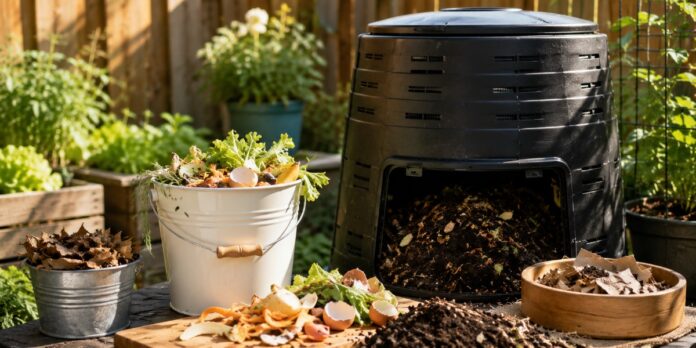
An open pile may work in a spacious backyard, but an enclosed bin is often easier to manage in a neighborhood. A bin keeps the materials contained, improves the appearance of the composting area and makes it harder for pets and wildlife to reach fresh scraps.
Compost tumblers can offer additional protection against animals and are convenient to turn. However, they usually hold less material than a traditional pile and may dry out more quickly during hot weather.
The best system is one that fits the available space and can be checked regularly. A neglected compost bin can develop problems regardless of its price or design.
Start With Plenty of Brown Material
One of the most common beginner mistakes is placing a large amount of wet food waste into an empty bin.
Fruit and vegetable scraps are rich in nitrogen and moisture. When they accumulate without enough dry material, the pile can become wet, compacted and deprived of oxygen. That creates the conditions that produce sour or rotten odors.
Begin with a layer of carbon-rich “brown” material. Suitable options include dry leaves, shredded non-glossy cardboard, torn paper bags, small twigs, straw and untreated wood chips.
Keep an extra container or bag of dry leaves or shredded cardboard near the composting area. Each time kitchen scraps are added, cover them with another layer of brown material.
A useful starting point is approximately three parts brown material to one part green material by volume. The ratio does not need to be measured precisely, but the pile should contain noticeably more dry material than wet kitchen waste.
Know What Counts as Green Material
“Green” does not necessarily describe the color of an item. It refers to materials that supply nitrogen and usually contain more moisture.
Common green materials include fruit and vegetable scraps, coffee grounds, paper coffee filters, fresh grass clippings and soft garden trimmings.
Grass clippings should be added in thin layers or mixed thoroughly with dry leaves. A thick mat of wet grass can compact quickly, block airflow and develop an unpleasant odor.
Families planning a more productive home garden may find additional ideas in The Self-Sufficient Backyard, including ways household systems can work together to reduce waste and improve food production.
Keep Meat, Dairy and Grease Out of a Basic Backyard Pile
Not every biodegradable item belongs in a home compost bin.
Meat, fish, bones, dairy products, cooking grease and oily foods can create strong odors and attract rodents, raccoons, flies and other scavengers. These materials are better handled through a municipal composting program that specifically accepts them.
Pet feces should also stay out of compost intended for vegetable gardens or other food-growing areas. Cat litter, dog waste and human waste may contain disease-causing organisms that a small backyard pile does not reliably destroy.
Diseased plants, insect-infested plants and weeds containing mature seeds may survive in a compost pile that does not reach and maintain high temperatures.
For a simple household system, concentrate on fruit and vegetable scraps, coffee grounds, dry leaves, cardboard and healthy yard trimmings.
Never Leave Food Scraps Exposed
Visible food is an invitation to flies, rodents and curious pets.
Dig a small opening in the center of the pile, add the kitchen scraps and cover them completely with several inches of existing compost and brown material. The surface should look like leaves, cardboard or other dry yard material—not a pile of discarded food.
Do not place a fresh bucket of scraps on top and plan to cover it later. Flies and animals may discover the food within a short time.
A tight-fitting lid can help, but proper burial remains important. Small insects may enter through ventilation openings, while rodents can sometimes chew through lightweight plastic.
Control Moisture Before It Becomes a Problem
Compost needs moisture, but it should not be soaked.
The material should feel similar to a wrung-out sponge. It should be damp enough to support decomposition without releasing water when handled.
A pile that is too dry will break down slowly. Add water gradually while mixing the materials rather than pouring a large amount into one location.
A pile that is too wet may become heavy, matted and smelly. Mix in shredded cardboard, dry leaves, straw or small wood chips to absorb excess moisture and restore open spaces where air can circulate.
Place the bin where rainwater will not collect around it. Good drainage becomes especially important during extended periods of wet weather.
Make Sure the Pile Can Breathe
Composting is an oxygen-dependent process. When the pile becomes compacted, microorganisms that function without oxygen can take over and produce offensive smells.
Turn or mix the pile periodically with a garden fork, compost aerator or tumbler handle. Move material from the outside toward the center and break apart wet clumps.
A pile does not necessarily need to be turned every day. Mix it when materials begin matting together, decomposition slows or an unpleasant smell develops.
Coarse materials such as small twigs and wood chips can help create air pockets. Avoid filling the entire bin with finely shredded or wet material that packs together tightly.
Understand What Different Odors Mean
A healthy compost pile should have a mild, earthy smell.
A rotten-egg or sewage-like odor usually signals excessive moisture or insufficient oxygen. Turn the pile thoroughly and add dry, coarse brown materials.
An ammonia smell often indicates that the pile contains too much nitrogen-rich material. Add dry leaves, shredded cardboard or straw and mix everything together.
A strong food odor usually means scraps are exposed or concentrated in one area. Bury them deeper and cover the surface with a generous layer of browns.
Odor is not a reason to abandon composting. It is a warning that the mixture needs an adjustment.
Prevent Flies in the Kitchen and Outdoors
A countertop container can make collecting scraps convenient, but it should not become a storage bin for decomposing food.
Use a container with a secure lid and empty it regularly. Wash the container after use, especially if liquid collects at the bottom.
Some families freeze scraps until they are ready to take them outside. Freezing can prevent indoor odors and interrupt the development of fruit flies.
At the outdoor pile, cover every addition immediately. If flies appear, stop adding fresh food temporarily and cover the pile with several inches of dry leaves or shredded cardboard.
Flies generally remain a problem when wet food stays exposed. Removing that access is more effective than spraying pesticides around the compost.
Make the Bin Difficult for Rodents to Enter
An enclosed bin should have a secure lid and no large openings.
Where rodents are a concern, the bottom and ventilation areas can be protected with durable metal hardware cloth. The bin should be inspected periodically for chewed plastic, gaps or soil disturbed around the base.
Avoid placing bread, cooked meals, meat, cheese or greasy food in the pile. Although some of those items can technically decompose, they are more likely to produce odors and attract animals in a small residential system.
Do not repeatedly place scraps in the same shallow location. Spread additions through the center of the pile and cover them completely.
The Homesteaders Handbook offers further ideas for families interested in developing practical household routines around food, gardening and responsible resource use.
Do Not Expect the Pile to Become Instantly Hot
Many beginners worry when their compost does not heat up immediately.
Heat depends on pile size, moisture, oxygen, outdoor temperature and the mixture of ingredients. A small household pile may remain relatively cool and still produce compost, although decomposition will take longer.
Adding more green material may help a dry, carbon-heavy pile become active. However, adding a large quantity of food waste simply to create heat can lead to odors and pests.
Slow composting is still composting. Families with limited yard waste can allow the materials to break down gradually rather than continually trying to create a high-temperature pile.
Store Scraps Properly Between Trips Outside
Kitchen habits can determine whether composting feels convenient or unpleasant.
Line the collection container with a small piece of newspaper or cardboard to absorb moisture. Drain liquids from scraps before adding them, and avoid leaving overripe fruit uncovered near the container.
Empty the container before odors develop. During hot weather, that may mean taking scraps outside daily or storing them in a refrigerator or freezer.
A routine that takes only a few minutes is more likely to continue than a complicated system requiring constant cleaning.
Begin With a Limited List
New composters do not need to save every possible compostable item immediately.
Start with vegetable peelings, fruit scraps, coffee grounds, dry leaves and shredded cardboard. These materials are easy to recognize and relatively simple to manage.
After the household develops a dependable routine, additional materials can be introduced gradually.
A simple system also makes troubleshooting easier. When too many unfamiliar materials enter the bin at once, it can be difficult to determine what caused an odor, moisture problem or pest visit.
Recognize When Compost Is Finished
Finished compost is dark, crumbly and earthy-smelling. Most of the original materials should no longer be recognizable, although a few pieces of wood or other slow-decomposing items may remain.
Screening the compost can separate finished material from larger pieces. The unfinished items can be returned to the active pile.
Finished compost can be mixed into garden soil, spread around established plants or applied as a light top dressing. It should not smell sour, rotten or strongly of ammonia.
Families interested in connecting composting with food production, water conservation and other backyard projects can find more ideas in The Self-Sufficient Backyard.
Most Compost Problems Are Fixable
Composting does not need to create a smelly or pest-filled corner of the yard.
Most problems can be prevented by following a few basic rules: use more browns than greens, bury food scraps, exclude meat and dairy, maintain moderate moisture and allow air to move through the pile.
When something goes wrong, the solution is usually straightforward. Add browns if the pile is wet or smells of ammonia. Turn it if it smells rotten. Add limited moisture if decomposition has stopped because the material is dry.
With a secure container and a consistent routine, families can turn ordinary kitchen and yard waste into a useful soil amendment without turning the backyard into a nuisance.