

Shop in Seagoville may earn a small commission when readers make a purchase through links in this article, at no additional cost to the buyer.
A successful backyard garden begins below the surface.
Vegetable plants may receive plenty of sunlight and regular watering, but they can still struggle when their roots are growing in compacted, poorly drained or nutrient-deficient soil. Healthy soil provides the air, moisture, nutrients and biological activity plants need to establish strong roots and produce dependable harvests.
Improving soil is not a one-time project. It is a gradual process of protecting the ground, adding suitable organic materials and replacing nutrients based on what the soil actually needs.
Soil Is More Than Dirt
Garden soil is a living system containing mineral particles, organic matter, air, water, plant roots and organisms.
The mineral portion consists primarily of sand, silt and clay. The proportions of those particles determine the soil’s texture.
Sandy soil contains large particles and drains quickly, but it may struggle to retain moisture and nutrients. Clay soil contains much smaller particles and generally holds more water, but it can become dense, sticky and poorly aerated.
Loam contains a useful balance of sand, silt and clay, but gardeners do not need naturally perfect loam to grow productive vegetables. Most backyard soils can be improved through careful management.
Soil Structure Determines How Roots Grow
Soil texture and soil structure are related, but they are not the same.
Texture refers to the proportions of sand, silt and clay. Structure describes how those particles join together into small clusters known as aggregates.
Good soil structure creates spaces of different sizes between the aggregates. Those spaces allow water to enter the ground, excess moisture to drain and oxygen to reach plant roots.
Loose, well-structured soil also gives roots room to spread. A larger root system can explore more soil for moisture and nutrients, helping the plant withstand periods of heat or limited rainfall.
Poorly structured soil may form hard clods, surface crusts or dense layers. Roots can become shallow or distorted when they cannot easily penetrate those layers.
Compaction Reduces Air and Water Movement
Compaction occurs when soil particles are pressed tightly together.
Walking repeatedly through garden beds, operating heavy equipment over wet soil and working clay soil when it is saturated can destroy useful pore spaces. Water may then collect on the surface or run away instead of soaking evenly into the root zone.
Compacted soil can also contain less oxygen. Although the leaves use carbon dioxide during photosynthesis, plant roots require oxygen for normal biological functions.
The simplest prevention is to create permanent beds and designated walking paths. Gardeners should be able to reach the center of each bed without stepping into the growing area.
Raised beds can help where native soil is severely compacted, shallow or poorly drained. They should still be filled with a balanced soil mixture rather than pure compost or an overly light commercial product.
Organic Matter Supports the Entire Soil System
Organic matter includes living roots, soil organisms and plant or animal materials at different stages of decomposition.
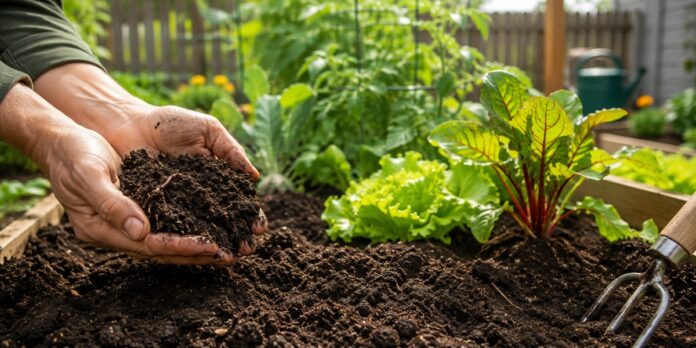
Finished compost is one of the most practical organic amendments for a backyard garden. It can improve the structure of clay soils while helping sandy soils retain more moisture and nutrients.
Organic matter also supplies food for bacteria, fungi, earthworms and other organisms. As those organisms break materials down, nutrients are recycled into forms that plants may eventually use.
Families developing a broader home food-production plan can find additional soil-building and composting ideas in the Homesteaders Handbook while choosing practices that match their available space and resources.
Organic matter does not eliminate every soil problem, but regular additions can make the ground more workable and resilient over time.
Nutrients Must Be Available in the Right Amounts
Plants require several nutrients to complete their life cycles.
Nitrogen supports leafy growth and is an important component of proteins and chlorophyll. Phosphorus contributes to energy transfer, root development, flowering and seed production. Potassium supports water regulation and several processes related to plant growth and resilience.
Plants also need secondary nutrients and micronutrients in smaller quantities. A nutrient is not unimportant simply because the plant requires less of it.
Adding more fertilizer does not automatically produce healthier plants. Excess nutrients can damage roots, encourage weak or excessive growth and move beyond the garden through runoff or drainage.
Nutrient availability is also affected by soil pH. A nutrient may be present in the soil but remain difficult for roots to absorb when the pH is outside the appropriate range for the crop.
Test the Soil Before Adding Fertilizer
Appearance alone cannot reveal everything happening underground.
Yellow leaves, weak growth and poor production may result from nutrient deficiencies, unsuitable pH, excessive moisture, drought, root damage, disease or other problems. Applying fertilizer without identifying the cause can waste money and make the condition worse.
A laboratory soil test can measure pH and important nutrient levels. Depending on the service selected, it may also provide information about organic matter, salinity or soil texture.
Gardeners should collect samples from several locations within the growing area and combine them as directed by the laboratory. A vegetable garden should generally be tested separately from a lawn or ornamental bed because its management and fertilizer needs may be different.
Texas residents can obtain soil-testing information through the Texas A&M AgriLife Extension Soil, Water and Forage Testing Laboratory or contact their county Extension office for assistance.
Compost and Fertilizer Serve Different Purposes
Compost and fertilizer are not interchangeable.
Compost primarily improves organic matter content, soil structure, water management and biological activity. It may supply nutrients, but the amounts and release rates can vary considerably.
Fertilizer is intended to provide nutrients in known or measurable concentrations. It does not automatically improve compaction, drainage or soil structure.
A productive garden may benefit from both, but each should be used for a specific reason. Gardeners can use the Homesteaders Handbook to explore practical methods for turning suitable household and yard materials into useful compost rather than treating every soil problem as a fertilizer shortage.
Mulch Protects Soil From Above
Bare garden soil is vulnerable to heat, erosion, crusting and rapid moisture loss.
An organic mulch placed around established plants can reduce evaporation, moderate soil-temperature changes and limit weed growth. It also softens the impact of rain and irrigation water on the soil surface.
Shredded leaves, clean straw and other appropriate plant materials can be used as mulch. As they gradually decompose, they contribute organic material near the surface.
Mulch should not be piled tightly against stems or tree trunks. Constant moisture against plant tissue can create conditions favorable to decay and other problems.
Gardeners should also avoid using grass clippings recently treated with herbicides unless the product label confirms that the clippings are safe for the intended use.
Soil Organisms Perform Essential Work
Healthy garden soil contains an active community of bacteria, fungi, insects, earthworms and other organisms.
These organisms break down organic residues, recycle nutrients and help create stable soil aggregates. Plant roots also interact with microorganisms in the surrounding soil.
Not every visible organism is beneficial, and earthworms alone do not prove that soil is healthy. The goal is to create conditions that support a diverse soil community rather than relying on one species.
Maintaining organic matter, avoiding unnecessary pesticide use and keeping living roots in the ground for more of the year can support biological activity.
Avoid Overworking the Garden
Tilling can loosen a new garden area and mix amendments into the upper soil, but repeated intensive cultivation may break apart aggregates and leave the surface vulnerable to erosion and crusting.
Gardeners should avoid tilling wet soil. A handful that remains in a sticky ball or smears when pressed is generally too wet to work.
Once a bed has been established, compost can often be spread across the surface or incorporated lightly without turning the entire soil profile each season.
Pulling plants, roots and soil aggressively at the end of every growing season can also disturb the underground system. Healthy roots and decomposing residues can contribute to soil development when disease and pest concerns do not require their removal.
Cover Crops Can Keep Soil Working
A garden does not have to remain bare after the main vegetable crop is harvested.
Cover crops are planted primarily to protect and improve the soil rather than to produce a traditional harvest. Their roots can help hold soil in place, support microorganisms and capture nutrients that might otherwise be lost.
The appropriate cover crop and planting date depend on the region, season and gardener’s goals. Some species may be damaged by winter weather, while others must be cut or terminated before they produce seed.
The soil-building approach described in The Self-Sufficient Backyard can help families connect seasonal garden planning with broader efforts to produce more food at home.
Raised Beds Still Require Soil Management
Raised beds can solve several problems, but they are not maintenance-free.
The soil level may settle as organic materials decompose. Nutrients can also decline after repeated harvests because vegetables remove them from the bed.
Adding compost periodically can replace some organic matter, while a soil test can identify fertilizer and pH needs. Continually filling a bed with rich compost without testing may eventually create excessive nutrient levels.
Raised beds also dry faster than some in-ground gardens. Mulch and efficient irrigation can help conserve moisture, but the soil should be checked before watering.
Healthy Soil Requires Patience
Poor backyard soil rarely becomes ideal after one application of compost.
Improvements occur as roots grow, organic materials decompose and stable aggregates form. Gardeners may notice easier digging, better water infiltration and stronger plant growth over several seasons.
Keeping simple records can help measure progress. Note which amendments were used, how much was applied, what the soil test showed and how the crops performed.
Readers planning a long-term household food system can use The Self-Sufficient Backyard to consider how soil care, crop selection, water use and available growing space fit together.
Build the Garden From the Ground Up
Healthy soil cannot guarantee that every seed will germinate or that every plant will escape pests, disease and severe weather. It does, however, give plants a stronger foundation.
A well-managed soil holds sufficient moisture without remaining waterlogged, allows roots to access oxygen and keeps necessary nutrients available in appropriate amounts.
Gardeners who test before fertilizing, protect beds from compaction, add suitable organic matter and keep the soil covered can gradually turn an ordinary backyard into a more dependable food-producing space.