

Shop in Seagoville may earn a small commission when readers make a purchase through links in this article, at no additional cost to the buyer.
Dog training becomes easier when it is treated as part of everyday life instead of a separate activity that requires a large block of free time.
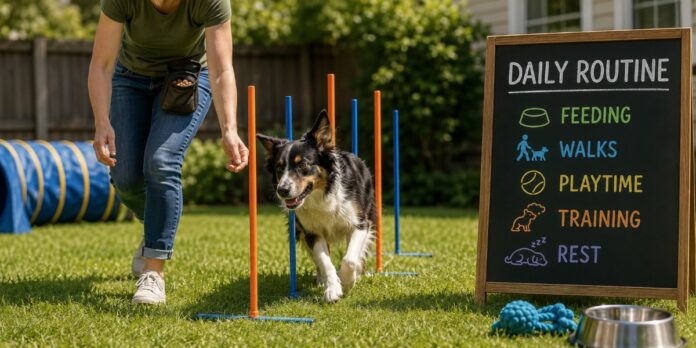
A predictable schedule helps a dog understand when it is time to eat, walk, play, learn and rest. It also gives owners several natural opportunities to reinforce good behavior without turning every interaction into a formal training session.
The most effective routine is not necessarily tied to the exact same minute every day. It is built around a consistent sequence of events that the dog can learn to recognize.
Start the Day With Movement and Attention
The morning routine should begin with a bathroom break, followed by an appropriate amount of walking, play or exploration.
A walk is more than physical exercise. It can also provide mental stimulation when dogs are allowed to safely sniff and investigate their surroundings. Owners can practice loose-leash walking, name recognition, attention and simple cues during the outing.
Exercise requirements vary considerably based on a dog’s age, breed, physical condition and health. Puppies generally benefit from shorter periods of activity, while active adult dogs may need longer or more energetic sessions. Senior dogs and dogs with medical conditions may require gentler exercise planned with a veterinarian.
The goal is not to exhaust the dog. It is to provide enough healthy activity to make calm behavior and focused training more likely afterward.
Turn Breakfast Into a Training Opportunity
Regular mealtimes provide one of the easiest ways to build training into the day.
Before putting down the food bowl, owners can ask the dog to sit, wait or make eye contact. The meal is then delivered as the reward for calm cooperation.
A small portion of the dog’s breakfast may also be reserved for several minutes of practice. Owners looking for a more organized training system can use the Dog Trainer Bible to select appropriate skills and create a consistent progression instead of practicing unrelated commands each day.
Training should remain brief and successful. For many dogs, three to five focused minutes can be more productive than a long session that ends with boredom or frustration.
Schedule Rest Instead of Waiting for Exhaustion
Rest should be an intentional part of the schedule, especially for puppies, adolescent dogs and highly active breeds that may not settle easily on their own.
After eating, exercising and using the bathroom, the dog can be guided to a bed, crate, exercise pen or designated resting area. This teaches the dog that periods of activity will be followed by periods of calm.
Owners can introduce a cue such as “place,” “bed” or “settle” and reward the dog for remaining quietly in the designated area. Rest training can become particularly valuable when the family is eating, working, receiving visitors or handling household tasks.
A dog that learns how to relax without constant attention is often easier to manage than one that expects entertainment throughout the day.
Use Everyday Transitions for Practice
Some of the best training opportunities occur during transitions.
Before opening an exterior door, ask the dog to pause. Before attaching the leash, wait for four paws on the floor. Before throwing a toy, request a sit. Before allowing the dog onto the couch, ask for a calm behavior.
These small repetitions teach the dog that cooperation leads to access to valued activities.
They also reduce the need for owners to repeatedly correct jumping, rushing through doors, barking for attention or grabbing toys. The dog begins to understand what behavior is expected before the reward becomes available.
Everyone in the household should follow the same basic rules. Training becomes confusing when one person requires a sit before opening the door while another allows the dog to charge outside.
Balance Walks With Play and Mental Work
Physical exercise is important, but activity should not be limited to walking.
Games such as fetch, tug, hide-and-seek and searching for scattered food can provide additional outlets for energy. Puzzle feeders and food-filled toys can also encourage independent activity when the owner is busy.
Playtime can include training without becoming rigid. A dog might be asked to release a toy, wait briefly before chasing it or return when called before the game continues.
Owners who need help connecting obedience work with play and household routines can follow exercises from the Dog Trainer Bible while continuing to use toys, praise and access to activities as rewards.
Play should end before the dog becomes overly tired or uncontrollably excited. A short cooling-off period and access to water can help the dog transition back to a calmer part of the day.
Add a Brief Evening Review
The evening routine offers another opportunity to practice the day’s most important skill.
Instead of introducing several new commands at once, owners can select one priority behavior for the week. That might be coming when called, staying on a mat, walking without pulling or calmly greeting people.
A short practice session before dinner can reinforce the behavior while the dog is motivated and attentive. Dinner can then serve as the final reward.
Consistency matters more than the number of repetitions. Practicing the same skill for a few minutes each day generally produces better results than conducting one lengthy session and then neglecting the behavior for the remainder of the week.
A Sample Daily Schedule
A typical routine for a healthy adult dog might look like this:
6:30 a.m.: Bathroom break and morning walk
7:15 a.m.: Breakfast with three to five minutes of training
7:30 a.m.: Quiet rest while the household prepares for the day
Midday: Bathroom break, brief walk or supervised play
Late afternoon: Longer walk, exercise or enrichment activity
6 p.m.: Short training review followed by dinner
Evening: Family time, controlled play and relaxation practice
Before bedtime: Final bathroom break and quiet settling routine
The schedule should be adjusted for the individual dog. Puppies usually need more frequent bathroom breaks, meals, supervision and naps. Senior dogs may need slower walks, easier activities and additional rest.
Work schedules, school activities and family responsibilities may change the timing, but owners should try to preserve the general sequence.
Build Flexibility Into the Routine
A routine should create security without making the dog dependent on an exact clock time.
Meals and walks can occur within a reasonable time range rather than at precisely the same minute every day. Owners can also occasionally change the walking route, training location or type of enrichment while preserving the familiar pattern of activity followed by calm.
When a major schedule change is approaching, such as a new work shift or the beginning of the school year, the transition should be introduced gradually when possible.
Sudden changes in eating, exercise and attention can be difficult for some dogs. Maintaining several familiar parts of the routine can make the adjustment easier.
Keep the Plan Simple Enough to Continue
The best dog-training routine is one the household can realistically maintain.
Owners do not need expensive equipment or hour-long sessions. They need clear expectations, appropriately timed rewards and repeated opportunities for the dog to succeed.
A structured guide such as the Dog Trainer Bible can provide additional exercises and step-by-step instruction, but lasting progress still depends on what happens during ordinary meals, walks, play sessions and quiet moments at home.
When those activities occur in a predictable order, training stops feeling like an additional chore. It becomes part of the dog’s daily life—and good behavior becomes easier to practice, recognize and reward.