Shop in Seagoville may earn a small commission when readers make a purchase through links in this article, at no additional cost to the buyer.
By six months old, most puppies are entering adolescence. They may look nearly grown, but their judgment, attention span and emotional control remain under development.
A puppy at this age does not need perfect obedience. The more realistic goal is a strong foundation: responding to familiar cues, understanding household routines, feeling reasonably comfortable in everyday situations and trusting the people responsible for training.
Breed, temperament, health, previous experiences and the age at which training began can all affect progress. Milestones should guide owners—not become a pass-or-fail test.
Responding to a Name
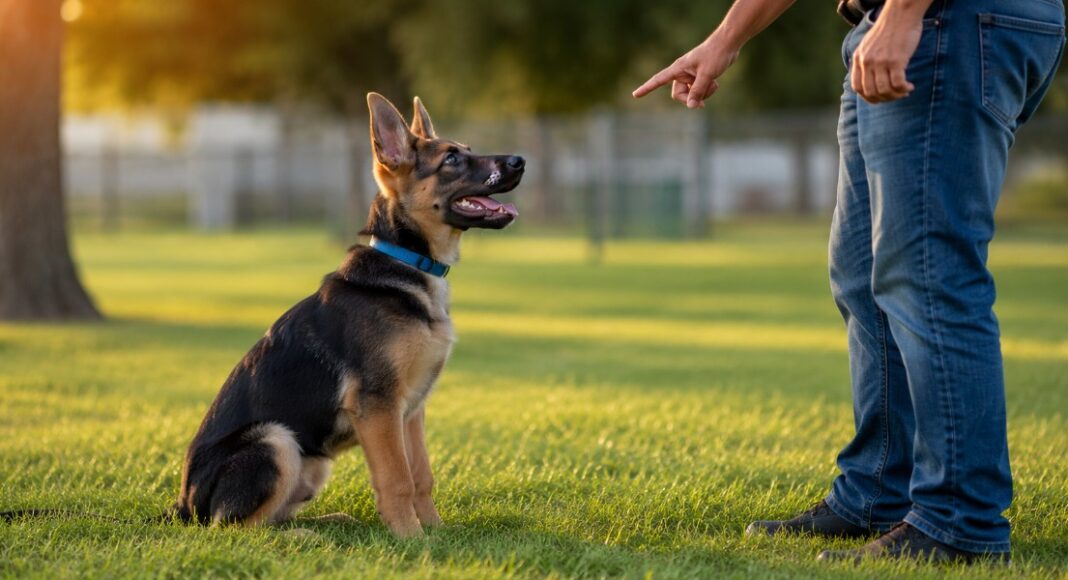
A six-month-old puppy should recognize its name and usually look toward the person who says it.
The puppy’s name should gain attention rather than function as a reprimand. Owners can say the name once, reward eye contact and then give a separate cue such as “come,” “sit” or “leave it.”
Repeatedly shouting the name during unwanted behavior may teach the puppy to ignore it or associate it with frustration.
Learning a Reliable “Sit”
“Sit” is often one of the first useful behaviors a puppy learns because it can be incorporated into daily routines.
By six months, a puppy should be able to sit in a quiet room and begin responding in mildly distracting environments. Owners can ask for a sit before serving meals, opening doors, attaching a leash or beginning play.
This helps develop impulse control without expecting a young dog to remain perfectly still around every distraction.
Families seeking a more organized training routine may use the Dog Trainer Bible while building a consistent vocabulary and practice schedule for everyone in the household.
Beginning “Down” and “Stay”
Most puppies can begin learning to lie down on cue before six months. A short stay can also be introduced once the puppy understands sit or down.
At this stage, success may mean remaining in position for only a few seconds while the owner stands nearby. Time, distance and distractions should be increased separately and gradually.
Owners should use a clear release word, such as “free” or “all done,” so the puppy understands when the exercise has ended.
Coming When Called
A puppy should enjoy moving toward its owner after hearing a recall cue such as “come.”
By six months, recall should be practiced frequently in the house, inside a fenced yard and on a long training line. Owners should reward the puppy generously for returning, even when the response is slower than expected.
The puppy should not be trusted off leash in an unsecured area simply because recall works at home. Exciting smells, wildlife, traffic, people and other dogs can overwhelm a young dog’s developing self-control.
Calling the puppy only for unpleasant events—such as ending play, taking away an object or receiving medication—can weaken the response.
Understanding “Leave It” and “Drop It”
“Leave it” teaches a puppy not to approach or pick up an item. “Drop it” asks the puppy to release something already in its mouth.
These cues can protect puppies from medications, discarded food, household chemicals and other dangerous objects.
Owners should practice through trades rather than chasing the puppy or forcibly pulling objects from its mouth. Offering a treat or appropriate toy can teach the puppy that releasing an item does not always mean losing everything enjoyable.
Walking on a Leash Without Constant Pulling
A six-month-old puppy may not walk perfectly beside its owner, but it should be learning that a loose leash allows the walk to continue.
Training can begin in a quiet room, driveway or yard before moving to busier areas. Rewarding the puppy for checking in and remaining near the handler helps make the desired position worthwhile.
Short, successful walks are generally more productive than long outings filled with pulling, overstimulation and repeated corrections.
Owners should choose exercise appropriate for the puppy’s breed, size and physical development. Questions about running, repetitive jumping or other strenuous activity should be discussed with a veterinarian.
Making Steady Housetraining Progress
By six months, many puppies can be trusted to eliminate outdoors most of the time when owners maintain a consistent routine. Occasional accidents may still happen, especially after changes in feeding, activity, supervision or schedule.
Puppies should be taken outside after waking, eating, drinking heavily, playing and spending time in confinement. Calm praise or a reward immediately after outdoor elimination helps clarify the expected behavior.
Punishing an accident after it occurs does not teach the puppy where to go. It may instead teach the animal to hide elimination from people.
A puppy that urinates unusually often, suddenly loses housetraining progress or appears uncomfortable should be examined by a veterinarian because a medical problem may contribute to the behavior.
Resting Comfortably in a Crate or Safe Area
By six months, a puppy should be developing the ability to relax for short periods in a crate, pen or puppy-proofed room.
Confinement should be introduced gradually and associated with rest, treats, meals or safe chew items. A crate should not be used as punishment or as an all-day storage space for an active young dog.
The puppy should learn to enter willingly and settle without constant attention. The amount of time it can remain comfortably confined depends on age, housetraining progress, temperament and previous training.
Spending Short Periods Alone
Puppies should gradually learn that separation from family members is safe and temporary.
By six months, the puppy should have experience remaining alone for manageable periods without being followed by someone from room to room all day.
Owners can begin with brief departures while the puppy has a safe activity, then return before distress escalates. The goal is calm independence—not allowing the puppy to panic until it becomes quiet from exhaustion.
Persistent howling, frantic escape attempts, drooling, self-injury or destruction near doors may indicate more than ordinary puppy protest. A veterinarian or qualified behavior professional should evaluate severe separation-related distress.
Using Appropriate Chew Toys
Many puppies are still teething near six months and may have a strong desire to chew.
The puppy should be learning which objects are available for chewing and which are off limits. Owners can prevent mistakes by limiting unsupervised freedom, keeping tempting items out of reach and providing safe alternatives.
When the puppy selects an appropriate toy, attention and praise can reinforce the decision.
The step-by-step training guidance in the Dog Trainer Bible may help owners coordinate chewing, impulse-control and household-manners exercises instead of addressing each problem only after it occurs.
Controlling Mouthing During Play
Puppies explore with their mouths, but by six months they should be making progress toward gentler play with people.
If teeth contact skin or clothing, owners can pause the interaction and redirect the puppy to a toy. Play can resume when the puppy is calmer.
Rough handling, physical punishment and games that encourage grabbing hands may increase excitement or create fear. Current veterinary behavior guidance recommends reward-based training rather than methods that rely on pain, intimidation or emotional distress.
Greeting People With Four Paws Down
A six-month-old puppy may still jump when excited, but it should be learning that calm behavior earns attention.
Family members and visitors should avoid rewarding jumping with petting, laughter or prolonged conversation. Attention can begin when the puppy’s paws return to the floor or after it performs a familiar sit.
Consistency matters. Jumping becomes difficult to eliminate when some people discourage it while others invite the puppy onto their bodies.
Settling While the Household Is Busy
Puppies need more than active obedience exercises. They should also learn how to relax when nothing exciting is happening.
Owners can reward the puppy for resting quietly on a mat or bed while the family eats, watches television or welcomes a visitor.
A “place” or “bed” cue can eventually give the puppy a predictable location during meals, deliveries and other household activity. At six months, the puppy may remain there only briefly, but the foundation should be developing.
Accepting Routine Handling
A puppy should be learning to tolerate gentle examination of its ears, paws, mouth, coat and body.
Handling practice can make grooming, nail care and veterinary visits less stressful. Sessions should remain brief and positive, with rewards provided before the puppy becomes overwhelmed.
Owners should not force a frightened puppy to endure prolonged restraint merely to prove that handling is required. Progress is usually better when the exercise is divided into small steps.
Riding Calmly in a Vehicle
By six months, puppies should have some experience traveling safely in a secured crate or appropriate restraint.
Vehicle practice can begin with sitting in a parked car, followed by brief trips that do not always end at the veterinary clinic. Pleasant destinations can help prevent the vehicle from predicting only stressful experiences.
A loose puppy should not be allowed to move around the vehicle, distract the driver or ride unsecured in an open truck bed.
Building Confidence Around Everyday Life
Socialization does not mean forcing a puppy to greet every person or play with every dog.
The goal is to help the puppy remain calm and recover appropriately around different people, clothing, sounds, surfaces, vehicles, animals and environments.
The most sensitive socialization period occurs early in puppyhood, but positive exposure should continue beyond that stage. Experiences should be controlled and matched to the puppy’s comfort level rather than overwhelming it in crowded or chaotic settings.
Behaving Appropriately Around Other Dogs
A six-month-old puppy does not need to play with every dog it encounters.
It should begin learning to notice other dogs without pulling, barking or demanding interaction every time. Calm observation can be more valuable than uncontrolled play.
Meetings should involve healthy, appropriately vaccinated dogs with suitable temperaments. Owners should interrupt play when either animal becomes overwhelmed, repeatedly attempts to escape or cannot take a break.
Dog parks are not required for socialization and may be unsuitable for puppies that are fearful, physically vulnerable or easily overstimulated.
Recovering From Mild Surprises
A well-supported puppy may startle at a dropped object, unfamiliar sound or unexpected movement. The important milestone is not complete fearlessness but the ability to recover.
Owners can create distance, offer rewards and allow the puppy to investigate voluntarily. Dragging the animal toward something frightening may make the fear stronger.
A puppy that repeatedly freezes, hides, growls or attempts to escape in ordinary situations may need help from a veterinarian or qualified reward-based trainer.
Following the Same Household Rules
By six months, the puppy should encounter consistent expectations from everyone in the home.
Family members should use the same cues for coming, sitting, getting off furniture and releasing objects. They should also agree on feeding, jumping, doorway and furniture rules.
Mixed signals can slow progress. A puppy cannot reliably learn not to beg, jump or climb on furniture when the behavior is rewarded by one person and discouraged by another.
Training Sessions Should Remain Short
Young dogs often learn best through several brief sessions rather than one long lesson.
Owners can practice during normal routines by asking for a sit before meals, a recall across the room or a short stay before opening a door.
Ending while the puppy is still engaged helps preserve enthusiasm. Rewards can include food, play, praise, access to the yard or another activity the puppy values.
The Dog Trainer Bible resource can provide a shared structure for families, but progress still depends on daily repetition, realistic expectations and consistent reinforcement.
Temporary Regression Can Be Normal
Around six months, many puppies begin showing adolescent behavior. A previously attentive puppy may become more interested in the environment, test familiar boundaries or appear to forget well-practiced lessons.
This does not necessarily mean the earlier training failed.
Owners should reduce distractions, return to easier versions of the exercises and reward successful responses. Increasing punishment because the puppy appears defiant can damage trust without addressing the developmental reason for the behavior.
When Professional Help Is Needed
Owners should seek qualified assistance when a puppy displays aggression, intense guarding, persistent fear, severe separation distress or repeated behavior that creates a safety risk.
A veterinarian should first rule out pain, illness or another medical contributor. A credentialed trainer or veterinary behavior professional can then develop a suitable behavior plan.
Six months is not a deadline after which learning ends. It is simply a useful checkpoint.
A puppy with a foundation in communication, social confidence, household routines and humane training is better prepared for adolescence—even when the next stage brings new challenges.