

Shop in Seagoville may earn a small commission when readers make a purchase through links in this article, at no additional cost to the buyer.
Teaching a dog to come when called is one of the most important lessons an owner can provide.
A reliable recall can prevent a dog from running into traffic, approaching an unfamiliar animal or wandering too far from home. It also gives dogs more freedom to explore safely when they are in an appropriate, secure environment.
Recall training requires more than repeatedly shouting “come.” Owners must teach their dogs that responding quickly is rewarding, enjoyable and worth abandoning whatever has captured their attention.
Begin in a Quiet Environment
Training should begin inside the home or in another enclosed area with very few distractions.
Choose one recall word, such as “come” or “here,” and make sure everyone in the household uses the same cue. Constantly changing words can make the lesson unnecessarily confusing.
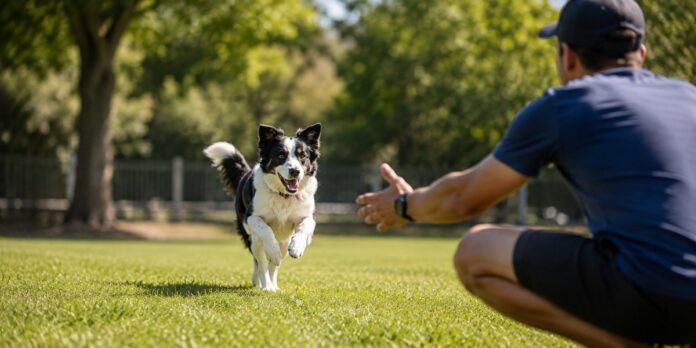
Stand only a few feet from the dog. Say the dog’s name once, followed by the recall cue in a cheerful voice. Move backward a few steps, encourage the dog to follow and reward the dog immediately upon arrival.
The reward can be a small treat, praise, a favorite toy or a brief game. During the early stages, however, food is often the easiest reward to deliver quickly and consistently.
Owners who prefer a structured progression can use the recall exercises in the Dog Trainer Bible to organize short training sessions while gradually increasing the difficulty.
Make Coming to You Worthwhile
Recall asks a dog to stop doing something interesting and return to the owner. The reward must be valuable enough to compete with sniffing, playing, exploring or watching another animal.
Ordinary dry dog food may be sufficient inside a quiet room. More challenging environments may require small pieces of chicken, cheese or another veterinarian-approved treat the dog especially enjoys.
Some dogs are more motivated by toys or play. A quick game of tug, the chance to chase a ball or permission to return to play can be more valuable than food for those dogs.
Owners should reward the dog immediately after it arrives. Delayed rewards make it harder for the dog to understand which behavior earned the benefit.
Teach the Dog to Stay With You
Coming close is not enough if the dog immediately turns and runs away again.
When the dog arrives, gently touch or hold its collar before providing the reward. This teaches the dog to remain nearby and accept being secured.
Some dogs are uncomfortable when a person reaches toward their neck. Practice collar handling separately by touching the collar, offering a treat and releasing it. Gradually progress to gently holding the collar for a few seconds.
The goal is to create a positive association with being caught, not to surprise or frighten the dog.
Increase Distance Gradually
Once the dog responds consistently from a few feet away, begin increasing the distance.
Practice from across the room, from a hallway and eventually from another room. Family members can take turns calling the dog between them, rewarding each successful response.
Games can make recall practice more interesting. An owner can briefly hide in another room and call the dog or run several steps away so the dog is encouraged to follow.
Only one person should call the dog at a time. Several people using different cues simultaneously can confuse the dog and weaken its response.
Introduce Distractions One at a Time
A dog that responds perfectly in the kitchen may appear to forget everything when training moves outside.
This does not necessarily mean the dog is stubborn. Outdoor environments contain smells, movement, sounds, people and animals that can be far more interesting than the owner.
Begin with mild distractions, such as a toy on the floor or another family member walking through the room. Call the dog from a short distance and provide a particularly valuable reward for responding.
Owners can then move into a securely fenced yard before practicing in more stimulating locations. The Dog Trainer Bible can provide additional training ideas for owners who need help advancing from indoor practice to real-world distractions.
Increase only one challenge at a time. Do not add greater distance, a new location and several distractions during the same session.
When the dog struggles, return to an easier exercise instead of repeating the cue more loudly.
Use a Long Training Line Outdoors
A dog should not be allowed to roam freely in an unsecured area while recall is still being developed.
A long training line attached to a securely fitted harness gives the dog room to explore while allowing the owner to maintain control. The line should be used in an open area where it is unlikely to become wrapped around people, trees or other objects.
Allow the dog to move away, use the recall cue and reward the dog when it returns. The line serves as a safety measure, not as a tool for forcefully dragging the dog back.
Owners should continue following local leash requirements even after the dog’s recall improves. No dog can be expected to respond perfectly in every possible situation.
Do Not Repeat the Cue Continuously
One of the most common mistakes is calling “come” repeatedly while the dog continues ignoring the owner.
Repeating the word can teach the dog that the first call does not matter. It may also turn the cue into background noise.
Use the cue once. When the dog does not respond, reduce the distraction, shorten the distance or calmly go and collect the dog.
Owners who have repeated the same word unsuccessfully for months may need to introduce a new recall cue and begin training again from the beginning.
Never Punish a Dog for Coming Back
A dog should never be scolded after responding to a recall cue, even when it took too long to return.
The dog associates the owner’s reaction with the most recent behavior—coming back. Punishment can teach the dog that approaching the owner leads to an unpleasant result.
Remain positive, secure the dog and reward the return. The owner can then adjust future training so the dog is not placed in a situation that exceeds its current ability.
Recall should also be avoided immediately before something the dog dislikes, such as a bath, nail trimming or the end of every play session. Walk over and collect the dog instead of using the recall cue for an unpleasant task.
Do Not End the Fun Every Time
Dogs quickly notice patterns.
When “come” always means the leash is attached and the trip to the park is over, the dog may become reluctant to return. Practice calling the dog during enjoyable activities, rewarding the response and releasing the dog to continue playing.
This teaches the dog that returning does not always end the fun.
Owners can also use access to the environment as a reward. The dog comes, receives praise and a treat, and then hears a release word that allows it to resume exploring.
Keep Training Sessions Brief
Recall training should be practiced regularly, but sessions do not need to be long.
Several successful repetitions lasting three to five minutes are often more productive than one extended session that causes the dog to become bored or frustrated.
End while the dog remains interested. A step-by-step program such as the Dog Trainer Bible can help families track progress without advancing to difficult environments before the dog is ready.
Practice in different rooms, yards and safe public locations. Dogs do not always understand that a cue learned in one place has the same meaning everywhere else.
Recognize When Professional Help Is Needed
Some dogs struggle with recall because of fear, extreme excitement, a strong desire to chase or previous negative training experiences.
Owners should consult a qualified reward-based trainer or veterinary behavior professional when the dog repeatedly runs away, becomes fearful during training or shows aggression toward people or animals.
Dogs experiencing sudden behavioral changes should also be evaluated by a veterinarian. Pain, illness, hearing loss and other medical concerns can affect a dog’s ability or willingness to respond.
Reliability Develops Through Repetition
A dependable recall is built through many successful experiences.
Owners should start in an easy environment, use rewards the dog genuinely values and increase distractions slowly. The dog should learn that returning to its owner is always safe and frequently leads to something enjoyable.
Even a well-trained dog should remain leashed near roads, livestock or other serious hazards. Recall training reduces risk, but it does not replace responsible supervision.
With patience and consistent practice, “come” can become more than an obedience command. It can become a dependable safety skill that gives both the dog and its owner greater confidence.