

Shop in Seagoville may earn a small commission when readers make a purchase through links in this article, at no additional cost to the buyer.
A self-sufficient garden does not require several acres, expensive equipment or a large suburban yard. Many households can begin producing fresh vegetables, herbs and fruit by using patios, balconies, driveways, side yards and other small outdoor spaces more efficiently.
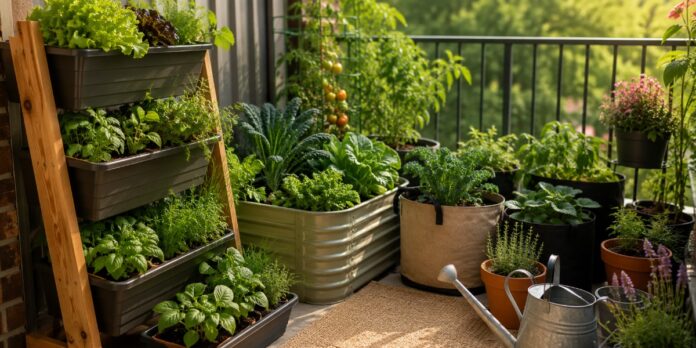
The goal is not to grow every item a family eats. A practical small-space garden focuses on crops that produce well, cost more at the grocery store or are used frequently in the kitchen. Containers, grow bags, vertical supports and compact raised beds can turn an overlooked corner of a property into a productive food-growing area.

Begin With the Space You Already Have
Before purchasing containers or seeds, observe the available space for several days. Most vegetables need at least six hours of direct sunlight, although leafy greens and some herbs may tolerate less.
Patios, balconies and small yards can contain areas with very different growing conditions. One section may receive strong morning sunlight, while another becomes extremely hot in the afternoon. Walls and fences can reflect additional heat, and covered patios may remain too shaded for fruiting vegetables.
Measure the space and identify nearby access to water. A garden located close to a faucet is easier to maintain than one requiring a long hose or repeated trips with a watering can.
Renters should also consider portability. Containers and grow bags can be moved without permanently changing the property, making them useful for people who expect to relocate.

Use Containers for Flexible Food Production
Containers are among the easiest ways to begin gardening in a limited area. They can be placed on patios, steps, balconies or along sunny walls, and they allow gardeners to control the soil more easily than traditional in-ground beds.
Tomatoes, peppers, eggplant, lettuce, radishes, carrots, green onions and many herbs can grow successfully in containers. The container must be large enough for the mature plant, not simply the seedling purchased at a garden center.
Tomatoes and other large plants generally need deep containers with room for extensive roots. Herbs, lettuce and green onions can grow in smaller pots or rectangular planters. Containers should always include drainage holes so excess water can escape.
Dark containers may heat quickly in direct summer sunlight. Placing them where they receive morning sun and some afternoon protection can reduce stress during hot weather.

Gardeners who want to connect small-space food production with other practical household skills may find the Homesteaders Handbook useful for developing a broader plan that includes gardening, food preservation and gradual self-sufficiency.
Consider Grow Bags for Patios and Driveways
Grow bags are lightweight fabric containers designed to hold soil while allowing air to reach the root zone. They are available in several sizes and can be used for vegetables, herbs, potatoes and small fruiting plants.
Because grow bags are portable, they can be repositioned as sunlight patterns change. A gardener may move plants closer to a wall during cool weather or provide more afternoon shade during the hottest months.
Grow bags also store more easily than many traditional pots. At the end of the season, they can be emptied, cleaned, folded and placed in a garage or storage area.

The main challenge is moisture. Fabric containers can dry out faster than raised beds or plastic pots, particularly during hot, windy weather. Gardeners should check them regularly and may need to water daily during extreme summer conditions.
Placing grow bags in shallow trays can help protect a patio surface, but water should not remain around the base long enough to cause root problems.
Build a Compact Raised Bed
A raised bed does not have to occupy a large portion of the yard. A narrow bed measuring only a few feet wide can produce a useful amount of food when plants are spaced carefully.
Compact raised beds work well along fences, beside patios or in small sections of a side yard. They can be built from untreated lumber, metal panels, masonry blocks or prefabricated kits designed for limited spaces.
Beds should be narrow enough for the gardener to reach the center without stepping on the soil. Walking inside the bed compacts the growing area and can reduce drainage and root development.

A raised bed offers more soil volume than most containers, which means it may retain moisture longer and support a wider range of crops. Gardeners can plant vegetables in close groups rather than traditional long rows, provided each plant still receives adequate light and airflow.
Turn the Patio Into an Edible Garden
A patio garden can combine food production with an attractive outdoor living area. Instead of lining up mismatched pots, gardeners can group containers by height, color or purpose.
Tall plants such as tomatoes or trellised beans can form the background. Medium-sized containers can hold peppers, Swiss chard or compact eggplant varieties. Smaller pots can contain basil, parsley, thyme, chives and other herbs.
Hanging baskets can be used for strawberries, trailing herbs or small tomato varieties. Railing planters may support lettuce, spinach and shallow-rooted herbs when the location receives enough sunlight.
Grouping containers can also make watering more efficient. However, plants should not be crowded so tightly that air cannot circulate between them.

Grow Upward Instead of Outward
Vertical gardening is one of the most effective ways to increase production in a small area. Trellises, cages, stakes and wall-mounted supports allow plants to use vertical space that would otherwise remain empty.
Pole beans, cucumbers, peas and some squash varieties can be trained upward. Indeterminate tomatoes also need strong support as they continue growing throughout the season.
A trellis can be installed inside a raised bed, secured to a large container or positioned against a fence. Gardeners should make sure the structure can withstand wind and the weight of mature plants.
Vertical growth can improve airflow, reduce contact between fruit and damp soil, and make harvesting easier. It may also create shade for lettuce or other cool-season crops planted below.
Choose Crops That Produce More in Less Space
Not every vegetable is equally practical for a compact garden. Corn, pumpkins and large sprawling melons may use considerable space for a relatively limited harvest. Small-space gardeners often receive better results from crops that produce repeatedly.

Leaf lettuce can be harvested one layer at a time, allowing the plant to continue growing. Pole beans, cucumbers, cherry tomatoes and peppers may produce over several weeks when harvested regularly. Herbs can be clipped repeatedly and used fresh, dried or frozen.
Radishes and green onions mature quickly and can be planted between slower-growing vegetables. Dwarf and patio varieties are specifically bred for containers and compact growing areas.
Gardeners should prioritize foods their household actually uses. A productive crop offers little benefit when no one enjoys eating it.
Improve the Soil From the Beginning
Garden soil should not be placed directly into containers because it may become compacted and drain poorly. Use a quality potting mix designed for containers, or create a blend that remains loose while holding enough moisture for plant roots.
Raised beds can be filled with a combination of topsoil, compost and other organic materials suited to vegetable production. Compost improves soil structure and gradually adds nutrients.

Container plants may need more frequent fertilization because nutrients can wash away during watering. Gardeners should follow product directions carefully and avoid assuming that more fertilizer will produce faster growth. Excess fertilizer can damage roots and reduce fruit production.
Adding mulch to the surface of containers and raised beds can help slow evaporation, reduce weeds and protect the soil from intense sunlight.
Create a Simple Watering System
Small gardens can still require regular attention, especially when crops are growing in containers. A watering can may be sufficient for a few pots, but a larger patio garden may benefit from drip irrigation or a simple timer.
Drip lines deliver water near the soil instead of spraying leaves and surrounding pavement. This reduces waste and helps keep moisture focused around the roots.
Self-watering containers are another option for gardeners who cannot check plants several times a day. These containers include a reservoir that allows the soil to draw water as needed.

Gardeners should still inspect plants regularly. Automatic systems can become blocked, disconnected or improperly adjusted.
Plant in Stages Instead of All at Once
A small garden becomes more productive when planting is spread across the season. Rather than planting an entire package of lettuce or radish seeds on one day, gardeners can sow a small amount every one or two weeks.
This process, known as succession planting, provides a steadier harvest and reduces the likelihood that too much produce will mature at the same time.
Once a crop finishes, the space can be replanted. Spring lettuce may be replaced with peppers or beans, while declining summer plants can make room for fall greens, carrots or radishes.
The Homesteaders Handbook can offer additional guidance for households that want to build on these early gardening efforts and gradually add skills such as composting, seed saving and preserving seasonal harvests.

Start Small and Expand With Experience
A first garden does not need 20 containers and several raised beds. Beginning with three or four productive crops gives new gardeners time to learn how quickly the soil dries, which areas receive the best sunlight and which vegetables perform well in the available space.
A simple starting garden might include one tomato plant, two pepper plants, a container of herbs and a rectangular planter for lettuce or green onions. Additional containers can be added as confidence and experience grow.
Keeping brief notes about planting dates, harvests, pests and weather conditions can improve future results. Small-space gardening becomes more efficient when homeowners repeat what worked and replace what did not.
Self-sufficiency is not measured only by the size of the property or the amount of food produced. It begins when households use the resources they have, learn practical skills and become less dependent on purchasing every item they consume.
With thoughtful crop selection and efficient use of containers, grow bags, patios and compact raised beds, even a modest outdoor space can become a reliable source of fresh food.