

Shop in Seagoville may earn a small commission when readers make a purchase through links in this article, at no additional cost to the buyer.
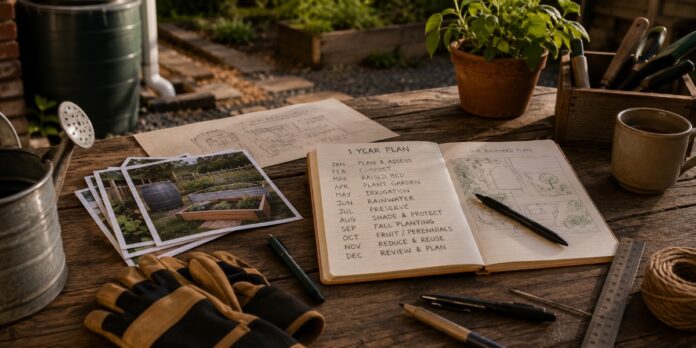
Building a more self-sufficient backyard does not require a large property, expensive equipment or an immediate transformation. Most households can make meaningful progress by completing one manageable project each month and allowing the results of one improvement to support the next.
A one-year plan helps families spread expenses across the calendar instead of purchasing everything at once. It also gives homeowners time to learn what works in their space before adding more complicated systems.
The goal is not complete independence from grocery stores or public utilities. A realistic backyard plan can help produce some food, reduce household waste, conserve water and create useful skills that become more valuable over time.
January: Study the Property and Set Priorities
The first month should focus on observation rather than construction.
Create a simple map of the backyard and mark areas that receive full sun, partial shade and little direct light. Note where rainwater collects, where the soil dries quickly and which parts of the yard are used by children, pets or vehicles.
Choose three priorities for the year. These might include growing vegetables, improving the soil, collecting rainwater, composting kitchen scraps or planting fruit trees.
Set a monthly spending limit before purchasing supplies. Even a modest budget can produce steady progress when projects are completed in the right order.
Affordable project: Draw a backyard plan using paper, a measuring tape and photographs of the property.
February: Start Composting
Compost can improve soil while reducing the amount of organic material placed in household trash.
A basic composting system may be made from a purchased bin, wooden pallets, wire fencing or a covered container with ventilation holes. Families can add fruit and vegetable scraps, coffee grounds, dry leaves, untreated grass clippings and small amounts of shredded cardboard.
Meat, dairy products, grease and pet waste should generally remain out of a basic backyard compost pile because they may attract pests or create odors.
Beginning with a simple system allows the household to develop the habit before investing in larger equipment.
Affordable project: Build or purchase one small compost container and place a covered collection bowl in the kitchen.
March: Create the First Growing Bed
New gardeners often make the mistake of building more garden space than they can maintain. One raised bed or small in-ground plot is enough for the first season.
Choose a location with suitable sunlight and convenient access to water. Improve the area with compost and quality soil rather than purchasing large amounts of decorative material.
A four-foot-wide bed is generally easier to reach from both sides without stepping on the soil. The length can be adjusted to match the space and budget.
Households interested in expanding their skills can find additional ideas in The Self-Sufficient Backyard.
Affordable project: Prepare one compact bed using reclaimed lumber, concrete blocks or an existing section of the yard when appropriate.
April: Plant a Small, Useful Garden
The best first garden is not necessarily the one with the greatest variety. It is the one that produces food the household will actually eat.
Select a few dependable crops instead of buying every seed packet available. Herbs, leafy greens, peppers, tomatoes, beans and other common garden plants may be good options depending on the local climate and planting season.
Families should check regional planting guidance before choosing varieties. Heat, frost dates and soil conditions can affect when different crops should be planted.
Keep a notebook showing planting dates, varieties and results. These records will make the second year more productive.
Affordable project: Plant three to five crops and use seeds where practical to reduce costs.
May: Improve Watering Efficiency
Consistent watering is one of the most important parts of maintaining a productive garden. It can also become expensive and time-consuming when water is applied inefficiently.
Add mulch around plants to reduce evaporation and suppress weeds. Leaves, untreated grass clippings, straw or wood chips may be used when they are appropriate for the crop and free from chemicals or disease.
A basic soaker hose or drip system can deliver water closer to plant roots than overhead watering. Timers may be added later if the budget allows.
Watering early in the day can also reduce loss from evaporation and give plant leaves time to dry.
Affordable project: Mulch the growing bed and install one soaker hose.
June: Add a Rainwater Collection System
A rain barrel can collect water from a roof downspout for use on ornamental plants and, when handled appropriately, in parts of the garden.
The container should have a secure cover to keep out debris, animals and mosquitoes. It should also include an overflow route that directs excess water away from the home’s foundation.
Local rules, roof materials and intended uses should be reviewed before installing a system. Collected rainwater should not automatically be treated as drinking water.
Families can begin with one barrel and expand later after learning how quickly it fills and how the water will be used.
Affordable project: Install one covered rain barrel beneath a suitable downspout.
July: Preserve a Small Portion of the Harvest
Preservation helps extend the value of a successful garden, but beginners do not need to purchase a large collection of specialized equipment.
Start by freezing herbs, vegetables or prepared ingredients that the family already uses. Some produce can also be dried or refrigerated for later meals.
Home canning requires tested recipes, correct equipment and careful food-safety procedures. Families interested in canning should learn from reliable preservation guidance rather than improvising processing times or methods.
The first objective is to prevent a small harvest from going to waste.
Affordable project: Freeze one type of garden produce in meal-sized portions and label it with the date.
August: Build Shade and Heat Protection
In hot climates, summer conditions can damage plants and make garden work difficult.
A simple shade cloth, trellis or temporary frame can protect vulnerable crops during the hottest part of the day. Organic mulch should be replenished if it has broken down or shifted.
This is also a useful month to review which plants handled the heat successfully. Varieties that performed well may be worth planting again next year.
Gardeners should avoid spending heavily to rescue plants that are poorly suited to the location. Learning what not to grow can be just as valuable as a successful harvest.
Affordable project: Add a small removable shade structure over the most heat-sensitive growing area.
September: Plant for Another Season
A productive backyard does not have to close after summer. Depending on local conditions, fall may provide another opportunity to grow vegetables, herbs or cover crops.
Remove exhausted plants, add finished compost and prepare the soil for the next planting period. Choose crops suited to shorter days and changing temperatures.
Cover crops may also help protect bare soil and add organic matter, even when the family does not plan to harvest food from that section.
Another practical guide for planning garden systems, food production and resource use is The Self-Sufficient Backyard.
Affordable project: Replant one existing bed instead of building a new one.
October: Add One Long-Term Food Plant
Annual vegetables can provide quick results, but perennial plants may produce for several years after they become established.
Consider adding one fruit tree, berry plant, grapevine or perennial herb that fits the available space and climate. Before purchasing, research the plant’s mature size, sunlight needs and pollination requirements.
A small urban yard may be better suited to a compact fruit-tree variety or container-grown plant than a full-size tree.
Buying one well-chosen plant is usually more financially manageable than creating an entire orchard at once.
Affordable project: Plant one perennial food-producing plant and protect it with mulch.
November: Reduce Waste and Reuse Materials
Self-sufficiency also involves making better use of materials already available.
Review household waste for items that can serve another purpose. Food-safe buckets may become planters, untreated wood may be used for garden structures and fallen leaves may become mulch or compost material.
Avoid reusing containers that held hazardous chemicals, and do not place painted, pressure-treated or unknown lumber where it may affect garden soil.
This is also a good time to organize tools, clean containers and store supplies for the next growing season.
Affordable project: Create a designated storage area for reusable garden materials and repair one damaged tool.
December: Measure Progress and Plan the Second Year
The final month should be used to evaluate the entire system.
Review how much food was harvested, which projects reduced expenses and which improvements required more time than expected. Record what failed as well as what succeeded.
Families should also calculate the total amount spent during the year. A project may still be worthwhile even if it did not immediately save money, especially if it produced reusable infrastructure, practical experience or healthier food.
Choose the next year’s priorities based on actual results. Possible expansions may include another growing bed, a larger compost system, additional rainwater storage, food-preservation equipment or a small greenhouse.
Affordable project: Complete a written year-end review and select no more than three major goals for the next year.
Build Slowly and Use Each Project
A backyard becomes more self-sufficient through connected systems rather than isolated purchases. Compost improves the garden. The garden produces food. Rainwater supports plants. Preservation extends the harvest. Reused materials reduce the cost of future improvements.
Each project should solve a real household need before another one is added. A large garden that is not maintained, an unused rain barrel or expensive equipment stored in a shed does not increase self-sufficiency.
One useful improvement each month can create a productive foundation without overwhelming the family budget. By the end of the year, the backyard may not provide everything the household needs, but it can produce more, waste less and give family members greater confidence in their ability to care for their own space.