

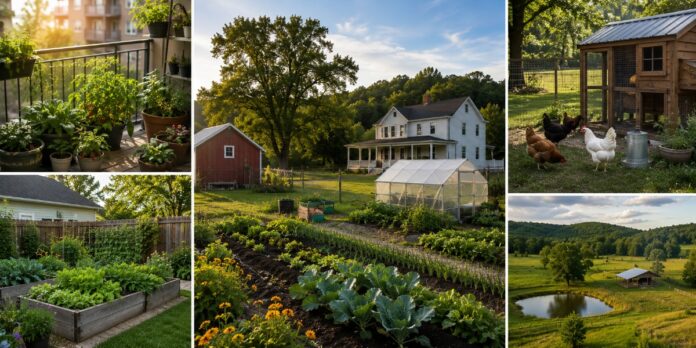
Living more self-sufficiently does not require buying a farm or moving far outside the city. Families can produce food, reduce waste, preserve supplies and become less dependent on last-minute purchases in apartments, suburban neighborhoods and rural properties.
The amount of land a household needs depends on its goals. Growing herbs for the kitchen requires very little space. Producing most of a family’s vegetables takes more room, sunlight and water. Raising livestock, growing staple crops or maintaining an orchard requires substantially more land, equipment and daily labor.
For most households, the best approach is to begin with the space they already have and expand only after learning which projects fit their budget, schedule and property.
Apartments: Self-Sufficiency Without a Yard
Apartment residents may not have access to traditional garden space, but they can still build useful household skills.
A sunny balcony, patio or windowsill can support containers filled with herbs, lettuce, peppers, tomatoes or strawberries. Microgreens and sprouts can also be grown indoors with limited space, although proper sanitation and moisture control are important.
Apartment-based self-sufficiency can also include:
- Cooking more meals from basic ingredients
- Learning to bake bread or make simple pantry staples
- Freezing or dehydrating seasonal produce
- Maintaining an emergency food and water supply
- Repairing clothing and household items
- Reducing food waste through careful meal planning
- Participating in a community garden
The greatest limitation is usually not acreage but access to sunlight, storage and outdoor water. Apartment residents should also check lease requirements before placing containers, shelving or water-collection systems on balconies.
Families interested in practical ways to use limited outdoor space can explore The Self-Sufficient Backyard, which focuses on producing more from the property available.
Small Yards: Concentrate on High-Value Projects
A small suburban yard can support more food production than many homeowners expect. The key is to prioritize projects that produce useful results without consuming the entire property.
Raised beds, vertical trellises and containers can help make efficient use of limited space. Families may grow vegetables that are frequently used or relatively expensive at the grocery store, including tomatoes, peppers, leafy greens, herbs and cucumbers.
A small yard may also have room for:
- A compact composting system
- Dwarf or patio fruit trees
- Berry bushes
- A small greenhouse or cold frame
- Rain barrels where permitted
- Pollinator-friendly plants
- Backyard chickens where local ordinances allow them
Homeowners should evaluate how many hours of direct sunlight different parts of the yard receive before building garden beds. Vegetable gardens generally perform best in the sunniest available location, while some herbs and leafy crops can tolerate partial shade.
The goal does not have to be producing every item the family eats. Replacing even a small portion of grocery purchases with homegrown food can provide savings, experience and greater control over how food is produced.
Quarter-Acre Properties: Room for an Integrated System
A quarter-acre property can provide enough space for several self-sufficiency projects when the house, driveway and required setbacks do not occupy most of the lot.
Families may be able to combine an intensive vegetable garden with fruit trees, composting, food storage and small livestock. A carefully planned property could include separate areas for annual crops, perennial plants, outdoor work and recreation.
Possible quarter-acre projects include:
- Multiple raised or in-ground garden beds
- Several dwarf or semi-dwarf fruit trees
- Grapes, berries or other perennial crops
- A chicken coop and enclosed run where permitted
- Compost bins or a worm-composting system
- A small greenhouse
- Rainwater collection for landscape use, subject to local rules
- Space for preserving, drying or storing harvested food
A property of this size may produce a meaningful amount of vegetables, herbs, eggs and fruit, but results depend heavily on soil quality, climate, water availability and the amount of time the household can devote to maintenance.
Readers looking for broader guidance on planning and operating a productive property can review The Homesteaders Handbook.
Larger Homesteads: More Options and More Responsibility
Properties larger than one acre may offer room for projects that are difficult or impossible on a standard residential lot. Depending on zoning, soil, water and infrastructure, a larger homestead may support livestock, orchards, staple crops, workshops, ponds or woodlots.
Additional acreage can create opportunities for:
- Goats, sheep or other grazing animals
- Larger poultry operations
- Full-size fruit and nut trees
- Corn, beans, potatoes or other space-intensive crops
- Rotational grazing
- Hay or forage production
- Farm buildings and equipment storage
- Larger composting systems
- Firewood production
- Expanded rainwater or irrigation systems
However, additional land does not automatically create greater self-sufficiency. Larger properties usually require more fencing, tools, maintenance, fuel and physical labor. Livestock must be fed, watered and protected every day, including during vacations, severe weather and illness.
Before purchasing acreage, prospective homesteaders should investigate property taxes, deed restrictions, flood risk, water access, septic requirements, road conditions and local rules governing animals and agricultural structures.
Land Quality Matters More Than the Number of Acres
Two properties of the same size may have very different levels of usefulness. A smaller lot with fertile soil, reliable water and full sunlight may be more productive than several acres with poor drainage, heavy shade or limited access.
Important considerations include:
Sunlight: Food gardens and fruit trees need adequate light to produce well.
Water: A dependable and affordable water source is essential, particularly during hot summers.
Soil: Compacted, rocky or contaminated soil may require raised beds, imported soil or extensive improvement.
Drainage: Low areas that remain wet can damage crops, structures and animal enclosures.
Local rules: City ordinances, county regulations, homeowners associations and deed restrictions may limit livestock, fencing, accessory buildings or water systems.
Time: A household with a small, well-maintained garden may produce more than one attempting to manage an oversized property without enough labor.
Begin With One Manageable Project
Families should avoid trying to install a garden, orchard, chicken coop, greenhouse and composting system at the same time. Each project has its own expenses, maintenance requirements and learning curve.
A more realistic first-year plan might include one garden bed, several containers or a basic compost bin. After completing a full season, the household can decide whether to expand.
The Self-Sufficient Backyard may help homeowners consider ways to organize food production and other systems within a residential property. Those planning a broader move toward homesteading can also consult The Homesteaders Handbook.
The right amount of land is not necessarily the largest property a family can afford. It is the amount of space the household can use responsibly, maintain consistently and adapt to its long-term goals. Self-sufficiency begins with practical skills and steady progress—not a particular number of acres.
Article tags: