Shop in Seagoville may earn a small commission when readers make a purchase through links in this article, at no additional cost to the buyer.
The doorbell rings, your dog bolts across the room, and suddenly you are trying to open the door while keeping an excited pet from jumping on a guest or slipping outside.
That routine does not have to become a permanent part of having visitors. The most effective approach is to teach your dog what to do when someone arrives instead of concentrating only on stopping unwanted behavior.
The American Veterinary Society of Animal Behavior recommends reward-based training for teaching dogs new behaviors and addressing behavior problems. Owners looking for additional at-home training guidance can also explore the Dog Trainer Bible.
Give Your Dog Somewhere Else to Go
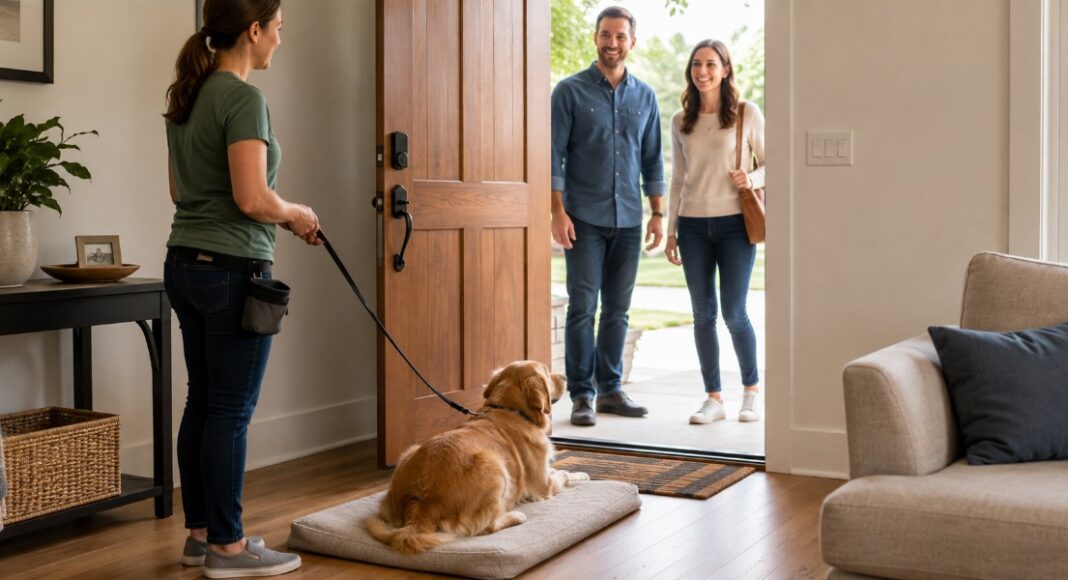
One of the most useful door-manners exercises is teaching a “place” or “go to your spot” cue.
Choose a dog bed, mat, crate or other designated area away from the front door. Begin training when nobody is visiting and the house is calm.
Guide your dog to the location and immediately reward them for stepping onto it. Gradually build toward having the dog sit or lie down and remain there until given a release cue.
Both the American Kennel Club and ASPCA recommend teaching an alternate behavior such as going to a bed or designated spot when someone comes to the door.
Practice Before Real Guests Arrive
Do not wait until the delivery driver is knocking or relatives are walking up the driveway to begin training.
Once your dog understands the place cue, practice the arrival routine under controlled conditions. Have a family member or friend knock on the door or ring the bell while you send the dog to the designated spot and reward calm behavior.
Start with easy repetitions. You might simply touch the doorknob, reward the dog for staying put and then repeat.
Progress to opening the door slightly, opening it completely and eventually having a helper enter the home.
The ASPCA recommends building difficulty gradually and conducting practice visits before expecting a dog to handle unpredictable real-world visitors successfully.
Make the Doorbell Part of the Training
The doorbell itself can eventually become a signal for your dog to head toward the designated location rather than sprint toward the entrance.
Practice with a helper or a recorded doorbell sound. When the sound occurs, direct the dog to the mat or bed and provide a high-value reward.
Repeated practice can help create a new routine: bell rings, dog goes to place, reward follows.
The AKC specifically recommends practicing this association so dogs learn an alternative to rushing toward an opening door.
For owners building several household-manners skills at once, the Dog Trainer Bible is another training resource that can be used alongside regular practice.
Use a Barrier While the Dog Is Learning
Training takes time, so management remains important.
If your dog is likely to charge through an open doorway, use a baby gate, closed interior door, crate or leash to prevent access to the entrance when visitors are expected.
The AKC recommends leashes or physical barriers for dogs prone to door darting, particularly while new door manners are still being learned.
Management is not a training failure. It prevents the dog from repeatedly practicing the exact behavior you are trying to change.
Control the Greeting
Once the guest is inside, your dog does not have to greet that person immediately.
Allow the visitor to enter and settle before releasing the dog from the designated spot. For particularly enthusiastic dogs, keeping a leash attached during the first few minutes can provide additional control.
Ask guests not to reward jumping, frantic circling or other overexcited behavior with immediate attention. Calm behavior should be what earns access to greetings, petting and interaction.
Dogs tend to repeat behaviors that successfully produce something they want, including human attention. Rewarding four paws on the floor rather than jumping can help establish clearer greeting manners.
Keep Training Sessions Short
A few successful repetitions are more useful than continuing until everyone becomes frustrated.
Practice when the dog is calm, use rewards the dog values and increase distractions gradually.
If your dog repeatedly leaves the mat or cannot respond to a familiar cue, make the exercise easier rather than escalating corrections.
The goal is to build a predictable habit, not to test how long the dog can resist temptation.
Avoid Punishment at the Door
Yelling, leash corrections or physical punishment may suppress behavior temporarily without teaching the dog the response you actually want.
Current guidance from the American Veterinary Society of Animal Behavior recommends reward-based methods and advises against aversive training techniques.
Instead, reward the behaviors you want to see: moving away from the entrance, settling on a mat, maintaining a stay and greeting visitors calmly.
Know When the Problem Is More Serious
An excited dog racing to greet visitors is different from a dog that is frightened or aggressive around unfamiliar people.
If your dog growls, snaps, lunges or shows other aggressive behavior toward guests, prioritize separation and safety rather than forcing an introduction.
A qualified dog-training or behavior professional can evaluate the situation and develop an appropriate plan. The ASPCA also recommends professional assistance when owners need help teaching visitor-related behavior skills.
For families interested in continuing basic obedience and household-manners work between training sessions, the Dog Trainer Bible provides an additional resource to consider.