

Shop in Seagoville may earn a small commission when readers make a purchase through links in this article, at no additional cost to the buyer.
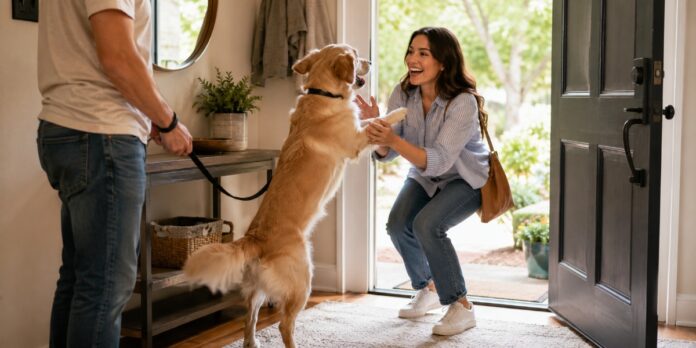
A dog racing toward the front door may be excited to welcome a visitor, but that enthusiastic greeting can quickly become uncomfortable or unsafe. A large dog can knock someone off balance, while even a smaller dog may scratch legs, damage clothing or frighten a guest.
Jumping is not usually an attempt to misbehave. Dogs commonly jump because it brings them closer to a person’s face and reliably earns attention. Talking to the dog, touching its paws or pushing it away may unintentionally reward the behavior because the dog still receives the interaction it wanted.
The solution is not simply telling the dog what it should stop doing. Owners should teach a clear alternative greeting and make sure polite behavior earns the attention that jumping once produced.
Choose a Better Way to Say Hello
Before training begins, the household should decide what the dog should do when someone arrives. Appropriate alternatives may include:
- Standing with all four paws on the floor
- Sitting beside the owner
- Waiting calmly on a designated mat or bed
The rule should be simple enough for every family member and visitor to follow. A dog cannot simultaneously sit and jump, making a trained sit one practical alternative. However, some excited dogs may find it easier initially to remain standing with four paws on the floor.
Readers seeking more structured at-home training ideas can review the Dog Trainer Bible while developing a greeting routine that matches their household.
Reward Four Paws on the Floor
Begin practicing with a family member or cooperative friend rather than waiting for an unexpected visitor.
Keep the dog on a comfortable leash and ask the helper to approach slowly. Before the dog jumps, mark the desired behavior with calm praise and place a small treat on the floor. Delivering the reward low helps keep the dog’s head and body directed toward the ground.
The helper may greet or pet the dog only while all four paws remain down. If the dog jumps, the helper should immediately turn away or calmly step back. The greeting resumes as soon as the dog’s paws return to the floor.
Timing matters. The reward should arrive while the dog is performing the desired behavior—not several seconds later. Dogs are more likely to repeat actions that produce an immediate and predictable reward.
At first, rewards may need to be frequent. As the dog becomes more dependable, food rewards can gradually become less frequent while praise, petting and access to the visitor continue to reinforce the polite greeting.
Practice Before Real Visitors Arrive
Doorway training is easier when it is separated into small steps.
Practice walking toward the door, touching the doorknob, opening the door slightly and welcoming a helper inside. Reward the dog at each stage for remaining calm. If excitement becomes too intense, make the exercise easier by increasing the distance from the door or shortening the greeting.
Owners may also teach the dog to go to a mat when the doorbell rings. The mat should first be introduced in a quiet setting, with the dog rewarded for approaching it, standing on it and eventually remaining there. Once the behavior is reliable, owners can begin adding door sounds and practice visitors.
A leash, baby gate or closed interior door can prevent the dog from rehearsing unwanted behavior while training continues. Management is not a substitute for teaching, but it helps keep visitors safe and prevents repeated jumping from becoming even more established.
Consistency Is Essential
Jumping will be difficult to eliminate if one person discourages it while another person allows it. Every household member should follow the same greeting rule.
That means the dog should not be allowed to jump when someone is wearing casual clothes but corrected when a guest arrives in nicer clothing. The rules should also apply when the owner returns home, when relatives visit and when the dog encounters familiar people outside.
Visitors should receive simple instructions before entering:
“Please ignore the dog until all four paws are on the floor.”
They should avoid eye contact, conversation and touching while the dog is jumping. Once the dog settles, they can provide calm attention. If the dog jumps again, the attention stops again.
This clear pattern teaches the dog that jumping makes the greeting disappear, while standing or sitting politely makes people come closer. Consistency across different people and situations is one of the most important parts of the process.
Additional exercises from the Dog Trainer Bible may help families establish shared cues and practice routines without changing the rules from one person to another.
Keep Greetings Calm
Excited voices, rapid petting and energetic movements can make self-control harder for a dog that is still learning. Owners and guests should enter quietly and keep their initial interactions calm.
The goal is not to prevent the dog from enjoying visitors. It is to teach the dog that access to people comes through controlled behavior.
Short practice sessions are usually more productive than one long session. Several successful repetitions followed by a break can help prevent frustration for both the dog and the people involved.
Avoid Physical Corrections
Kneeing a dog in the chest, stepping on its paws, shouting, jerking the leash or using painful training equipment may create fear, anxiety or conflict without clearly teaching an appropriate greeting.
The American Veterinary Society of Animal Behavior recommends reward-based methods for dog training and behavior modification. Its guidance emphasizes arranging the environment for success, reinforcing desirable responses and teaching the animal what to do instead of relying on punishment.
Owners working on polite greetings can use resources such as the Dog Trainer Bible alongside patient, reward-based practice and clear household rules.
Know When to Seek Professional Help
Some dogs display more than ordinary excitement at the door. Growling, snapping, intense barking, guarding the entrance, severe fear or an inability to settle may require individualized assistance.
Owners should prevent direct access to visitors and consult a veterinarian, veterinary behaviorist or qualified reward-based trainer when a dog’s behavior creates a safety concern. Visitors should never be used as test subjects when there is a realistic risk of injury.
Teaching polite greetings takes repetition, but the lesson is straightforward: jumping does not produce attention, while four paws on the floor opens the door to praise, treats and friendly interaction.
With one greeting rule, cooperative visitors and consistent rewards, an enthusiastic dog can learn to welcome people without overwhelming them.