

Shop in Seagoville may earn a small commission when readers make a purchase through links in this article, at no additional cost to the buyer.
A dog racing through the house with a shoe, child’s toy or food wrapper may look playful, but the situation can become dangerous when the object could cause choking, poisoning or an intestinal blockage.
Teaching a dependable “drop it” cue gives owners a safer way to recover objects without chasing, yelling or wrestling with their dog. The goal is not to overpower the animal. It is to teach the dog that releasing an item leads to something worthwhile.
Owners interested in developing additional obedience skills can also explore the Dog Trainer Bible as a supplemental training resource.
Why Chasing Usually Makes the Problem Worse
Running after a dog may unintentionally turn the incident into a game of keep-away. Some dogs quickly discover that picking up a forbidden object earns immediate attention and starts an exciting chase.
A dog may also swallow the object when a person approaches quickly or attempts to take it. Forcing open the dog’s mouth can increase the danger of a bite and may contribute to defensive behavior around valued possessions.
Instead, remain calm, avoid cornering the dog and offer an exchange that is more appealing than the object already in its mouth.
Understand “Drop It” and “Leave It”
The two cues serve different purposes.
“Leave it” tells a dog not to pick up or approach an item. “Drop it” is used after the dog already has something in its mouth.
Both skills are valuable, but “drop it” is especially important when an owner does not notice a discarded object, unsafe food or household item until the dog has already grabbed it.
Begin With an Easy Practice Item
Training should begin during a calm period, not during an emergency.
Choose a toy the dog enjoys but does not guard intensely. Avoid starting with a favorite chew, food bowl or highly prized possession. The first lesson should be easy enough for the dog to succeed.
Prepare several small, high-value treats. The reward should be more attractive to the dog than the practice toy.
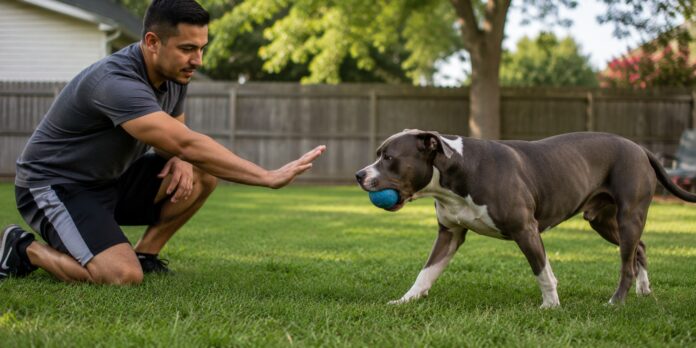
Allow the dog to hold or play with the toy for a few seconds. Then place a treat near its nose. Most dogs will open their mouths to take the food, causing the toy to fall.
The instant the toy is released, calmly praise the dog with a consistent marker such as “yes.” Give the treat immediately.
This reward-based exchange is the foundation of the behavior. Veterinary behavior guidance recommends beginning with a lower-value object and offering something more valuable in return.
Do Not Add the Words Too Early
Owners sometimes repeat “drop it” before the dog understands what the phrase means. That can teach the dog that the words are unimportant.
During the first several repetitions, focus only on creating the behavior. Present the treat, wait for the dog to release the toy, mark the moment and provide the reward.
Once the dog is releasing the toy predictably, say “drop it” immediately before presenting the treat.
After additional successful repetitions, say the cue and pause briefly before showing the reward. The dog should begin releasing the toy after hearing the words rather than waiting to see food.
Readers looking for a broader step-by-step training system may review the Dog Trainer Bible.
Return the Toy During Practice
When the practice object is safe, give it back after the dog receives the treat.
Returning the toy helps teach that surrendering an item does not always mean losing it permanently. The dog receives food and gets another opportunity to play, making cooperation more rewarding than running away.
This step applies only to safe training objects. Never return medication, toxic food, sharp material or another hazardous item.
Gradually Increase the Challenge
Once the dog responds reliably with an ordinary toy, practice with several different safe objects.
Training can also take place in different rooms, in the yard and during walks. Begin each new setting with limited distractions before progressing to more difficult situations.
Owners can practice during fetch by asking for the ball to be released before throwing it again. During tug, stop moving the toy, give the cue and reward the release by restarting the game.
Keep sessions brief. Several successful repetitions are more productive than continuing until the dog becomes frustrated, distracted or overstimulated.
Stop Showing the Treat Before Every Response
Food is helpful when teaching the behavior, but the dog should eventually respond without seeing it first.
Once the cue is reliable, keep treats in a pocket rather than holding them in front of the dog. Ask for the release, praise the response and then produce the reward.
Rewards can later include food, another toy, resumed play or permission to continue an enjoyable activity. Continue rewarding the behavior often enough to preserve a strong response.
The Dog Trainer Bible may provide owners with additional ideas for building consistent household training routines.
What to Do When the Object Is Unsafe
When a dog has something dangerous, remain as calm as possible and avoid turning the situation into a chase.
Use the trained cue and offer an unusually valuable reward. Tossing several treats a short distance away may move the dog from the object long enough for an adult to retrieve it safely.
Do not practice emergency scenarios with actual dangerous items.
When a dog has swallowed medication, toxic food, chemicals or another potentially poisonous substance, contact a veterinarian, emergency animal hospital or animal poison-control service immediately. Owners should not wait for symptoms to appear before seeking professional guidance.
Swallowed socks, toys, bones, packaging and other foreign objects can also create potentially life-threatening digestive obstructions. Veterinary advice should be obtained promptly when ingestion is suspected.
Watch for Resource Guarding
Some dogs stiffen, growl, freeze, show their teeth or snap when a person approaches an object. These behaviors may indicate resource guarding rather than ordinary playfulness.
Do not punish the warning or attempt to prove control by forcibly removing the item. That approach can place family members at risk and may intensify the dog’s defensive response.
Families dealing with guarding or aggressive behavior should consult a veterinarian, veterinary behaviorist or qualified reward-based trainer before attempting object-exchange exercises.
Consistency Builds a Safer Response
A reliable “drop it” cue is created through repeated, positive experiences.
When releasing an object consistently produces praise, food or renewed play, the dog has less reason to run away or guard what it finds. With calm practice, the cue can become an everyday household skill—and an important safeguard during an emergency.