Shop in Seagoville may earn a small commission when readers make a purchase through links in this article, at no additional cost to the buyer.
North Texas households can face severe thunderstorms, damaging winds, hail, tornadoes, flash flooding, extreme heat and occasional winter weather. These emergencies may interrupt electricity, cellular service, transportation and access to essential supplies. Preparing before warnings are issued can help families respond calmly and protect children, older adults, pets and household members with medical needs.
A useful emergency plan does not need to be complicated or expensive. It should explain how family members will communicate, where they will go, what they will take and how they will manage if the power remains out for an extended period.
Create a Family Communication Plan
Begin by choosing an out-of-town relative or trusted friend who can serve as the family’s central contact. Every household member should have that person’s name and telephone number saved in a phone and written on a paper contact card.
Families should also select a meeting place near the home and another location outside the neighborhood in case they cannot safely return. Parents should review school and child-care emergency procedures and determine who is authorized to pick up each child.
During a widespread emergency, text messages may go through when phone calls do not. Families should create a group text, practice sending a brief safety update and make sure children know how to contact the designated adult.
Assemble Essential Household Supplies
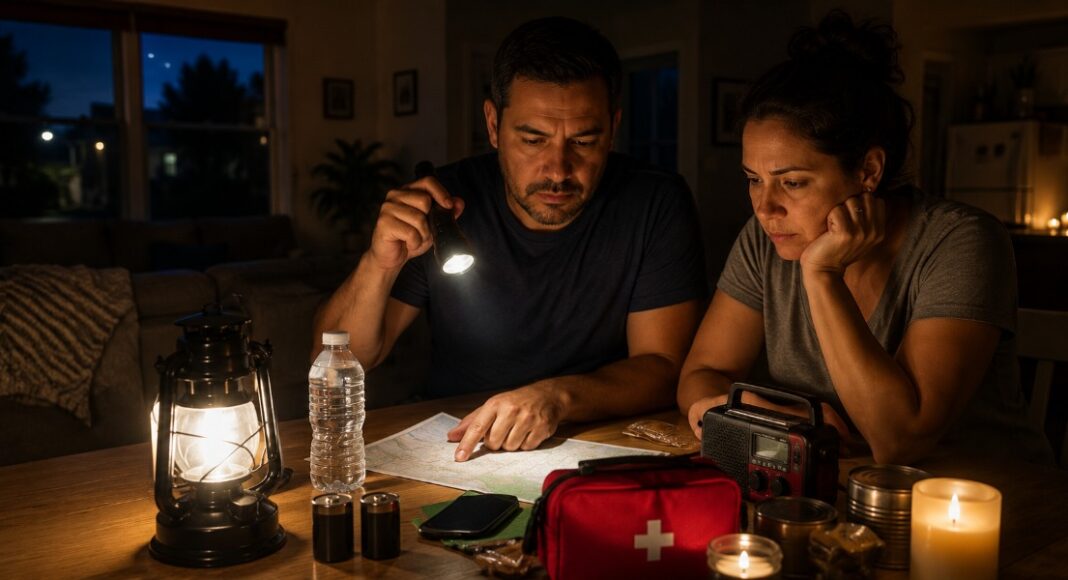
An emergency supply kit should contain items the household may need while sheltering at home or leaving quickly. Texas Ready recommends preparing food, water and essential supplies for family members and pets. FEMA advises keeping enough supplies to remain self-sufficient for several days.
A basic household kit may include:
- Drinking water and nonperishable food
- Manual can opener
- Flashlights and extra batteries
- Battery-powered or hand-crank radio
- First-aid supplies
- Prescription and over-the-counter medications
- Personal hygiene products
- Face masks, work gloves and sturdy shoes
- Copies of identification, insurance information and important records
- Cash in small denominations
- Infant, disability or senior-care supplies
- Pet food, water, carriers and leashes
Store supplies in an accessible location and keep a smaller portable kit in each vehicle. Check expiration dates, batteries and seasonal clothing at least twice a year.
Prepare Medication and Medical Information
Every household should maintain an updated medication list containing each person’s prescriptions, dosages, allergies, medical conditions, doctor information and preferred pharmacy. Keep a printed copy in the emergency kit and a protected digital copy that can be accessed from another device.
People who use refrigerated medications or electrically powered medical equipment should speak with their doctor, pharmacist or equipment provider before an outage occurs. The plan should identify how medications will remain at a safe temperature and where the person can go if a nebulizer, oxygen concentrator, ventilator or other essential device loses power.
Identify a Safe Place During Extreme Heat
A summer outage can quickly make a home dangerously hot. Families should identify an air-conditioned backup location before an emergency, such as the home of a relative or another public location announced by local officials. Transportation arrangements should be made in advance for anyone who does not drive.
During an outage, residents should drink fluids, use cool baths or wet cloths and move to an air-conditioned location when necessary. Older adults, infants, pregnant women and people with chronic medical conditions may need assistance relocating before indoor temperatures become unsafe.
Include Pets in Every Decision
Pet owners should determine where their animals can stay if the family must evacuate. Keep carriers, leashes, food, water, medications, vaccination records and a recent photograph of each pet with the emergency supplies.
A trusted neighbor or nearby relative can serve as a backup caregiver when owners are away from home. Updated identification tags and microchips may also help reunite separated pets with their families.
Prepare Backup Charging Options
Keep phones fully charged when severe weather is expected. Each household should have at least one charged power bank, the correct charging cables and a vehicle charger. A battery-powered radio provides another way to receive information when internet or cellular service is unreliable.
Portable generators must never be operated inside a house, garage, shed, basement, porch or carport. Federal safety guidance calls for placing portable generators outside, at least 20 feet from the home, with the exhaust directed away from doors, windows and vents. Homes should also have working carbon-monoxide alarms with battery backup.
Practice the Plan Before It Is Needed
An emergency plan is most effective when every family member understands it. Review the plan together, practice reaching the meeting location and assign responsibilities such as collecting medications, helping children, securing pets or contacting relatives.
Update the plan whenever telephone numbers, medications, schools, caregivers or household needs change. A few hours of preparation can prevent confusion when North Texas weather disrupts normal routines and families must make important decisions quickly.