

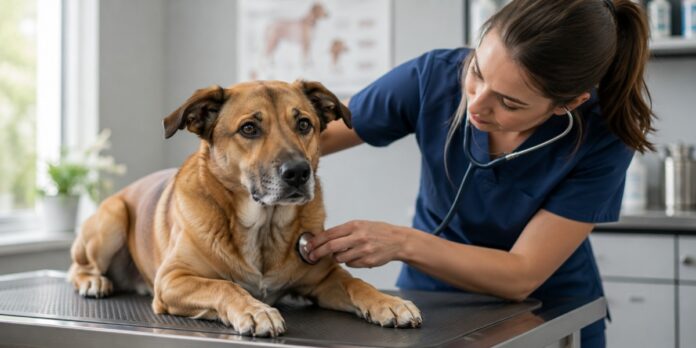
Dogs cannot explain when something hurts. Owners must rely on changes in behavior, appetite, movement and appearance to recognize possible health problems.
Not every unusual behavior is an emergency, but certain symptoms should not be ignored.
Difficulty Breathing
Labored breathing, repeated gasping, blue or unusually pale gums and severe breathing distress require immediate veterinary attention.
Heavy panting may occur after exercise or during hot weather, but panting that seems extreme or occurs without an obvious reason should be evaluated.
Repeated Vomiting or Diarrhea
A single mild stomach upset may not always indicate a serious problem. Repeated vomiting, ongoing diarrhea, blood, weakness or an inability to keep water down can lead to dehydration and may signal a more serious condition.
Puppies, senior dogs and small dogs may become dehydrated more quickly.
Sudden Loss of Appetite
Some dogs occasionally skip a meal. However, refusal to eat combined with lethargy, pain, vomiting or other symptoms deserves attention.
A noticeable change in drinking habits can also be important. Excessive thirst or very limited water intake may indicate a health concern.
Trouble Urinating
Straining, crying, producing only small amounts of urine or being unable to urinate can be urgent.
Blood in the urine, frequent accidents or repeated attempts to urinate should also be reported to a veterinarian.
Swollen or Painful Abdomen
A rapidly enlarged abdomen, repeated unsuccessful attempts to vomit, restlessness or obvious abdominal pain can signal a life-threatening emergency.
Owners should not wait to see whether severe abdominal symptoms improve on their own.
Collapse, Seizures or Severe Weakness
Collapse, loss of consciousness, repeated seizures or inability to stand requires immediate help.
During a seizure, move dangerous objects away from the dog and avoid placing hands near its mouth. Contact a veterinarian as soon as possible.
Sudden Behavior Changes
Pain and illness can cause a friendly dog to become withdrawn, irritable or unusually aggressive.
Confusion, pacing, hiding, crying and inability to settle may also indicate discomfort.
Behavior changes are especially important when they appear suddenly.
Limping or Difficulty Moving
Minor soreness may improve with rest, but severe limping, visible injury, swelling or refusal to place weight on a limb should be evaluated.
Dragging a leg, losing balance or being unable to rise may require urgent care.
Eye Injuries
Squinting, cloudiness, swelling, discharge or keeping an eye closed should not be ignored. Eye problems can worsen quickly and may threaten vision.
Possible Poisoning
Contact a veterinarian immediately when a dog may have eaten medication, chemicals, toxic food, poisonous plants or another dangerous substance.
Do not induce vomiting unless specifically instructed by a veterinary professional.
Owners know their dogs’ normal habits better than anyone. When behavior or appearance changes noticeably, it is reasonable to contact a veterinary clinic for guidance.
Early care can prevent a manageable problem from becoming more serious.