

Shop in Seagoville may earn a small commission when readers make a purchase through links in this article, at no additional cost to the buyer. Shop in Seagoville only recommend products we believe will provide value to our readers.
Most owners teach sit first. Sit is useful and easy and satisfying to teach.
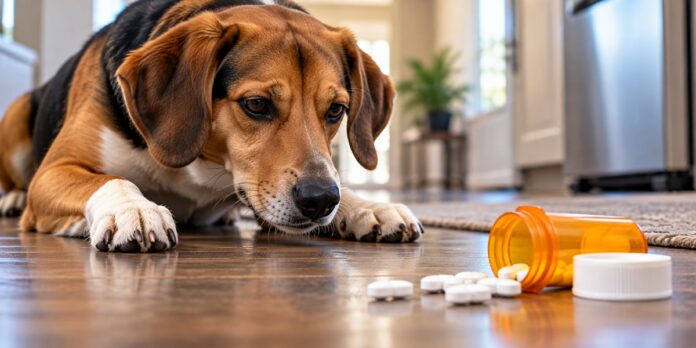
“Leave it” is the command that actually prevents emergencies. It is the difference between a dropped pill on the kitchen floor and a trip to the emergency clinic.
What the Command Does
“Leave it” asks a dog to disengage from something before he takes it. It is a preventive cue rather than a corrective one.
“Drop it” handles what is already in the mouth. “Leave it” stops the sequence earlier, which is why it is the safer of the two skills.
Where It Matters Most
Dropped medication is one of the most common household poisoning risks for dogs. So are chocolate and grapes and products containing xylitol.
Outdoors the list grows. Chicken bones and discarded food and dead wildlife and unfamiliar plants all appear on ordinary walks. A dog who reliably disengages on cue avoids most of it.
Teaching the Foundation
Start with a low value item in a quiet room. Place a treat in a closed fist and let the dog investigate.
Wait. The moment the dog backs off or looks away, mark it and reward from your other hand. The reward never comes from the item you asked the dog to leave.
Adding the Word
Once the dog reliably backs off, add the cue just before you present the item. The word predicts the behavior rather than describing it after the fact.
Say it once and stay quiet. Repeated cues teach the dog that the first one does not count.
Raising the Difficulty
Move to an open hand and then to the floor. Cover the item with your foot at first if needed.
Then increase value gradually. A biscuit is easier to leave than a piece of steak. Structured programs such as the Dog Trainer Bible sequence these steps so the dog succeeds at each level before moving on.
Taking It Outside
Practice on a leash in the yard before you try a sidewalk. Real environments contain items you did not plan for.
Reward generously in public. The value of what you offer needs to beat the value of what the dog found.
Never Punish the Investigation
Scolding a dog for approaching an item teaches him to grab faster next time. Speed is a rational response to a dog who expects the item to be taken away.
The whole system works because disengaging pays better than grabbing. That trade has to stay honest every single time, and the Dog Trainer Bible is direct about why punishment undermines this specific skill.
Practice Before You Need It
A command practiced only in emergencies is not a command. Work it into ordinary days a few times a week.
Thirty seconds of practice during a walk keeps the behavior sharp. That small habit is the kind of maintenance the Dog Trainer Bible builds into its weekly plan, and it is the reason the cue works when it counts.