

Shop in Seagoville may earn a small commission when readers make a purchase through links in this article, at no additional cost to the buyer.
A narrow side yard may appear too small, shaded or inconvenient for gardening, but a carefully planned strip of ground can produce herbs, salad greens and vegetables throughout much of the year.
The key is to work with the area’s actual sunlight, preserve a usable walkway and select growing systems that make use of vertical space. A productive side-yard garden does not need to contain dozens of plants. It needs the right plants arranged where they can receive adequate light, water and attention.
Measure the Sun Before Building Anything
The first step is to observe the side yard at several points during the day.
Walls, fences, rooflines and neighboring homes can create changing patterns of light. A location that appears sunny in the morning may be shaded by early afternoon, while another section may receive intense late-day heat.
Most fruiting vegetables, including tomatoes, peppers, cucumbers and beans, perform best with at least six hours of direct sunlight. Areas receiving approximately four to six hours may still support leafy greens, several herbs and some cool-season crops.
A side yard that receives less than three hours of direct sunlight will offer fewer food-growing options. Gardeners should avoid forcing sun-loving crops into deep shade and expecting normal production.
Create a simple map showing which sections receive morning sun, afternoon sun and the longest period of direct light. Place the most demanding vegetables in the brightest section.
Preserve Access Through the Yard
A garden should not block access to gates, air-conditioning equipment, utility meters, exterior faucets or trash containers.
Measure the width of the side yard and determine how much space must remain open for walking, carrying tools and moving equipment. Avoid creating beds that require people to step into the growing soil, which compacts the soil and can damage roots.
A narrow bed placed along one fence or wall often works better than beds on both sides of a tight passage. Containers may also be placed at wider points while the narrowest section remains open.
Before digging deeply or driving trellis posts into the ground, property owners should make sure they know where buried utilities and irrigation lines are located.
The garden should not interfere with the home’s drainage pattern. Water must continue moving away from the foundation rather than collecting against the house or inside a raised bed.
Select a Growing System That Fits the Space
Side-yard gardens generally work best with one or more of three systems: narrow raised beds, containers or vertical planters.
A raised bed can provide better drainage and usable soil where the existing ground is compacted or difficult to cultivate. The bed should be narrow enough that every plant can be reached from the walkway without stepping inside it.
Containers offer greater flexibility. They can be moved to follow seasonal light, replaced individually and arranged around permanent features. Pots should have drainage holes and enough depth to support the roots of the selected crop.
Wall-mounted planters and tiered stands can hold shallow-rooted herbs or greens, but they must be installed securely. Gardeners should also consider whether watering them will stain a wall, damage siding or create constantly wet areas near the foundation.
Readers developing a larger self-reliance plan can use the Homesteaders Handbook for additional ideas about organizing food production and other practical household systems.
Match Crops to the Available Light
Plant selection determines whether the side yard becomes productive or frustrating.
The sunniest locations can be used for compact tomatoes, peppers, bush beans, cucumbers and other crops that flower and produce fruit. Look for patio, bush, dwarf or determinate varieties when purchasing seeds or transplants.
Partially shaded areas are better suited to lettuce, spinach, Swiss chard, kale and other leafy vegetables. Parsley, chives and some other herbs may also tolerate less light than tomatoes or peppers, although most herbs still grow more vigorously with substantial sunlight.
Basil generally belongs in one of the brighter sections. Mint can be productive in a container, but it should usually be kept separate because it can spread aggressively when planted directly in a bed.
Avoid planting more than the household will use. Two healthy pepper plants may be more useful than eight crowded plants competing for sunlight, water and nutrients.
Use Vertical Space for Climbing Crops
The fence line provides an opportunity to grow upward instead of allowing vines to spread across the walkway.
Pole beans, peas and cucumbers can be trained onto trellises. Tomatoes may be supported with sturdy cages, stakes or vertical systems selected for the plant’s mature size.
A freestanding trellis can be positioned near a fence without requiring vines to grow directly into the fence. This makes pruning, harvesting and seasonal cleanup easier.
Install supports before young plants begin producing long vines. Adding a trellis after the plants have spread can damage stems and roots.
Position tall crops carefully so they do not shade shorter plants for most of the day. In many layouts, tall plants belong along the north or west side of the growing area, although the best placement depends on the direction of the home and the side yard’s existing shadows.
Use Containers to Solve Soil Problems
Side yards near newer homes may contain compacted soil, construction debris or areas that drain poorly. Containers allow gardeners to bypass those conditions.
Use a commercial potting mix intended for containers rather than filling pots with heavy soil taken directly from the yard. Potting mixes are designed to hold moisture while still allowing excess water to drain.
Match the container to the crop. Herbs and lettuce can grow in relatively shallow planters, while tomatoes, peppers and root vegetables need more soil volume.
Small containers dry quickly during hot weather. Larger pots generally hold moisture longer and provide more room for roots, but they can become extremely heavy once filled and watered. Place them in their permanent locations before planting.
Install an Efficient Watering System
Side yards can become hotter and drier than the open backyard because walls and fences reflect heat.
Drip irrigation or carefully placed emitters can deliver water near the roots without wetting the entire passage. A simple timer can make watering more consistent, especially during hot and dry periods.
Containers may need to be checked more frequently than raised beds because their limited soil volume can dry rapidly. Watering needs will change with the weather, plant size and container material.
Check the soil rather than watering solely because the calendar says it is time. Soil should remain appropriately moist without becoming constantly saturated.
A layer of organic mulch can slow moisture loss, moderate soil temperature and reduce weed growth. Keep mulch from being piled against plant stems.
Plant for Repeated Harvests
A small garden becomes more productive when plants are selected for repeated use.
Leaf lettuce, chard and many herbs can be harvested a little at a time. Bush beans and peppers may continue producing over an extended period when mature crops are collected regularly.
Gardeners can also practice succession planting. When one crop finishes, remove it and plant another suited to the coming season. A container used for spring lettuce might hold basil during warm weather and return to greens when cooler conditions arrive.
The goal is to avoid leaving valuable growing space empty for months.
Families interested in developing a broader backyard food system can find planning ideas in The Self-Sufficient Backyard, including ways to connect gardening with other practical self-sufficiency projects.
Create a Practical Side-Yard Layout
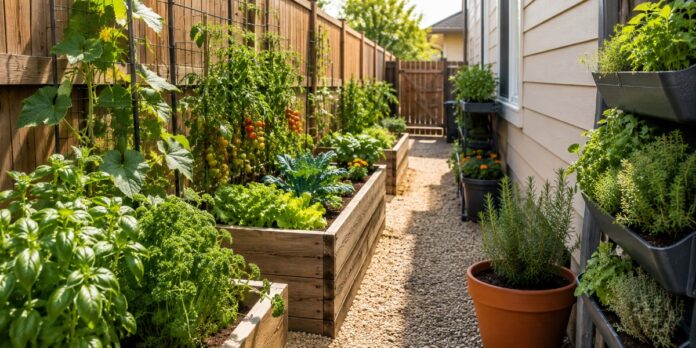
A simple layout might include a narrow raised bed along the sunniest fence, a freestanding trellis at one end and several herb containers near the kitchen door.
The raised bed could hold peppers, chard and compact tomatoes. Cucumbers or pole beans could climb the trellis, while pots could contain parsley, basil, chives and mint.
Maintain a clear path through the center. Place the plants needing the most frequent harvesting where they are easiest to reach.
Avoid packing every available inch with containers. Plants need adequate airflow, and the gardener still needs room to water, prune, inspect and harvest them.
Start With a Manageable Section
Transforming the entire side yard at once can lead to unnecessary expense and more maintenance than expected.
Begin with one bed, one trellis and a few containers. Observe which plants perform well, where water collects and how the sunlight changes during the growing season.
The following year, expand only where the first section succeeded.
A productive food garden is not defined by its size. Even a narrow strip can provide fresh herbs, salad ingredients and vegetables when every part of the space has a clear purpose.