

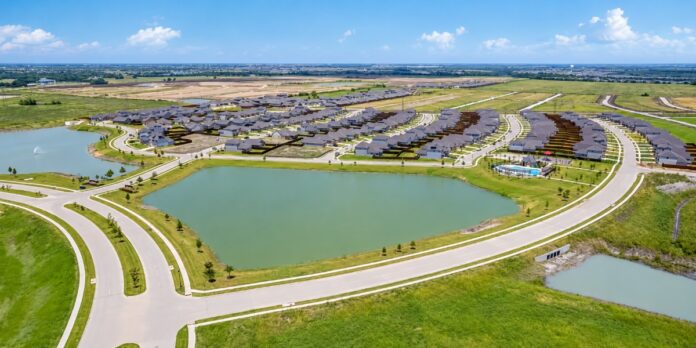
Crandall’s published district budgets set aside $315,500 for administration in 2026–27, while bond documents identify additional firms involved in financing development.
CRANDALL — Property owners paying assessments in Crandall’s public improvement districts help finance more than roads, water lines and drainage. Their annual bills also support a system of administration involving a private consultant, the city, a bond trustee and other professionals.
The city’s published 2026–27 service-plan updates for Cartwright Ranch, River Ridge and Arbors contain six administrative budgets totaling $315,500. Of that amount, $152,000 is assigned to the administrator and $90,000 to the city.
The remaining $73,500 covers trustee and disclosure services, auditing and contingencies.
Those figures are estimates for the assessment year running Sept. 15, 2026, through Sept. 14, 2027. They do not establish how much each recipient has actually collected or how much constitutes profit.
Crandall identifies MuniCap Inc. as its PID administrator. Its executed PID and tax increment reinvestment zone administration agreements, both dated May 4, 2020, describe the company’s responsibilities and compensation structure.
The recurring administrative budgets break down as follows:
| District and assessment area | Administrator | City | Total administration |
|---|---|---|---|
| Cartwright Ranch — Improvement Area No. 1 | $23,000 | $15,000 | $48,500 |
| Cartwright Ranch — Major Improvement Area | $20,000 | $15,000 | $46,000 |
| River Ridge — Improvement Area No. 1 | $30,000 | $15,000 | $57,000 |
| River Ridge — Single-Family Residential Major Improvement Area | $20,000 | $15,000 | $47,000 |
| River Ridge — Improvement Area No. 2 | $25,000 | $15,000 | $56,000 |
| Arbors — Improvement Area No. 1 | $34,000 | $15,000 | $61,000 |
| Total | $152,000 | $90,000 | $315,500 |
The assessment areas are separate accounting categories within three PIDs. The totals should not be described as six separate districts.
MuniCap’s work includes researching parcels and ownership changes, calculating annual assessments, preparing district budgets and service-plan updates, and maintaining financial records. The contract also addresses delinquency management, assessment prepayments, bond disclosure and federal tax compliance.
The original PID fee schedule caps initial service-plan and bond-issuance consulting at $30,000 per new PID, plus expenses. It provides additional caps of $17,500 for subsequent development phases requiring assessments or bonds and $17,500 for bond-refunding services.
For routine assessment administration, the original schedule provides a $25,000 cap per PID, up to $4,000 in initial setup costs and a $15,000 annual cap for each subsequent phase requiring a separate assessment levy.
Additional work requires city authorization. Listed hourly rates range from $150 for an associate to $275 for the president.
Those are the original contract terms, not proof of current charges. The agreement permits specified fee increases, subject to an annual 10% limit and 120 days’ advance written notice. Determining whether current invoices comply would require the applicable amendments, increase notices and billing records.
The separate TIRZ contract originally estimated annual administrative costs of $6,500 to $9,000, plus $2,000 to $4,000 for setup. River Ridge’s current budget notes say its administrator estimates include both PID and TIRZ services.
Adding the original TIRZ estimates to those current budget lines would risk counting the same work twice.
Both contracts require monthly invoices identifying the work, employee, date, hours and hourly rate. The PID agreement directs payment from available PID funds; the TIRZ agreement directs payment from available TIRZ funds.
Wilmington Trust, N.A., is identified in the annual plans as trustee and dissemination agent. River Ridge budgets $4,500 for those services in each of its three assessment areas, while Arbors budgets $4,500. Cartwright Ranch lists $4,000 for trustee services and $3,500 for dissemination in each of its two areas.
Cartwright’s tables contain a point needing clarification: their footnotes say trustee and dissemination services are included within the trustee fee, although the tables show separate charges.
This review follows the published totals without assuming whether that wording reflects an error or a different billing arrangement.
The annual budgets also provide $18,500 collectively for audit expenses. They do not name the auditors in those budget tables. Nor do the $15,000 city allocations explain how the city distributes the money among staff time, legal work or other expenses.
Additional professionals receive compensation through bond financing rather than solely through annual administration.
For Arbors’ $14.866 million Series 2025 bond issue, the city’s published documents identify FMSbonds Inc. as underwriter, Hilltop Securities Inc. as municipal adviser and Kelly Hart & Hallman LLP as bond counsel.
The bond purchase agreement specifies a $445,980 underwriting discount, equal to 3% of the bonds’ principal amount. It separately identifies an $81,435.52 original issue discount, which is a bond-pricing adjustment and should not be labeled an adviser’s fee.
The indenture directs $765,782.98 into a costs-of-issuance account. That allocation does not disclose the individual payments to Hilltop, bond counsel or other professionals. It should not be treated as a vendor payment ledger or combined with other financing charges without checking the closing accounting.
River Ridge’s 2026–27 update offers another window into professional costs. Its Improvement Area No. 2 table reports $983,562 spent on engineering and $495,227 on project-management fees, based on Requisition No. 3, approved June 11, 2026. It also reports $17,540 spent on city inspection.
These are cumulative project expenditures, separate from the coming year’s administrative budget. The summary does not identify the recipients behind the engineering and project-management totals.
Establishing who ultimately received those funds requires the requisition attachments, invoices and reimbursement records.
Property owners do not necessarily have to supply the entire $315,500 through new administrative collections. The plans apply $27,000 in existing administrative-account money to reduce the coming year’s installments: $12,000 at Cartwright Ranch and $15,000 at River Ridge.
Across the six budgets, that leaves $288,500 in administrative costs to be collected through the published annual installments.
The documents establish a recurring revenue stream for administration and identify several firms involved in financing. They leave a narrower but consequential question unanswered: exactly how much each firm has been paid, for which work, and under which approved fee terms.
A complete accounting would require the city’s vendor-payment ledger, MuniCap invoices and fee-change notices, trustee disbursements, bond-closing statements, professional engagement letters and engineering requisition attachments.
The records reviewed do not establish improper payments or contract violations; they also do not support a claim that every charge has been independently verified.