

Shop in Seagoville may earn a small commission when readers make a purchase through links in this article, at no additional cost to the buyer. Shop in Seagoville only recommend products we believe will provide value to our readers.
Your dog sits perfectly in the kitchen. He sits before meals and before the door opens and every time you ask.
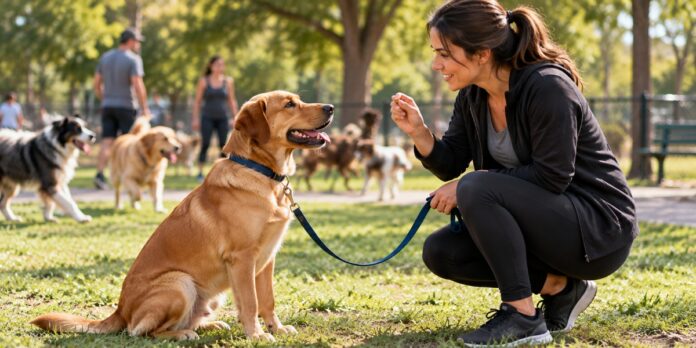
Then you take him to the park and he stares straight through you. Most owners read this as defiance. It is almost always something else.

Dogs Do Not Generalize Easily
People assume a word means the same thing everywhere. Dogs do not start with that assumption.
When a dog learns “sit” in the kitchen he learns a package. The word and the room and your body position and the smell of the floor are all part of what he learned. Change the package and the behavior gets shaky.
Distraction Competes for Attention
A park is a flood of information. Other dogs and squirrels and unfamiliar people all compete with your voice.
Your dog is not weighing obedience against rebellion. He is weighing your request against everything else happening at that moment. Early in training your request loses that contest.

The Fix Is Gradual Difficulty
Trainers describe this process as proofing. You take a known behavior and rebuild it in progressively harder settings.
Start in the kitchen and move to the living room. Then the backyard and the front yard and a quiet sidewalk. Each step should be easy enough that the dog succeeds most of the time. Programs such as the Dog Trainer Bible lay this ladder out in order so owners do not skip rungs.
Change One Thing at a Time
The most common mistake is jumping from the kitchen to the dog park. That is three variables at once.
Change the location or the distraction or the distance, but not all three. If the dog fails twice in a row, the last step was too big.
Raise the Pay for Harder Work
A piece of kibble is fine in a quiet kitchen. It is not competitive with a squirrel.
Save your best rewards for the hardest environments. Chicken and cheese and real play all buy attention that dry biscuits will not.
Shorten the Distance Before You Extend It
Distance and duration and distraction all add difficulty. When you add one, reduce the others.
Ask for a five second sit near you at the park rather than a two minute stay across the field. Build back up once the short version is reliable, which is the sequence the Dog Trainer Bible uses for every skill.

Do Not Repeat the Cue
Saying “sit sit sit” teaches the dog that the first word is optional. Say it once and wait a few seconds.
If nothing happens, the environment is too hard. Move a few feet away from the distraction and try again rather than escalating your volume.
Expect Setbacks in New Places
A dog who is solid at three locations may fall apart at the fourth. That is normal and it is not a loss of training.
Each new environment is a small rebuild rather than a full restart. Owners who understand generalization stop taking it personally, and a structured plan like the Dog Trainer Bible turns those rebuilds into a routine part of the process.