

Shop in Seagoville may earn a small commission when readers make a purchase through links in this article, at no additional cost to the buyer. Shop in Seagoville only recommend products we believe will provide value to our readers.
Backyard chickens can look inexpensive at first. A few chicks may cost less than dinner for a family, but the birds themselves are usually the smallest part of the startup bill. For most beginners, the real money goes into a secure coop, fencing, feeders, waterers and the supplies needed to raise young birds safely.
The good news is that a first flock does not require a designer coop, premium accessories or shelves full of chicken gadgets. Careful planning can keep costs under control. The First-Time Chicken Keepers is designed to help new owners sort essential purchases from optional extras before spending begins.
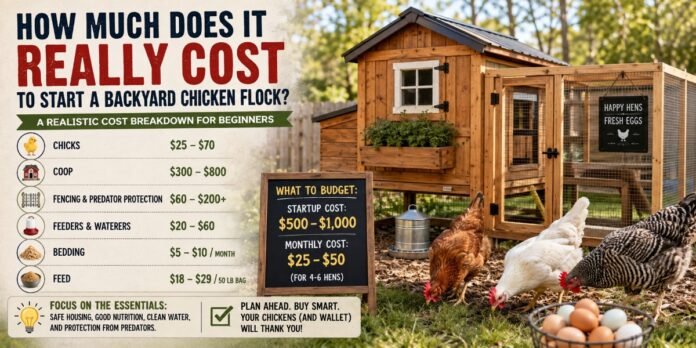
Chicks: About $25 to $70 for a Small Flock
Common day-old chicks often sell for roughly $5 to $12 each, depending on breed, sex, hatchery and quantity. A beginner starting with four to six chicks could therefore spend approximately $25 to $70 on the birds themselves.
Buying chicks also creates short-term brooding costs. Young chicks need a safe enclosure, chick starter feed, bedding, a feeder, a waterer and a dependable heat source until they are fully feathered. Some of those items can be reused with future flocks, so the first year is normally the most expensive.
Coop: Roughly $300 to $800 for Many Beginner Setups
The coop is usually the largest single expense. Current prebuilt backyard coops for small flocks commonly fall in the $300 to $800 range, although larger and premium models can exceed $1,000.
A used coop or well-planned do-it-yourself build can reduce that cost, but beginners should not save money by sacrificing security, ventilation or usable space. A cheap coop that allows raccoons, dogs or other predators inside can become far more expensive than buying or building a solid structure correctly the first time.
Fencing and Predator Protection: $60 to $200 or More
Basic poultry netting can be inexpensive, while welded wire and half-inch hardware cloth cost more. A small run may require $60 to $200 or more in fencing, posts, fasteners and predator-proofing materials.
This is one area where “cheap” can become false economy. Chicken wire helps contain chickens but is not the strongest choice for stopping determined predators. Hardware cloth around vulnerable openings, doors and lower sections of the enclosure is often money better spent than decorative coop upgrades.
Feeders and Waterers: About $20 to $60
Simple poultry feeders and waterers remain affordable. Current basic feeders can be found around $10 to $30, with similar prices for practical waterers. A beginner can usually equip a small flock for roughly $20 to $60 without buying automatic systems.
The First-Time Chicken Keepers can also help beginners focus on practical equipment rather than buying accessories that solve problems they do not yet have.
Bedding and Feed: Small Purchases That Repeat
Pine shavings are among the least expensive recurring supplies, with large bags currently selling for about $6 at major farm retailers. Depending on coop size and cleaning routine, bedding may cost only a few dollars per month for a small flock.
Feed is the larger ongoing expense. Current 50-pound bags of layer feed commonly cost about $18 to $29. An adult laying hen typically eats roughly one-quarter pound of feed per day, although consumption varies with bird size, weather and productivity.
At that rate, four hens may consume about 30 pounds per month, while six hens may approach 45 pounds. A small flock can therefore go through roughly one 50-pound bag every month to month and a half.
What Should a Beginner Budget?
For four to six chickens, a realistic basic startup budget is often around $500 to $1,000 when buying a modest prebuilt coop and new supplies. A careful do-it-yourself setup using some reused materials can come in lower. Premium coops, large runs, automatic doors, specialty feeders and decorative accessories can push the total well beyond $1,000.
After setup, many small-flock owners can expect routine feed, bedding and basic supplies to cost roughly $25 to $50 per month, excluding veterinary care, repairs, replacement equipment or unexpected predator damage.
The biggest money-saving lesson is simple: buy for the chickens’ needs, not for the hobby’s marketing. Birds need safe housing, clean water, appropriate feed, ventilation, dry bedding and protection from predators. They do not need an expensive coop sign, elaborate toys or every accessory promoted to new keepers.
Before placing a chick order, review The First-Time Chicken Keepers and build a complete budget first. The cheapest flock is usually the one planned correctly before the first bird arrives.