

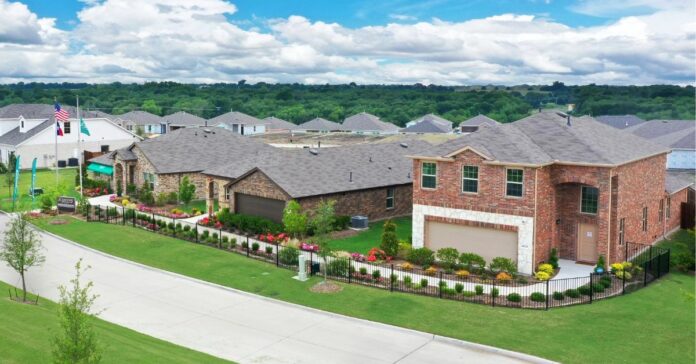
Crandall residents could see a higher city property-tax bill even though city leaders are proposing to keep the tax rate exactly where it was last year.
City budget documents for the upcoming fiscal year propose a property-tax rate of $0.75 per $100 of taxable value, the same rate Crandall adopted for the 2025 tax year.
But keeping the rate unchanged does not necessarily mean keeping a homeowner’s tax bill unchanged.
Crandall’s own taxpayer-impact statement shows the city’s example median-valued homestead increasing from $266,075 in 2025 to $288,917 in 2026.
At the same 75-cent tax rate, the city calculates that the property tax due on that median-valued homestead would rise from approximately $1,996 to $2,167.
That’s an increase of about $171 per year in city property taxes.
Same Rate, Higher Property Value
The reason is relatively simple: the tax rate is only one part of the property-tax equation.
A property owner pays the tax rate against the taxable value of the property after applicable exemptions and other adjustments. If that taxable value rises, the tax bill can increase even when the city leaves the tax rate unchanged.
In Crandall’s example, the median-valued homestead increases by $22,842, or about 8.6 percent, from one year to the next.
Applying the same 75-cent rate to the higher value produces a larger city tax bill.
That distinction is particularly important in a rapidly growing community where rising property values and large amounts of new construction can increase the city’s tax base without an increase in the stated tax rate.
Crandall Expects 13.51 Percent More Property-Tax Revenue
The change becomes even clearer when looking at how much money the city expects to collect overall.
Crandall’s FY2026-27 budget documents state that the budget will raise $655,497 more in total property taxes than the previous year’s budget — an increase of 13.51 percent.
Of that increase, $456,415 is expected to come from new property added to the tax roll this year.
That is an important distinction.
A significant portion of Crandall’s additional tax revenue is being generated by the city’s continued development and construction rather than simply by collecting more from properties that were already on the tax roll.
But existing homeowners can still pay more when their taxable property values increase.
The result is a situation that can sound contradictory at first: the city can keep the tax rate at 75 cents, collect substantially more property-tax revenue overall and still see the tax bill on a typical homestead rise.
The 75-Cent Rate Is Not New
Crandall adopted the same $0.7500 per $100 valuation tax rate for the 2025 tax year.
Under that rate, approximately 65.5 cents of every $100 in taxable value was designated for maintenance and operations, while approximately 9.5 cents went toward the city’s interest and sinking fund used for debt obligations.
The city’s Aug. 17, 2026 City Council agenda called for a public hearing on the proposed 2026 rate of 75 cents and possible action on an ordinance establishing that rate.
The same meeting included consideration of the city’s FY2026-27 operating budget and a resolution acknowledging the increase in total property-tax revenue.
What the Median-Home Example Does — and Does Not — Mean
The city’s $2,167 figure should not be interpreted as the exact amount every Crandall homeowner will owe.
Property taxes vary depending on a home’s taxable value, exemptions, appraisal changes and other factors.
The figure also represents only the City of Crandall portion of a homeowner’s property-tax bill.
Crandall ISD, Kaufman County and other applicable taxing entities establish their own tax rates and collect their own portions of the total property-tax bill.
Some homeowners in certain developments may also have additional assessments associated with public improvement districts or other special districts.
Still, the city’s median-home example provides a useful illustration of why residents should look beyond the tax rate itself when evaluating the city’s budget.
Growth Is Bringing Crandall More Revenue
Crandall’s rapidly expanding tax base presents both an opportunity and a challenge for city leaders.
New homes, businesses and commercial developments bring additional property and sales-tax revenue into the city.
At the same time, growth creates additional demand for roads, drainage, sewer infrastructure, police services and other municipal services.
The question for taxpayers is therefore not simply whether Crandall’s tax rate increased.
It is also how much additional revenue the city is collecting, where that money is being spent and whether growing tax collections are keeping pace with the growing cost of providing city services.
For FY2026-27, Crandall’s own budget numbers show that the city expects property-tax collections to rise considerably even while maintaining the same proposed 75-cent rate.
For the median-valued homestead used in the city’s taxpayer-impact statement, that translates into approximately $171 more in city property taxes for the year.
So while the number printed beside Crandall’s tax rate may stay the same, the number at the bottom of many homeowners’ tax bills may not.