Shop in Seagoville may earn a small commission when readers make a purchase through links in this article, at no additional cost to the buyer.
A backyard greenhouse does not have to be an expensive glass building with electricity, automatic vents and permanent foundations. For homeowners who simply want to protect vegetables from an early frost or get seedlings into the garden sooner, several inexpensive structures can provide useful season extension.
Low tunnels, cold frames, row covers and small hoop houses all work by creating a protected environment around plants. Choosing the right option depends on available space, the crops being grown and how much construction a homeowner wants to tackle.
Start With the Simplest Option
One of the least expensive approaches is a low tunnel built directly over a garden bed.
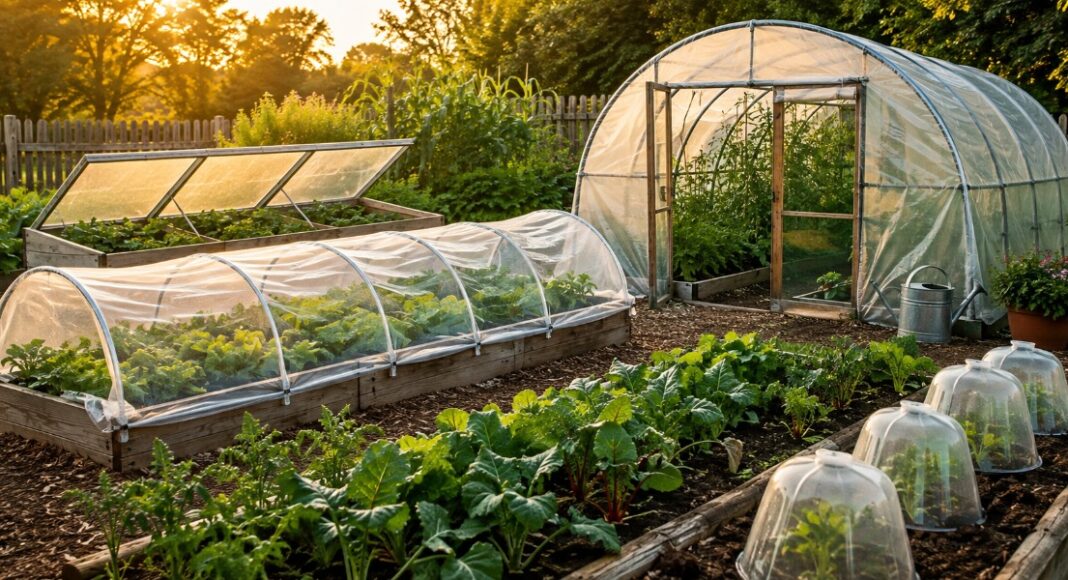
Gardeners can bend PVC pipe, metal conduit or sturdy wire into hoops and place them at intervals along the bed. The frame can then be covered with greenhouse plastic or appropriate row-cover fabric.
Edges need to be firmly secured so wind cannot lift the covering. Soil, boards, clips, sandbags or other suitable weights can help hold the material in place while still allowing access to plants.
Low tunnels are especially practical because they require relatively little material and can usually be removed when warm weather arrives.
Homeowners interested in becoming more self-reliant may also find gardening, food-production and property-management ideas in the Homesteaders Handbook.
Build a Cold Frame From Basic Materials
A cold frame is essentially a low, bottomless box with a transparent or translucent top. Sunlight enters through the cover and warms the soil and air inside.
The frame can be constructed from lumber or other weather-resistant materials, while the lid can be made with clear polycarbonate, greenhouse plastic or a suitable reused window.
Cold frames work well for hardening seedlings before transplanting, protecting cool-season vegetables and keeping some crops growing later into fall.
Placement matters. A sunny location with good exposure allows the structure to capture more daytime warmth. The top should also be easy to raise because temperatures inside can climb rapidly on sunny days.
Consider a Small Walk-In Hoop House
Gardeners who want more room can scale the same concept into a small hoop house.
A basic version consists of a series of PVC or metal hoops attached securely to a ground-level base and covered with greenhouse plastic. A simple framed doorway can provide access.
The structure does not need to resemble a commercial greenhouse. Keeping the footprint modest reduces the amount of framing and covering material required while still providing enough protected space for raised beds, containers or rows of vegetables.
Plans should account for wind. Hoops, plastic and the base must be securely anchored rather than relying on the weight of the structure alone.
For homeowners considering a broader approach to producing food on residential property, The Self-Sufficient Backyard provides additional ideas centered on small-property self-sufficiency.
Do Not Overlook Row Covers and Cloches
Not every garden needs a structure large enough to enter.
Floating row covers can be placed directly over some crops or supported above them by hoops. Depending on the material, they can provide protection from cold, wind and certain insects.
Individual plants can also be protected with cloches. Simple versions can be made from clear containers such as plastic milk jugs or large bottles with the bottoms removed.
These options are useful for gardeners who want to experiment with season extension before investing in a larger structure.
Ventilation Is Essential
The biggest mistake with a small greenhouse, tunnel or cold frame may be treating it as something that can simply be covered and forgotten.
Solar energy can cause temperatures inside enclosed structures to rise substantially even when outdoor conditions feel comfortable. Doors, lids or tunnel sides should be opened as necessary to release excessive heat.
Ventilation also helps manage humidity and reduces prolonged moisture around plant foliage.
Homeowners who plan to experiment with several food-growing techniques can find additional homesteading information through the Homesteaders Handbook, while The Self-Sufficient Backyard focuses on producing more food from relatively limited property.
Choose Materials That Can Be Reused
Keeping costs low is not only about spending less on the first build. A structure becomes more economical when its components can serve for several growing seasons.
Reusable hoops, removable frames, clips, lumber and properly stored row-cover material can reduce the need to rebuild from scratch each year.
Gardeners should inspect plastic and fabric for tears before reuse and replace damaged structural components that could fail in wind or bad weather.
A modular design can also make expansion easier. A gardener might begin with one low tunnel, add a cold frame the following season and eventually build a small walk-in hoop house as growing needs increase.
Before constructing a permanent or larger structure, homeowners should check applicable local building requirements, property restrictions and homeowners-association rules.