

Shop in Seagoville may earn a small commission when readers make a purchase through links in this article, at no additional cost to the buyer.
Children may be comfortable using social media, video platforms, online games and messaging apps, but technical confidence does not always translate into scam awareness.
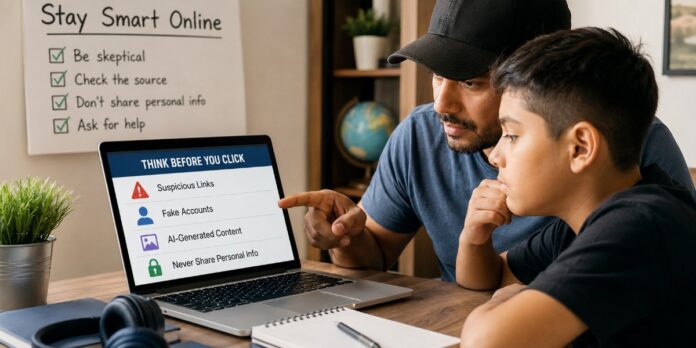
Fraudulent accounts, false giveaways and impersonation attempts are increasingly designed to look like ordinary online conversations. Artificial intelligence can also help scammers create convincing messages, voices, photographs and videos that appear to come from a trusted person.
Families can reduce the risk by teaching children one central rule: an online message should not be trusted simply because it looks professional, includes a familiar photograph or appears to come from someone they know.
Explain How Impersonation Works
A fake account may copy another person’s name, profile photograph, biography and recent posts. The impersonator may then contact the person’s friends or relatives with a new friend request, an urgent story or a request for money.
Children should understand that seeing a familiar face or username does not prove who controls the account. Scammers may also create accounts that appear to represent celebrities, schools, businesses, government agencies or popular online creators.
The Federal Trade Commission recommends independently contacting the person or organization when an unexpected request arrives. Families should use a phone number, account or website they already know is genuine rather than replying through the suspicious message.
Parents can use discussions about entrepreneurship, advertising and responsible online communication from the myKidPrenuers: The StartUp Generation E-books to help children understand the difference between legitimate business outreach and deceptive online pressure.
Watch for Changes in an Account
Teach children to slow down when a familiar person suddenly contacts them from a new account, telephone number or messaging platform.
Warning signs may include:
- A slightly misspelled username
- Very few posts or followers
- An account created recently
- Messages that do not sound like the person
- Pressure to move the conversation to another platform
- Requests for passwords, verification codes or personal information
- Claims that the person cannot speak by telephone or video
A compromised account can be more difficult to recognize because the message may come from a real profile belonging to a friend or relative. Children should still verify unusual requests through a separate communication method.
The FBI advises people to confirm new contact information through a previously established platform or another trusted source, particularly when a message requests money, sensitive information or access to an account.
Treat Unexpected Links as Suspicious
Phishing messages try to persuade recipients to click a link, open an attachment or enter information on a fraudulent website.
A message may claim that an account has been suspended, a package could not be delivered, a gaming prize is waiting or immediate action is required. Some messages appear to come from friends, schools, streaming services or other familiar organizations.
Children should not click an unexpected link merely because the sender knows their name or mentions something they enjoy. Personal details gathered from public profiles can make a fraudulent message appear more convincing.
The FTC advises users not to open links or attachments in unexpected messages. Instead, they should independently open the company’s official app or type the known website address into the browser.
The FBI also recommends checking email addresses, website addresses and spelling carefully because scammers frequently use small differences that can be easy to overlook. Multifactor authentication should be enabled when available, and authentication codes should never be shared with another person.
Question Giveaways and Prize Announcements
False giveaways frequently promise gift cards, gaming currency, electronics, concert tickets or other popular prizes. The message may say the child has been selected randomly or must act before the offer expires.
A legitimate prize should not require the winner to purchase gift cards, send cryptocurrency, pay a processing fee or provide online banking credentials.
Children should also be suspicious when an account asks them to repost a message, tag several friends and then complete a separate payment or identity-verification process.
The FTC warns that fraudulent prize messages may arrive through texts, emails or social media and may use recognizable company names. Legitimate sweepstakes operators do not require winners to pay money to receive a prize.
Families discussing how real businesses earn trust and communicate with customers may find age-appropriate ideas in the myKidPrenuers: The StartUp Generation E-books, particularly when comparing genuine promotions with offers designed to collect money or personal information.
Do Not Rely on Perfect Grammar
Parents once taught children to identify scams by looking for awkward wording, obvious spelling mistakes or poorly designed pages. Those clues can still appear, but they are no longer reliable on their own.
Artificial-intelligence tools can help criminals produce polished messages that use correct grammar and imitate professional communication. The FBI has warned that AI can make targeted phishing messages and impersonation attempts more convincing.
A message should therefore be judged by what it asks the recipient to do—not simply by how polished it looks.
Urgency, secrecy and unusual payment demands remain important warning signs. A scammer may say the child will lose an account, miss a prize or cause trouble for someone unless immediate action is taken.
Understand AI-Generated Photographs and Videos
AI-generated and manipulated content can show events that never occurred or make a real person appear to say something they never said.
Families can teach children to examine images and videos for possible warning signs, including inconsistent lighting, unnatural movement, distorted facial features, unusual pauses or mismatched audio. However, these flaws are not always present.
The FBI notes that synthetic content has become easier to create and that AI-generated material can sometimes be difficult to identify. Visual inspection should be treated as one clue rather than definitive proof.
Children should ask several questions before believing or sharing surprising content:
- Who originally posted it?
- Is the account authentic?
- Has a reliable organization reported the same event?
- Is the clip complete or taken out of context?
- Is the post trying to create panic or anger?
- Is the viewer being pressured to send money or share the content immediately?
Reverse-image searches and reputable fact-checking services may provide additional context, but the safest approach is to pause before reposting unverified material.
Create a Family Verification Phrase
AI voice cloning can make a telephone call or voice message sound like a relative. A scammer may claim that someone has been arrested, injured, stranded or placed in another emergency requiring immediate payment.
The FTC warns that criminals can create convincing voice imitations from short audio clips obtained from publicly available content. Families should not rely on the sound of a voice as proof of identity.
One protective step is to choose a private family verification phrase that is not posted online. Children can ask for the phrase when they receive an unusual emergency request.
They should then end the conversation and contact the family member using a number already stored in the household’s contacts. If the person cannot be reached, another trusted relative should be contacted before anyone sends money.
Make Requests for Money an Automatic Stop Sign
Children and teenagers should never send money, gift-card numbers, cryptocurrency, banking information or payment-app transfers in response to an unexpected online request without involving a parent or trusted adult.
Scammers favor payment methods that may be difficult to reverse. Requests for gift cards, cryptocurrency or urgent transfers should trigger an immediate pause and verification.
This rule should apply even when the message appears to come from a friend.
A child may receive a message claiming that a friend needs help buying food, replacing a broken telephone, entering a gaming competition or resolving an emergency. The account may be fake, compromised or controlled by someone using stolen information.
Teaching children basic money-management and decision-making skills through resources such as the myKidPrenuers: The StartUp Generation E-books can support broader conversations about protecting earnings, recognizing pressure tactics and making thoughtful financial decisions.
Give Children Permission to Stop the Conversation
Scammers may tell children to keep the interaction secret because parents will not understand, the opportunity will disappear or someone will get in trouble.
Families should establish that secrecy involving money, photographs, passwords, account access or threats is always a reason to involve a trusted adult.
Children should be allowed to end a call, block an account and ignore a message without worrying that they are being rude. Legitimate organizations and trustworthy people will allow time for verification.
They should also know that asking for help will not automatically result in losing their device or being punished. Fear of punishment can make a child less likely to disclose a mistake quickly.
What to Do After a Suspicious Message
Children should save evidence before blocking the account when it is safe to do so. Screenshots, usernames, profile addresses, telephone numbers, payment instructions and message times may assist with reporting.
The account should be reported through the platform’s reporting system. Phishing and fraud attempts can also be reported to the Federal Trade Commission, while internet-enabled crimes may be reported to the FBI’s Internet Crime Complaint Center.
If a child entered a password on a suspicious page, the family should change it immediately through the legitimate service, sign out of other sessions and enable multifactor authentication. Any reused passwords should also be changed.
When money has been sent, a parent should contact the payment service, bank, card issuer or gift-card company immediately. Acting quickly may improve the possibility of limiting additional losses, although recovery is not guaranteed.
Make Scam Awareness an Ongoing Conversation
Online-safety lessons are most effective when they become part of ordinary family conversations rather than a single warning delivered after something goes wrong.
Parents can occasionally review real-looking examples and ask children what they would do next. The goal is not to make them suspicious of every person online. It is to build the habit of pausing, checking and asking for help before taking action.
A simple family rule can cover many situations:
Do not click, pay, share or panic until the message has been verified.
That pause may be the most valuable protection a child has when a fake account, fraudulent giveaway or AI-generated impersonation appears on the screen.