

Shop in Seagoville may earn a small commission when readers make a purchase through links in this article, at no additional cost to the buyer.
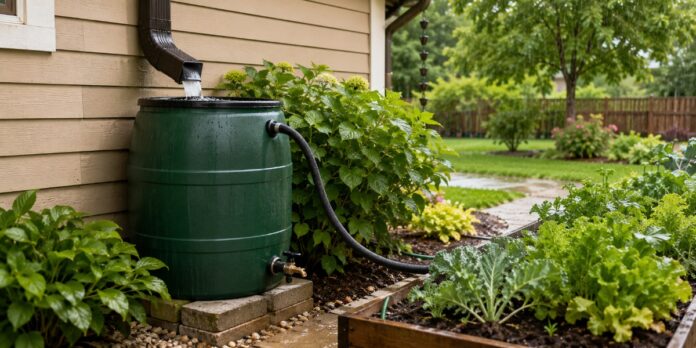
Rainwater collection does not have to begin with an expensive underground cistern or complicated plumbing system. For many homeowners, a basic setup consisting of gutters, a downspout, a covered barrel and a garden hose can provide useful water for lawns and ornamental plants.
Rain barrels capture water flowing from a roof that might otherwise enter streets, storm drains or low areas around a home. Larger storage tanks use the same basic process but provide additional capacity for homeowners with larger gardens or greater irrigation needs.
Start With the Intended Use
Before purchasing equipment, decide how the collected water will be used. A simple residential system is best treated as a source of nonpotable water for landscaping, ornamental plants and other outdoor purposes where the water will not be swallowed.
Rainwater may collect dirt, animal waste, bacteria, chemicals and particles as it moves through the air and across roofing materials. Water that looks clean should not automatically be considered safe for drinking, cooking, brushing teeth or washing produce.
Homeowners interested in broader self-reliance projects can use the Homesteaders Handbook as a starting point while designing a system that fits their property, available space and gardening plans.
Inspect the Roof and Gutters
The roof serves as the system’s collection surface. Rain flows from the roof into gutters, through a downspout and into a barrel or tank.
Before connecting a storage container, homeowners should clean leaves, twigs and accumulated debris from the gutters. Damaged or sagging sections should be repaired so water moves toward the selected downspout instead of spilling near the foundation.
Roofing and gutter materials can affect water quality. Rainwater may pick up metals, chemicals, dirt or germs from roofing materials, gutters, pipes and other collection surfaces. This is one reason a simple backyard system should generally be reserved for limited outdoor uses.
Install a gutter guard or debris screen when possible. The screen will not purify the water, but it can reduce the amount of leaves and larger material entering the storage container.
Select a Barrel or Storage Tank
Many residential rain barrels hold approximately 50 to 55 gallons. A typical barrel includes a covered opening, an inlet screen, a lower spigot and an overflow connection. Larger cisterns or storage tanks can hold hundreds or thousands of gallons.
Only use a container designed for water storage or a clean, food-grade barrel with a known history. Containers that previously held pesticides, petroleum products, cleaning chemicals or other hazardous materials should not be converted into rain barrels.
The container should be opaque or protected from sunlight to discourage algae growth. It should also have a secure lid that prevents children, pets and wildlife from entering.
Readers planning a larger food-producing or self-sufficient property may find additional project ideas in The Self-Sufficient Backyard while comparing small barrels with higher-capacity storage tanks.
Estimate How Much Water the Roof Can Produce
Even a relatively small section of roof can fill a rain barrel quickly.
A commonly used estimate multiplies the roof area draining into the system by the rainfall amount and then by approximately 0.6. Under that calculation, 500 square feet of roof receiving one inch of rain could produce roughly 300 gallons of runoff before accounting for losses.
That means a single 55-gallon barrel may overflow during an ordinary storm. Homeowners can add a second connected barrel, choose a larger tank or direct excess water toward a landscaped area that can safely absorb it.
The Texas Water Development Board also provides rainwater-harvesting resources and a system-size calculator for residents evaluating larger installations.
Build a Stable Base
A full rain barrel is extremely heavy and must sit on a firm, level foundation. Concrete blocks or a purpose-built platform can raise the barrel enough to provide room beneath the spigot for a watering can.
Raising the barrel can also improve gravity-fed water flow. However, the platform must be wide, stable and capable of supporting the container without shifting, leaning or sinking into wet soil.
Do not place a barrel on loose bricks, stacked scrap lumber or an unstable stand. The container should not be able to tip if someone pulls on the attached hose.
Connect the Downspout
The simplest design routes one downspout into the screened opening at the top of the barrel. Another option is a downspout diverter that sends water into the container and redirects flow through the original downspout when the barrel becomes full.
The inlet should remain covered with fine screening. Open barrels can become mosquito-breeding sites, while secure mesh can prevent adult mosquitoes from entering and laying eggs. Damaged screens should be repaired promptly.
A first-flush diverter can further improve collected-water quality. This device redirects the earliest runoff from a storm, which may contain higher concentrations of dust, animal waste and other material washed from the roof.
Include a Safe Overflow Route
Every barrel and tank needs an overflow outlet. Once the container reaches capacity, additional roof runoff must have somewhere to go.
Attach an overflow hose near the top of the barrel and direct it away from the house. Water should not be discharged beside the foundation, onto a walkway or toward a neighboring property.
The overflow can lead to a lawn, landscaped bed, tree area or rain garden capable of absorbing the additional water. Extension guidance recommends directing excess water away from buildings to reduce erosion and foundation-related drainage problems.
The Homesteaders Handbook may provide inspiration for combining water collection with other practical home and garden projects, but each installation should still account for the property’s actual drainage pattern.
Use Collected Water Carefully
The safest use for untreated barrel water is generally irrigation of flowers, shrubs, trees and other nonedible plants. Rain-barrel water is not tested like municipal drinking water and may contain contaminants from the roof or collection system.
Homeowners should avoid using untreated rainwater to rinse harvested produce. They should also avoid overhead watering that places collected water directly on vegetables, herbs, fruit or other edible plant parts.
Some extension guidance indicates that rainwater may be applied to the soil around certain taller edible plants when the water cannot contact the edible portion. However, using treated tap or well water on food crops provides a more cautious approach, particularly for leafy greens, root vegetables and low-growing produce.
Never connect a basic rain barrel directly to household drinking-water plumbing. Rainwater must remain separate from the public water supply unless the system is professionally designed with the required treatment and cross-connection protections.
Maintain the System
Inspect the barrel, gutters, screens, spigot, hoses and overflow connection regularly. Remove leaves and sediment, repair leaks and make sure water is not collecting on top of the container.
The interior should be cleaned periodically, especially when sediment or algae begins to accumulate. Extension guidance recommends inspecting components at least twice per year and cleaning the barrel’s interior approximately once a year.
Use stored water between storms when practical. Creating available storage space allows the barrel to capture runoff during the next rain event instead of immediately overflowing.
Owners can explore additional backyard-planning concepts through The Self-Sufficient Backyard while remembering that water-storage systems require continuing inspection rather than one-time installation.
Check Local Requirements
Texas supports residential rainwater harvesting. State law provides a sales-tax exemption for qualifying rainwater-harvesting equipment, and homeowners associations generally cannot prohibit collection systems, although reasonable rules involving placement and screening may apply.
More advanced systems involving indoor use, potable water or connections to public plumbing carry additional requirements. Homeowners considering those projects should contact local building officials, the water provider and a properly licensed plumbing professional before construction begins.
For a simple garden system, the essential design remains straightforward: maintain clean gutters, direct one downspout into a covered container, screen every opening, provide a secure overflow route and reserve untreated water for appropriate outdoor uses.
A carefully installed rain barrel can conserve treated water, reduce roof runoff and provide a convenient supply for landscape maintenance without turning the project into a major construction job.