

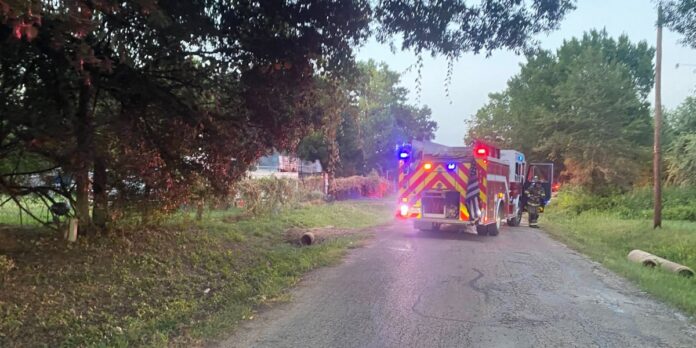
A weekend house fire has brought new urgency to the Water for Sand Branch Coalition’s campaign to secure permanent water, sewer and other essential services for one of Dallas County’s most underserved communities.
The fire occurred Sunday, July 26, at the home of a resident identified by coalition organizers as Mr. David.
The coalition reported that residents placed three calls seeking emergency assistance and waited approximately 45 minutes for the Seagoville Fire Department to arrive. Organizers said one firefighter responded and that the homeowner had to help fight the fire.
Those response details have not yet been independently confirmed through a publicly available incident report.
For coalition members, however, the emergency illustrated a danger they have warned about throughout their campaign: Sand Branch has no municipal water system and therefore no conventional network of fire hydrants.
A structure fire that might be supported by nearby hydrants in another community can become much more difficult to contain in Sand Branch, where firefighters must depend on the water carried aboard responding equipment or brought to the scene through other means.
“This is beyond ridiculous and unacceptable,” coalition organizers said in their public appeal following the fire. “We will push harder to get permanent water.”
The group is also seeking assistance for Mr. David as he deals with the damage and recovery from the fire.
A Community Without Basic Utilities
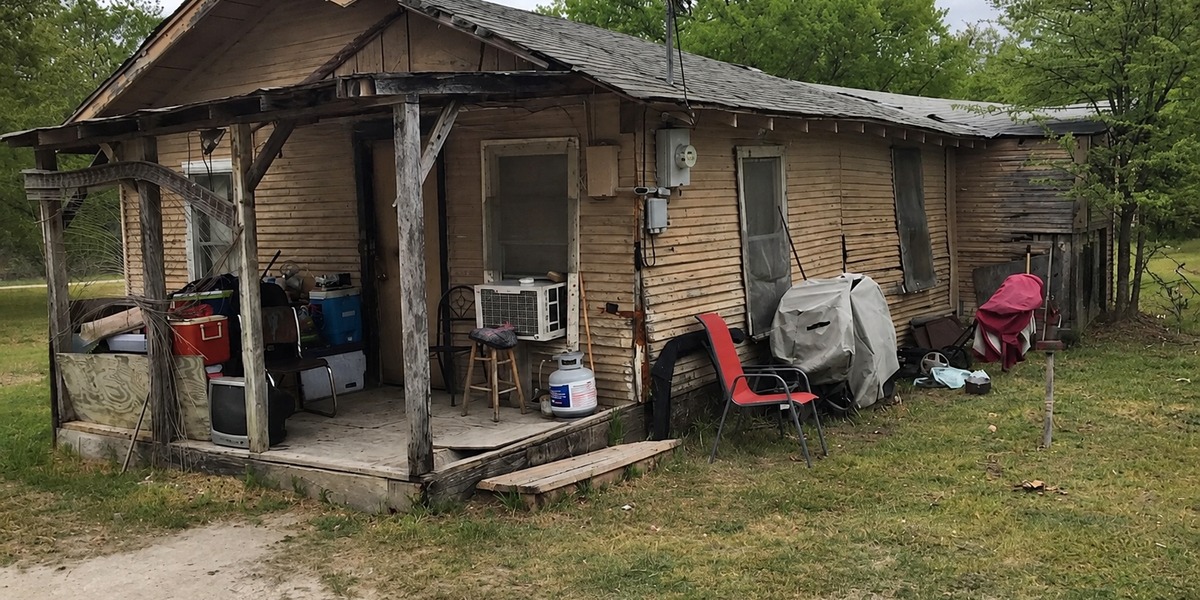
Sand Branch is an unincorporated community approximately 14 miles southeast of downtown Dallas. The historic freedmen’s settlement was established during the years following emancipation and remains home to fewer than 100 households.
Despite its location within one of the largest metropolitan counties in the country, Sand Branch has never had a functioning municipal water or wastewater system.
Residents have relied on private wells, septic systems, bottled water, water tanks and supplies delivered by churches, nonprofit organizations and volunteers. The community’s well water has long been considered unsafe because of contamination concerns.
The absence of running water affects nearly every part of daily life. Residents must secure water for drinking, preparing meals, bathing, cleaning and maintaining their homes.
The consequences become especially severe during North Texas summers, when prolonged heat places additional pressure on elderly residents, people with medical conditions and households without reliable air conditioning.
Coalition organizers recently described several emergencies involving residents, including the house fire, a heart attack, an air-conditioning failure and a serious traffic-related injury.
Volunteers and neighbors helped provide transportation, supplies and other immediate support. Organizers later reported that the residents who required hospital treatment were in stable condition.
Coalition Pursues Permanent Solution
Founded by real estate developer and community advocate Derek Avery, the Water for Sand Branch Coalition is focused on more than delivering bottled water during emergencies.
Its stated mission is to bring permanent water, sewer and trash-collection services to Sand Branch.
The coalition’s goals include completing environmental testing, securing money for environmental remediation, financing water and sewer construction and addressing the community’s floodplain designation.
The organization also wants financial protections created for longtime residents so infrastructure improvements do not lead to displacement.
Its proposed protections include assistance with water bills for legacy residents for up to 10 years, along with down-payment assistance intended to help families remain connected to the community.
The broader vision includes affordable housing, a community center, historic landmarks and opportunities for neighborhood businesses and retail development.
Coalition leaders have described their work as an effort to restore Sand Branch without turning the arrival of utilities into a gentrification project that prices longtime residents out of their homes.
Fire Demonstrates Wider Public-Safety Risk
The July 26 fire underscores why the campaign extends beyond convenience or household plumbing.
A permanent water system would provide residents with safe drinking water, but it could also support fire protection, sanitation, housing rehabilitation and future development.
Without municipal sewer service, households must continue relying on individual septic systems. Without reliable water infrastructure, new construction and substantial property improvements remain difficult.
The community’s floodplain designation creates another obstacle. Coalition leaders argue that restrictions associated with the designation discourage construction, reduce the number of potential utility customers and make Sand Branch appear less financially attractive to traditional funding programs.
That creates a cycle in which the lack of water restricts growth, while the community’s limited population and customer base are then cited as reasons a water system may not be financially sustainable.
The coalition maintains that government intervention is necessary to break that cycle.
Pressure on Dallas County
Coalition organizers believe Dallas County represents the strongest path toward a permanent solution because Sand Branch is an unincorporated community under county jurisdiction.
The organization is urging county leaders to adopt an infrastructure proposal it calls the Ken Wright Infrastructure Bond. Coalition members say their plan would support water and sewer construction while providing housing assistance for Sand Branch residents.
The proposal has not been identified as a formally approved Dallas County bond measure. It remains an advocacy plan that coalition volunteers want county officials to advance and fund.
Coalition leaders say they completed much of the preliminary research and planning as volunteers to demonstrate that a permanent utility project is possible.
Their message to county officials is that Sand Branch no longer needs additional promises, temporary studies or indefinite delays. It needs a funded construction plan with deadlines and public accountability.
Other Infrastructure Efforts Continue
The Water for Sand Branch Coalition is not the only organization pursuing a long-term solution.
The Sandbranch Development and Water Supply Corporation is separately working with local, state and federal entities to establish drinking-water and wastewater services.
The corporation has pursued potential assistance through the Texas Water Development Board and the U.S. Department of Agriculture’s Rural Development programs.
Those funding processes generally require technical studies, environmental reviews, engineering plans and evidence that a proposed utility system can remain financially and operationally sustainable.
Coalition leaders argue that Sand Branch’s small population, contaminated land, floodplain restrictions and limited rate base make it difficult to satisfy conventional funding expectations without substantial public support.
They contend that those barriers should strengthen the case for government assistance rather than become reasons to leave residents without basic services.
Growing Political Attention
Sand Branch’s water crisis has received increasing attention from elected officials, news organizations, churches and community groups.
Texas state Rep. James Talarico visited Sand Branch in February 2026 after participating in a water drive benefiting the coalition. He helped carry water to residents and spoke publicly about the moral responsibility to provide basic utilities.
The coalition thanked Talarico for using his platform to bring attention to the community and has continued asking officials from every level of government to participate in finding a permanent solution.
Organizers also view Sand Branch as part of a broader discussion about water security in Texas, where growing communities, aging infrastructure and limited supplies are creating challenges far beyond southern Dallas County.
Volunteers Fill the Gap
While the infrastructure campaign continues, volunteers remain essential to daily life in Sand Branch.
The coalition recruits people to deliver water, assist residents during emergencies, contact public officials, organize community events and promote the campaign through social media.
Churches, nonprofit organizations, local businesses and individual donors have helped provide bottled water, food, household necessities and emergency assistance.
Those efforts have prevented families from being completely abandoned, but they do not replace municipal infrastructure.
A case of bottled water can help a family for several days. It cannot supply a fire hydrant, operate a household plumbing system or provide the foundation needed for safe residential development.
That distinction is at the center of the coalition’s mission.
The organization will continue accepting volunteers and donations while pressing Dallas County and other government agencies to move from temporary relief to permanent construction.
For Sand Branch residents, the July 26 fire was another warning that the cost of delay is measured not only in inconvenience, but also in homes, health and public safety.