

Shop in Seagoville may earn a small commission when readers make a purchase through links in this article, at no additional cost to the buyer.
Children are often capable of contributing to household routines earlier than adults expect. A preschooler may not clean a room perfectly or prepare an entire meal, but that same child can put toys into a basket, match socks, carry napkins to the table or wash produce beside an adult.
The goal is not to transfer adult workloads to children. It is to introduce practical skills in small, safe steps that match each child’s development.
The American Academy of Pediatrics encourages families to begin with simple responsibilities during the preschool years, then gradually increase expectations as children mature. The Centers for Disease Control and Prevention also identifies helping with basic chores as a common developmental ability during early childhood.
Families interested in connecting responsibility with creativity, planning and early financial awareness may also explore the myKidPrenuers: The StartUp Generation E-books while building routines appropriate for their children.
1. Organizing Toys and Personal Belongings
Putting away toys is often treated as something adults must do after young children finish playing. In reality, even toddlers can begin learning that items have designated places.
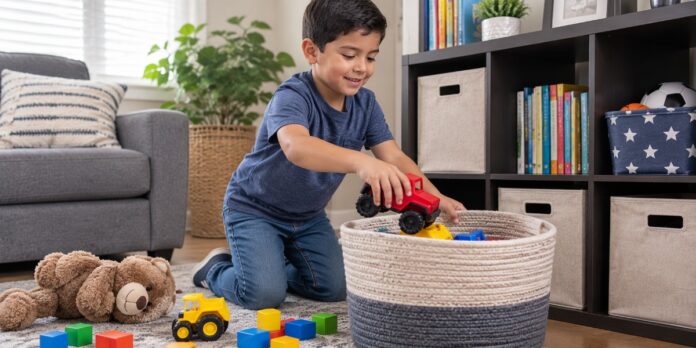
A two- or three-year-old may be able to place blocks in a bin, carry stuffed animals to a shelf or put dirty clothing into a hamper. An older preschooler can sort books, shoes, art supplies and toys into separate locations.
The task becomes easier when storage is designed for the child rather than the adult. Low shelves, open baskets, picture labels and clearly marked containers reduce the number of instructions required.
Instead of saying, “Clean your entire room,” a parent can give one specific direction: “Put the toy cars in this basket.” After that step is completed, the child can move to the next category.
Parents should not expect a young child’s organization to look professionally arranged. The first goal is learning where belongings belong and taking responsibility for returning them.
As children grow, they can organize school supplies, charge electronic devices in an assigned location and prepare backpacks for the following day.
2. Sorting, Folding and Putting Away Laundry
Laundry offers several tasks that can be divided according to age and ability.
Young children can place dirty clothes into a hamper, separate light and dark items with guidance or match clean socks. Elementary-age children can fold towels, washcloths, pajamas and simple shirts.
Older children can put clothing into drawers, hang garments and eventually learn to operate the washer and dryer with supervision.
Sorting laundry also provides natural practice with matching, colors, categories and following a sequence. A child who is not yet ready to manage an entire load can still complete one meaningful part of the process.
Parents should demonstrate how clothing is turned right-side out, how pockets are checked and where different items belong. Assigning each child a small laundry basket can simplify the routine.
Detergent, bleach, stain removers and laundry packets require additional caution. Concentrated detergent packets can cause serious poisoning and should remain locked, stored out of sight and handled by adults when young children are present. Children should also be taught never to climb inside a washer or dryer.
3. Preparing Simple Food
Children do not need to operate a stove or use a sharp knife to begin learning food preparation.
A preschooler can wash fruits and vegetables, tear lettuce, stir ingredients with a spoon or spread soft food using a child-safe utensil. The CDC specifically recommends allowing three-year-olds to assist with simple meal-preparation tasks such as washing produce and stirring.
As coordination and judgment improve, children may prepare cereal, yogurt with fruit, cheese and crackers, sandwiches, salads or other foods that do not require heat.
Older elementary-age children can learn to measure ingredients, follow a short recipe and prepare simple snacks. Preteens may begin cooking basic meals under direct adult supervision.
Food preparation should always begin with handwashing and a clean work surface. Children must also learn that raw meat, poultry, seafood and eggs require special handling to prevent cross-contamination.
Adults should decide when a child is ready to use a knife, microwave, toaster, stovetop or oven. Age alone does not determine readiness. The child must be able to follow directions consistently, recognize hazards and remain focused.
The American Academy of Pediatrics advises parents to supervise children while cooking and select responsibilities that match their developmental abilities. Pot handles, hot liquids, knives, appliance cords and cleaning chemicals should remain controlled by an adult until the child is ready.
4. Setting and Clearing the Table
Setting the table is one of the simplest ways to teach a child that household work supports everyone.
A young child can carry napkins or place lightweight utensils beside each plate. With supervision, the child can help distribute cups and other unbreakable items.
Older children can set the entire table, fill water glasses, bring cold food from the refrigerator and clear their own dishes after eating.
The task also helps children learn counting, placement and preparation. If four people will eat dinner, the child must determine how many plates, forks and napkins are needed.
After the meal, children can scrape appropriate leftovers into the trash or compost container, place dishes near the sink and wipe the table with a damp cloth.
Sharp knives, breakable glass, heavy serving dishes and hot cookware should remain adult responsibilities until the child has demonstrated the judgment and physical control required to handle them safely.
Families can connect this responsibility to meal planning by asking children to help choose one side dish, count available ingredients or create a simple shopping list. The family-focused lessons in the myKidPrenuers collection can supplement conversations about planning, resources and completing useful work.
5. Cleaning Safe Household Surfaces
Children can begin cleaning without being given access to strong chemicals.
A preschooler may wipe a low table with a damp cloth, dust an accessible shelf or clean a small spill with adult assistance. School-age children can sweep, use a handheld vacuum and wipe fingerprints from safe surfaces.
Older children can vacuum rooms, mop appropriate flooring and take greater responsibility for maintaining shared spaces.
Parents should first demonstrate the task. Show the child where to begin, which areas to cover and how to recognize when the job is complete.
“Clean the living room” may be too broad for a beginner. “Put the pillows on the couch, collect the toys and vacuum the rug” provides a clearer sequence.
Young children should generally use water, mild soap when appropriate or another adult-approved method rather than handling disinfectants, bleach, ammonia, concentrated cleaners or spray products.
Cleaning products must remain in their original containers and be stored securely. Adults should read product labels and never allow children to combine cleaners, because some mixtures can release dangerous gases or cause burns.
The quality of the first attempt will rarely match an adult’s work. Correct major problems, but avoid immediately redoing everything in front of the child. That can communicate that the effort was useless.
6. Making the Bed and Managing Linens
A perfectly made bed is not necessary for a child to begin learning the routine.
A young child can pull a blanket toward the top of the bed, place a pillow in position and move stuffed animals out of the sleeping area. Early attempts may be uneven, but the child is practicing order and completing a morning responsibility.
Elementary-age children can straighten sheets, arrange blankets and place dirty linens into a hamper.
Older children can strip the bed, help place fitted sheets over the corners and replace pillowcases. Preteens and teenagers should generally be capable of changing their own bedding after receiving instruction and practice.
Parents can make the task easier by using simple bedding. Multiple decorative pillows, tightly tucked layers and oversized blankets may turn a basic responsibility into an unnecessarily frustrating project.
The bed does not need to look like a hotel display. The practical objective is to create a comfortable sleeping space and teach the child to care for personal surroundings.
7. Putting Away Groceries and Maintaining Household Supplies
Putting away groceries teaches children how a household is organized and how everyday supplies are managed.
Young children can carry lightweight, nonbreakable items from a bag and place them on a low shelf. They may sort canned goods, paper products or packaged snacks under adult supervision.
Older children can put refrigerated products away promptly, rotate newer pantry items behind older ones and alert an adult when commonly used supplies are running low.
This responsibility naturally introduces discussions about food waste, expiration dates, household budgets and the difference between needs and wants.
A child can also maintain a limited personal supply area. That might include checking whether school snacks, toiletries, pet supplies or art materials need to be added to the family shopping list.
Parents should continue handling raw meat packages, heavy containers, glass bottles, medicines, alcohol, chemicals and items that require special storage.
Children who participate in grocery organization are more likely to understand that food does not simply appear in the refrigerator. Someone must plan, purchase, transport, store and eventually prepare it.
Readiness Matters More Than a Birthday
Age recommendations are useful starting points, but children develop at different rates.
One six-year-old may carefully complete a multistep task, while another may need frequent reminders and close supervision. A child’s coordination, attention, emotional maturity and ability to follow safety rules are more important than comparing that child with siblings or classmates.
Children with disabilities may need modified tools, visual instructions, shorter tasks or additional assistance. The responsibility should be adapted so the child can participate meaningfully rather than being excluded.
Parents should introduce one new task at a time. Demonstrate it, complete it together and then allow the child to attempt part of it independently.
Avoid Assigning a Task Without Teaching It
Adults sometimes become frustrated when a child performs poorly at a job that was never clearly explained.
A child who has been told to “sort the laundry” may not know whether sorting means by color, fabric, owner or washing instructions. A child asked to “clean the bathroom” may not know which surfaces are included or which products are safe.
Parents can use a simple teaching sequence:
Show it: The adult completes the task while explaining the steps.
Do it together: The adult and child share the work.
Watch the child do it: The adult provides guidance without taking over.
Allow greater independence: The child assumes responsibility once the skill becomes reliable.
Photographs, checklists and labels can help children remember multistep routines without requiring constant verbal reminders.
Do Not Expect Adult-Level Results
Chores are partly about completing necessary work, but they are also opportunities to practice.
A towel may be folded unevenly. A bed may contain wrinkles. A shelf may not be dusted perfectly. Correcting every minor flaw can make children reluctant to try again.
Parents should distinguish between a task that is imperfect and one that is genuinely incomplete.
Praise should focus on effort, improvement and responsibility rather than telling the child that every attempt is excellent. Honest feedback can include both recognition and one manageable correction.
For example: “You put all the dishes away. Next time, check that the cups are dry before placing them in the cabinet.”
Household Work Should Not Be Used Only as Punishment
Children are more likely to view chores as a normal part of family life when every capable person contributes.
When household work is assigned only after misbehavior, children may begin to see cooking, cleaning and organizing as penalties rather than useful life skills.
Consequences may still be appropriate when a child refuses an established responsibility. However, the purpose of the task should remain clear: members of a household help maintain the place where they live.
Regular routines are often easier than unpredictable assignments. A child may clear the table after dinner every night, fold towels on Saturday or prepare one simple snack each afternoon.
Small Responsibilities Can Lead to Greater Independence
Children do not suddenly become capable of managing a home when they turn 18.
Adults who can prepare meals, wash clothing, clean safely and organize their belongings usually developed those abilities through years of practice.
Starting early allows mistakes to occur while support remains available. It also gives children repeated opportunities to experience competence and understand how their efforts benefit other people.
The myKidPrenuers: The StartUp Generation E-books may provide additional ideas for families interested in helping children connect initiative, problem-solving and responsibility with everyday life.
The objective is not a spotless home maintained by children. It is a home in which children gradually learn that they are capable, trusted and responsible members of the household.