

Shop in Seagoville may earn a small commission when readers make a purchase through links in this article, at no additional cost to the buyer.
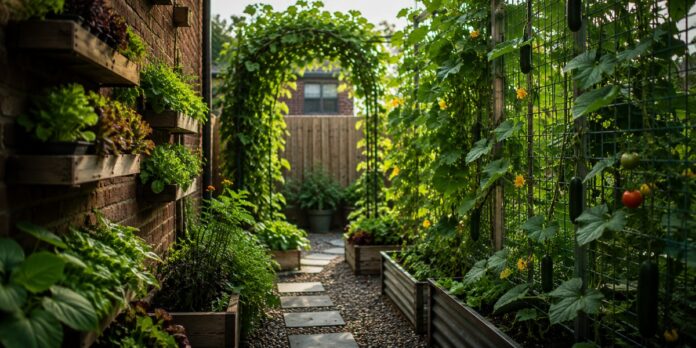
A small backyard, narrow side yard or apartment patio does not have to prevent a household from growing fresh vegetables. By training plants upward instead of allowing vines to spread across the ground, gardeners can make better use of limited space and leave valuable soil available for additional crops.
Vertical gardening uses trellises, arches, wall-mounted planters, cages, fences and other supports to create growing room above the garden. In a carefully planned space, this approach can substantially increase the amount of productive planting area and may effectively double what a gardener can grow within the same footprint.
The method is especially useful for pole beans, peas, cucumbers, indeterminate tomatoes and certain smaller varieties of squash and melons. It can also bring vegetables within easier reach, improve access for routine care and reduce the amount of fruit resting directly on the soil.
Vertical gardening does not eliminate the need for sunlight, water, healthy soil and regular maintenance. It simply allows gardeners to use the third dimension—the open space above the bed, container or patio.
Begin With the Available Footprint
Before purchasing a trellis or filling a wall with planters, gardeners should measure the space and observe how sunlight moves across it.
Most fruiting vegetables need at least six hours of direct sunlight each day, with many performing better when they receive more. A wall that remains shaded for most of the day may support certain leafy greens and herbs but is unlikely to produce a strong crop of tomatoes or cucumbers.
Gardeners should also consider how a vertical structure will affect nearby plants. A tall trellis placed on the southern edge of a garden can cast shade across shorter vegetables. Positioning tall crops toward the north side of the bed can help reduce that problem.
Wind is another consideration. A trellis covered with mature vines can act like a sail during a North Texas thunderstorm. Posts, anchors and wall attachments must be strong enough to support both the weight of the crop and the pressure created by wind.
Families interested in building a more productive food system around a small property can explore additional planning ideas through The Self-Sufficient Backyard, which focuses on making practical use of available household space and resources.
Trellises Offer the Simplest Starting Point
A trellis is one of the most versatile vertical-gardening tools. It can be built from wood, metal fencing, livestock panels, wire mesh, netting or other weather-resistant materials.
The structure generally consists of sturdy vertical posts with a climbing surface secured between them. The correct material depends on the crop.
Lightweight netting may be sufficient for peas, while vigorous cucumber vines or heavily producing pole beans need stronger support. Tomatoes and small melons require an even more substantial structure because their fruit adds considerable weight as the season progresses.
Gardeners should install trellises before plants become large. Adding supports after vines have spread across the ground can damage roots and break stems.
Climbing plants may also need initial guidance. Peas use tendrils to attach themselves, pole beans wind around supports and cucumbers may need their growing tips gently directed through the openings in a trellis. Gardeners should inspect vines every few days and reposition them carefully when necessary.
Trellises can be placed along the back of a raised bed, attached to the sides of a large container or positioned between garden rows. Existing fences may also serve as supports when they receive adequate sunlight and can safely carry the crop.
Garden Arches Turn Walkways Into Growing Space
A garden arch creates productive space above a walkway that would otherwise remain unused. Arches can be constructed from cattle panels, heavy wire mesh, metal frames or purpose-built garden structures.
One end of the arch is anchored on each side of a path or between two raised beds. Climbing crops grow upward and eventually form a leafy tunnel overhead.
Pole beans, cucumbers, gourds and small-fruited squash can perform well on arches. The design allows fruit to hang downward, making it more visible and often easier to harvest.
The structure must be tall and wide enough for people to move beneath it comfortably. Gardeners should also avoid placing heavy crops directly above areas where falling fruit could cause injury.
Large pumpkins, full-size watermelons and heavy winter squash are generally poor choices unless the structure is engineered for the load. Smaller melons may be grown vertically, but developing fruit may require slings made from soft fabric or mesh. The sling should support the fruit while allowing it to expand.
An arch can also create partial shade beneath it. Lettuce, herbs or other crops that appreciate some protection from intense afternoon heat may be planted near the base, provided the vines do not block too much light.
Wall Planters Work Well on Patios and Small Yards
Wall planters can transform a blank fence, garage wall, balcony divider or patio enclosure into a growing area. Common systems include stacked pockets, modular planter boxes, vertical shelves and hanging containers.
These systems work best for crops with relatively compact roots. Lettuce, spinach, strawberries and many culinary herbs can adapt well to wall-mounted containers. Bush beans, compact peppers and certain dwarf tomato varieties may also work when the planter provides enough soil volume.
Drainage is essential. Every container must allow excess water to escape, and gardeners should consider where that water will go. A vertical system placed against wood siding or an untreated fence can create moisture damage if runoff is not managed properly.
Wall planters also dry out more quickly than in-ground beds. Upper containers may receive more sun and wind, while lower pockets may remain shaded or collect drainage from the rows above.
Gardeners should check moisture at several levels rather than assuming the entire wall has identical needs. Drip tubing or a small irrigation line can make watering more consistent, especially during hot weather.
The mounting hardware must support the combined weight of the containers, moist potting mix, mature plants and water. Garden soil should not be used in wall planters because it can become compacted and is much heavier than a high-quality container mix.
Readers seeking manageable projects that can be completed gradually may find complementary ideas in the Homesteaders Handbook, particularly when combining food production with other practical improvements around the home.
Choose Crops That Naturally Want to Climb
The best vertical-gardening crops already possess a climbing, twining or vining growth habit.
Pole beans are among the most productive choices. Unlike bush beans, which grow as compact plants, pole beans continue climbing and producing over a longer vertical area. They need tall supports and should be harvested regularly to encourage continued production.
Peas also climb well but are cool-season vegetables. Their supports can sometimes be reused later in the year for warm-season beans or cucumbers.
Cucumbers are another strong candidate. Trellising keeps the vines from covering large sections of the garden and can produce straighter, cleaner fruit. Growing the plants upward may also improve visibility, making it easier to locate mature cucumbers before they become oversized.
Indeterminate tomatoes continue growing and producing until cold weather or disease ends the season. They need tall cages, stakes or trellises capable of supporting substantial growth. Determinate tomatoes stop growing after reaching a more limited size and may perform well in shorter cages.
Small-fruited squash, gourds and melons can also be trained vertically, but their mature weight must be considered. Gardeners should select compact or smaller-fruited varieties and provide slings when necessary.
Vining and climbing crops are only part of the system. Short vegetables can be planted beneath or in front of vertical supports, allowing gardeners to harvest from both the ground-level bed and the space above it.
Match the Support to the Mature Plant
A structure that looks strong when seedlings are small may fail after becoming covered with foliage and fruit.
Gardeners should estimate the mature size of the crop before choosing materials. Thin decorative trellises may support flowers or lightweight peas but bend under cucumbers, tomatoes or vigorous bean vines.
Wooden posts should be driven deeply enough to remain stable. Metal posts, brackets and fasteners should resist rust and should not contain sharp edges that can damage stems.
Mesh openings should be large enough for gardeners to reach through when harvesting. Fruit can become trapped when it develops inside openings that are too small.
Permanent structures should be positioned with crop rotation in mind. Planting the same vegetable family in the same location every year can allow certain diseases and pests to build up in the soil. Movable trellises provide more flexibility because they can be transferred to different beds.
Vertical Gardens Still Need Root Space
Training the foliage upward does not reduce the plant’s underground needs. Crops still require adequate soil depth, nutrients, moisture and room for their roots.
A large tomato placed in a shallow wall pocket will struggle even if it has a tall trellis. Cucumbers grown in containers need enough potting mix to support rapid growth and fruit production.
Containers should have drainage holes and should be filled with a lightweight growing medium intended for container use. Because nutrients are gradually depleted or washed from containers, plants may require carefully timed fertilization.
Vertical systems can also dry out faster because more foliage is exposed to moving air. During hot North Texas weather, containers may need to be checked daily.
Mulch can reduce evaporation in raised beds and larger containers. Drip irrigation or soaker hoses can deliver water near the roots without unnecessarily wetting the foliage.
Gardeners interested in connecting vertical production with broader household planning can find additional strategies through The Self-Sufficient Backyard, including ways to organize food-growing projects around the land and resources already available.
Improved Airflow Can Support Plant Health
Lifting foliage and fruit from the ground can improve air movement around some plants. Better airflow may help leaves dry more quickly after rain or irrigation, reducing conditions that favor certain diseases.
Trellising also keeps cucumbers and tomatoes from resting directly on damp soil, where they may be more vulnerable to rot, slugs and soilborne pathogens.
These benefits do not make plants disease-proof. Crowded vines can still create a dense canopy with poor circulation. Gardeners should follow recommended spacing, remove damaged or diseased foliage and avoid packing too many plants onto one structure.
Vertical plants are generally easier to inspect. Gardeners can see both sides of the leaves, identify insects earlier and harvest without stepping over sprawling vines.
The improved access can be particularly helpful for older gardeners or people who find repeated bending and kneeling uncomfortable.
Use Layering to Increase Production
Vertical gardening becomes especially productive when crops are arranged in layers.
A trellis may support pole beans or cucumbers, while lettuce, radishes, herbs or green onions grow near the base. Hanging containers can hold strawberries above a patio, while larger containers below produce peppers or tomatoes.
Gardeners should make sure every layer receives enough light and water. The tallest crop should not completely shade the plants beneath it.
Root competition must also be considered. Several crops planted in the same small container may compete for moisture and nutrients even when their foliage occupies different levels.
A layered system works best when each plant has sufficient root space and when the gardener chooses crops with compatible growing requirements.
Start With One Reliable Structure
A complete vertical garden does not have to be built in one weekend. Beginners can start with a single trellis and one dependable climbing crop.
Pole beans or cucumbers can demonstrate how much ground space is saved when vines grow upward. Gardeners can observe sunlight, wind, irrigation needs and harvest convenience before adding arches or wall systems.
A project-based resource such as the Homesteaders Handbook may help households develop their gardening skills through smaller improvements rather than attempting an expensive transformation all at once.
Gardeners should keep notes about which crops performed well, whether the structure remained stable and how often containers required water. Those observations can guide future expansion.
Vertical gardening cannot guarantee that every yard will produce exactly twice as much food. Results depend on the crops, design, sunlight and care provided. However, by turning fences, walls, walkways and open air into productive growing zones, households can dramatically increase what fits within a small space.
For gardeners who have assumed their yard or patio is too limited, the solution may not be finding more land. It may be learning to grow upward.