Shop in Seagoville may earn a small commission when readers make a purchase through links in this article, at no additional cost to the buyer.
Busy families often want to prepare more meals at home but assume meal planning requires hours of shopping, chopping and cooking before the week even begins. A practical plan does not have to include five completely different recipes or a refrigerator filled with individually prepared containers.
The simplest approach is to choose a small group of flexible ingredients, assign each night a basic meal type and complete only the preparation that will make weeknight cooking easier. With a short plan and a realistic grocery list, families can serve affordable dinners without turning Sunday into an all-day kitchen project.
Start With Five Meal Categories
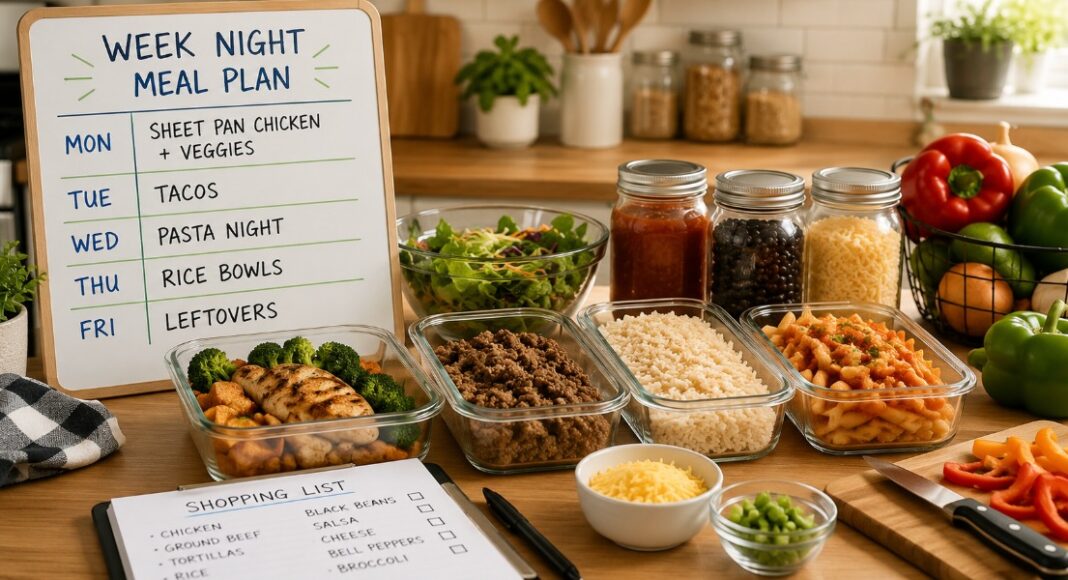
Instead of searching for five unrelated recipes, assign a general category to each weeknight. A sample schedule might include:
Monday: One-pan meal
Combine a protein, vegetables and potatoes or another starch on a sheet pan. Chicken, sausage, fish or seasoned beans can all work with this format.
Tuesday: Taco or wrap night
Use tortillas with ground meat, shredded chicken, beans or roasted vegetables. Set out simple toppings so each family member can assemble a meal.
Wednesday: Pasta night
Pair pasta with marinara sauce, pesto, vegetables, meatballs or leftover protein. Add a salad or frozen vegetables to complete the meal.
Thursday: Rice-bowl night
Serve rice with a protein, vegetables and a sauce. The same ingredients used for tacos or sheet-pan meals can often be reused without making dinner feel identical.
Friday: Leftovers or freezer meal
Finish remaining food from the week or use a dependable freezer option. Planning a leftovers night prevents food waste and gives the household a break from cooking.
This structure provides variety while allowing ingredients to overlap. A package of chicken, for example, could be used in Monday’s sheet-pan dinner, Tuesday’s tacos and Thursday’s rice bowls.
Choose Ingredients That Can Serve More Than One Purpose
The grocery list should be built around foods that can appear in several meals. Families might select one or two proteins, two starches, several vegetables and a few sauces or seasonings.
A basic list could include chicken, black beans, rice, pasta, tortillas, frozen vegetables, salad greens, shredded cheese and a jar of sauce. These ingredients can be rearranged throughout the week instead of being purchased for a single recipe.
Frozen vegetables are especially useful because families can prepare only the amount needed. Canned beans, prepared sauces and rotisserie chicken can also reduce cooking time when convenience is more important than making every ingredient from scratch.
Prepare Components, Not Complete Meals
Weekend preparation should focus on the tasks that create the biggest time savings. Families do not need to cook all five dinners in advance.
A short preparation session might include:
- Washing and cutting vegetables
- Cooking one batch of rice
- Browning ground meat or cooking chicken
- Mixing a simple sauce
- Portioning snacks or side dishes
- Checking that frozen ingredients are ready to use
Completing three or four basic tasks can make the week feel organized without consuming an entire afternoon. The goal is to remove the most inconvenient steps, not to finish every meal before Monday.
Build the Plan Around the Family Calendar
Meal planning works best when it reflects the household’s actual schedule. A night filled with practices, meetings or school activities should not be assigned the week’s most complicated dinner.
Place the fastest meals on the busiest evenings. Save a meal that requires more cooking for a night when someone will be home earlier. Families should also identify which evenings may require packed food, a slow-cooker meal or a dinner that can be reheated at different times.
A written plan posted on the refrigerator can reduce daily uncertainty. It also helps family members know whether ingredients are reserved for a specific meal.
Give Children a Role in the Process
Children can help select meal categories, compare grocery prices, wash produce, organize ingredients or assemble tacos and rice bowls. These responsibilities can teach planning, cooperation and basic money-management skills.
Families interested in expanding those lessons beyond the kitchen can explore myKidPrenuers : The StartUp Generation E-books, which introduces children to entrepreneurship and business-related thinking.
Older children can also help calculate the approximate cost of each dinner. Comparing the cost of homemade meals with restaurant or delivery purchases can make budgeting more understandable and practical.
Keep an Emergency Meal Available
Even a well-organized week can change unexpectedly. Keeping one simple backup dinner prevents a busy evening from becoming unnecessarily stressful.
Possible emergency meals include frozen soup, breakfast for dinner, grilled cheese sandwiches, canned chili, frozen vegetables with rice or pasta with jarred sauce. These meals may not be part of the original schedule, but they can keep the family from relying on an expensive last-minute purchase.
Repeat What Works
Families do not need to create a completely new menu every week. Maintaining a list of 10 to 15 dependable dinners can make planning much faster. Meals can be repeated every few weeks with different vegetables, sauces or side dishes.
After each week, note which meals were affordable, easy to prepare and popular with the household. Remove recipes that created too much work and keep the ones that fit naturally into the family routine.
A successful weeknight meal plan is not measured by complicated recipes or hours of preparation. It should reduce stress, control grocery spending and make it easier to put dinner on the table consistently.
Parents looking for another way to teach children planning, decision-making and financial responsibility may also visit myKidPrenuers : The StartUp Generation E-books.