

Shop in Seagoville may earn a small commission when readers make a purchase through links in this article, at no additional cost to the buyer.
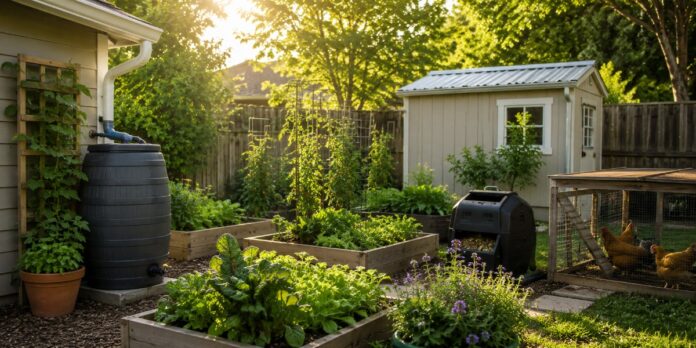
A more self-sufficient backyard does not require a large property, expensive equipment or a complete lifestyle change. Homeowners can begin with one manageable project, learn what works in their space and gradually add systems that help produce food, reduce waste and make better use of available resources.
The goal is not necessarily to become completely independent. A productive garden, a small composting area or a simple food-storage routine can still reduce household expenses and make families better prepared for unexpected disruptions. Readers looking for a broader guide to backyard food production and practical homesteading can explore The Self-Sufficient Backyard.
Begin With a Small Food Garden
Growing food is often the most familiar starting point for backyard self-sufficiency. New gardeners do not need to convert the entire yard into planting beds. One raised bed, a few large containers or a small sunny section of the property can provide enough space to learn the basics.
Choose vegetables and herbs that the household regularly eats. Tomatoes, peppers, lettuce, green beans and common cooking herbs are popular options, but the best choices depend on the season, available sunlight and local growing conditions.
Before planting, observe the yard throughout the day. Most food-producing plants need several hours of direct sunlight. Access to water and protection from pets or wildlife should also be considered.
Beginning with a limited number of plants makes it easier to manage watering, pests and harvesting. Gardeners can expand after learning which crops perform well in their particular soil and location.
Turn Household Scraps Into Compost
Composting allows households to turn certain kitchen scraps and yard materials into a soil amendment that can support future garden growth.
Fruit and vegetable scraps, coffee grounds, dry leaves, untreated grass clippings and small amounts of shredded paper or cardboard may be appropriate for a backyard compost pile. Meat, dairy products, grease and pet waste generally should not be placed in a basic home compost system because they can create odors or attract pests.
A successful compost pile typically contains a mixture of moist, nitrogen-rich materials and dry, carbon-rich materials. It should remain damp but not waterlogged. Turning or mixing the pile helps introduce oxygen and can speed decomposition.
Homeowners with limited space may use a covered compost bin or rotating tumbler. Even a modest system can reduce the amount of organic material sent to the trash while producing material that can be added to garden beds.
Make Better Use of Rainwater
Rain collection can provide supplemental water for gardens and landscaping. A basic system may involve placing a covered rain barrel beneath a gutter downspout.
Collected rainwater can reduce reliance on treated household water during periods of regular rainfall. However, homeowners should use containers designed for water storage, keep openings screened or covered and prevent standing water from becoming a mosquito-breeding area.
Overflow should be directed away from foundations, neighboring properties and areas where erosion could occur. Rainwater generally should not be treated as drinking water without proper testing and treatment.
Residents should also review local rules, neighborhood restrictions and recommended safety practices before installing a collection system.
Preserve More of What You Grow
A productive garden may provide more food than a household can use immediately. Learning basic preservation methods can help extend the value of the harvest.
Freezing is often one of the easiest starting points. Many vegetables can be cleaned, prepared and frozen in meal-sized portions. Herbs may also be frozen or dried for later use.
Other preservation options include dehydration, pickling and home canning. Canning requires particular care because incorrect processing can allow dangerous bacteria to survive. Homeowners should use tested recipes and current food-safety instructions from reliable sources rather than relying on unverified social media advice or older family methods that may not meet modern safety standards.
Keeping an inventory of stored food can reduce waste. Label each package or container with its contents and the storage date, and use older items first.
Create a Practical Household Food Supply
Food storage does not need to involve purchasing large quantities all at once. Families can gradually build a supply by adding a few shelf-stable foods during regular shopping trips.
Focus on foods the household already uses, such as rice, pasta, canned vegetables, beans, oats, cooking oil and shelf-stable meal ingredients. Buying unfamiliar products simply because they store well may lead to waste.
Stored food should be protected from heat, moisture, insects and rodents. Shelves should be organized so expiration or best-quality dates remain visible.
A rotating pantry is more practical than a collection of supplies that are never used. Consume the oldest items first and replace them during future shopping trips.
Grow Vertically When Space Is Limited
Small yards can still support meaningful food production. Trellises, vertical planters, hanging containers and fence-mounted systems can increase growing space without taking over the property.
Pole beans, cucumbers and some varieties of squash can be trained upward. Herbs, strawberries and leafy greens may grow well in containers when they receive appropriate sunlight and water.
Vertical growing also may make harvesting easier and improve air circulation around plants. Structures should be securely installed and placed where they will not block access or create hazards during storms.
Add Projects Gradually
Backyard self-sufficiency works best when each new system can be maintained consistently. Starting too many projects at once may create more work than a household can reasonably manage.
A practical first-year plan might include one garden bed, a small compost bin and a basic pantry inventory. Rain collection, additional planting areas or food-preservation equipment can be added later.
Households may also consider planting fruit trees, creating pollinator-friendly areas, learning seed-saving techniques or keeping small livestock where local laws and property rules allow. Each project should be evaluated based on cost, available space, maintenance requirements and the household’s actual needs.
Small Improvements Can Produce Lasting Benefits
Self-sufficiency is not an all-or-nothing goal. A family that grows a portion of its vegetables, composts food scraps or stores several weeks of commonly used groceries has already reduced some of its dependence on outside systems.
The most successful backyard projects are usually the ones that fit naturally into everyday life. Start with a clear, realistic goal, keep records of what works and expand only when the first project has become manageable.
For more ideas about organizing a productive backyard and developing practical food and resource systems, visit The Self-Sufficient Backyard.