

Cowboys Nation • Salary Cap • NFL 2026
Jerry Jones restructured the books, rebuilt the roster, and bet big on a window that is still wide open. Here is why the Cowboys are positioned to dominate for years to come.
By Merv Moore | Shop in Seagoville | June 17, 2026
The Dallas Cowboys entered the 2026 offseason looking less like a championship contender and more like a franchise in financial chaos. They were roughly $55 million over the $301.2 million salary cap, per ESPN, with a defense that ranked dead last in the NFL in points allowed. Something had to give.
What followed was one of the most aggressive and calculated cap overhauls in recent Cowboys history. And when the dust settled, America’s Team looked less like a team in crisis and more like one ready to make a serious run.
The Reset
The front office moved fast. In early March, the Cowboys restructured the contracts of quarterback Dak Prescott, wide receiver CeeDee Lamb, and left guard Tyler Smith, clearing roughly $66 million in cap space. The moves dropped all three players to base salaries below $2 million for 2026, converting the rest into prorated signing bonuses.
Right tackle Terence Steele’s deal was also reworked, opening another $13 million. These were not panic moves. They were calculated steps in a larger plan Jerry Jones had been telegraphing all winter.
Standing at the NFL Scouting Combine in Indianapolis, the 83-year-old owner was blunt. “I would bet that we will spend more money in free agency than we have,” Jones said. “I guess what I’m doing is saying, yes, I intend to do that if given the opportunity.” He repeated a phrase that became the offseason’s rallying cry: “bust the budget.”
Building the Defense
Jones was clear about where that budget-busting energy would flow. The Cowboys ranked 30th in yards allowed per game and 32nd in points allowed per game in 2025, giving up a staggering 30.1 points per contest. The offense was not the problem. The defense was a five-alarm fire.
Dallas responded by trading for Green Bay Packers edge rusher Rashan Gary, who recorded 7.5 sacks in 2025. They signed safety Jalen Thompson to a three-year, $33 million deal and added cornerback Cobie Durant. Linebacker Dee Winters arrived via trade from the San Francisco 49ers.
The Cowboys also hired new defensive coordinator Christian Parker, who spent two seasons coaching defensive backs for the Philadelphia Eagles. Parker brings a Vic Fangio-influenced system that relies on sub-package flexibility and smart zone coverages.
The Draft Dividend
The 2026 NFL Draft gave the Cowboys two first-round selections, a direct dividend from the Micah Parsons trade. Dallas used them wisely. The Cowboys traded up to select Ohio State safety Caleb Downs at No. 11 overall, then moved back and landed UCF pass rusher Malachi Lawrence at No. 23.
Downs was considered by some scouts to be the top overall talent in the class regardless of position, per ESPN’s draft analysis. Lawrence posted seven sacks and 14 tackles for loss in his final college season. It marked the first time since 2005 that Dallas used both first-round picks on defensive players.
ESPN’s Matt Bowen named the Cowboys one of the five most improved teams in football this offseason. “The Cowboys can score points,” Bowen wrote. “The key for 2026 is the defensive upgrades.” SI.com’s Matt Verderame went further, listing Dallas as an early Super Bowl sleeper for the 2026 season.
The Offensive Engine
While the defense gets rebuilt, the Cowboys offense remains one of the most dangerous in the NFL. Dak Prescott finished the 2025 season with 4,552 passing yards, third-best in the NFL. The Cowboys averaged 26.6 points per game on offense last season, a top-ten mark in the league.
George Pickens, playing his first season in Dallas, proved he was worth every penny. In Week 12 against the defending Super Bowl champion Philadelphia Eagles, Pickens caught all nine of his targets for 146 yards and a touchdown, helping Dallas overcome a 21-0 deficit to win 24-21. His 43-yard catch over two defenders was among the most spectacular plays of the entire NFL season.
Pickens finished his first Cowboys season with 1,429 receiving yards and nine touchdowns, earning second-team All-Pro honors. He signed his franchise tag worth $27.3 million for 2026. CeeDee Lamb delivered his own reminder of elite status in the Week 2 win over the New York Giants, making clutch catches in double coverage at critical moments down the stretch.
The Long View
The restructures do come with a cost. Prescott’s 2027 cap number now exceeds $76 million. His 2028 figure could top $85 million. The Cowboys are borrowing from the future to compete right now. But with Over the Cap projecting more than $92 million in available cap space for the 2028 season, that future may not be as bleak as the raw numbers suggest.
The 2026 draft class was signed with unusual speed, another sign of organizational urgency. Six of Dallas’ seven picks had their rookie deals in place within days of the draft. The front office is moving with real purpose.
Jones made his ultimate goal perfectly clear at Super Bowl radio row. “Make no mistake about it,” he said. “I don’t have a higher priority than to go and win a Super Bowl.” At 83, he is not interested in patience for its own sake.
The Bottom Line
The Cowboys have a franchise quarterback in his prime, two All-Pro caliber receivers, a proven run game behind Javonte Williams, and a fully overhauled defense with fresh talent at every level. The cap situation is tight in the short term but intelligently structured for the years ahead.
Shop in Seagoville enters the 2026 season with justified optimism. This is not wishful thinking. It is a roster built with clear intention, backed by real financial planning, and pointed directly at ending a 30-year wait. The window is open. The Cowboys are ready to climb through it.
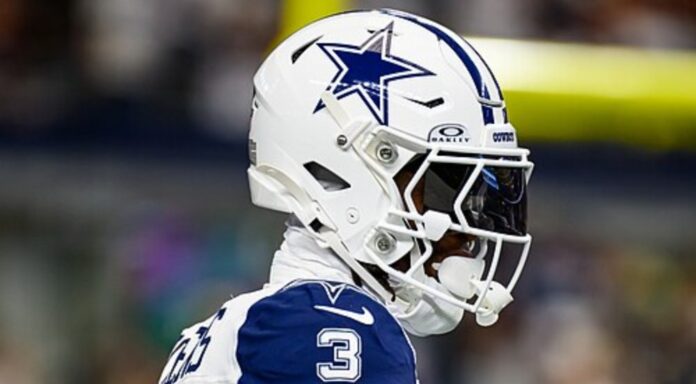
Photo: George Pickens by All-Pro Reels CC BY-SA 4.0