

Affiliate disclosure: This article contains affiliate links. If you purchase through one of these links, we may receive a commission at no additional cost to you.
A backyard garden does not have to begin with a tractor, a greenhouse or a large piece of land. For most local families, the best first garden is a small, manageable space planted with foods the household already enjoys. A few containers, a narrow raised bed or a sunny corner of the yard can produce fresh vegetables while giving children and adults a reason to spend more time outdoors.
The first decision is location. Vegetables generally perform best in full or nearly full sunlight, fertile soil that drains well and a spot close enough to a water source that regular watering will not become a burden.
Texas A&M AgriLife Extension also advises avoiding areas where large trees and shrubs will compete with vegetables for water and nutrients. A garden beside a fence can work well, provided the fence does not shade the plants for most of the day.
Before digging, watch the yard for several days. Notice which areas receive morning sun, afternoon sun or all-day heat.
In North Texas, a location with strong morning light and some protection from the harshest late-afternoon sun can be useful for certain crops during hot weather. Also check what happens after a heavy rain. Water that remains pooled for long periods is a warning that the site may need improved drainage or a raised bed.
Next, choose the garden style. An in-ground plot is inexpensive, but local clay soil may require compost and repeated improvement. A raised bed costs more initially but gives the gardener greater control over the soil. Containers are ideal for renters, patios and families who want to start with only a few plants.
Five-gallon containers can hold peppers, tomatoes or compact vegetables, while window boxes and smaller pots are useful for herbs and leafy greens. Every container must have drainage holes.
Keep the first planting simple. Four to six types of vegetables are enough for a beginner. Tomatoes, peppers, bush beans, okra, cucumbers and squash are familiar warm-season choices, while lettuce, radishes, carrots, kale and other greens are better suited to cooler periods. Plant what the family will actually eat. A large harvest of an unpopular vegetable is not a successful money-saving strategy.
Timing matters as much as the crop. North Texas gardeners work with two major challenges: occasional freezes and intense summer heat. Cool-season vegetables should be planted early enough to mature before hot weather, while warm-season plants should go into the garden after frost danger has eased and the soil has warmed.
Many warm-season crops slow down during the hottest part of summer, so a fall garden can be just as important as a spring garden. Texas A&M AgriLife provides separate guidance for spring and fall planting because the correct window can determine whether a crop thrives or struggles.
Good soil is the foundation. Mix compost or other well-decomposed organic matter into the planting area rather than relying only on bagged fertilizer. Heavy soil improves gradually, not overnight.
For a new raised bed, use clean, weed-free soil suitable for vegetables and do not fill the bed with construction debris or poor subsoil. AgriLife notes that soil improvement may take more than one growing season, especially in challenging ground.
Water deeply enough to reach the root zone, then allow the upper surface to begin drying before watering again. Shallow daily sprinkling can encourage shallow roots and waste water. Mulch around established plants with leaves, straw or another suitable material to slow evaporation and reduce weeds.
During summer, check containers frequently because they dry faster than in-ground beds.
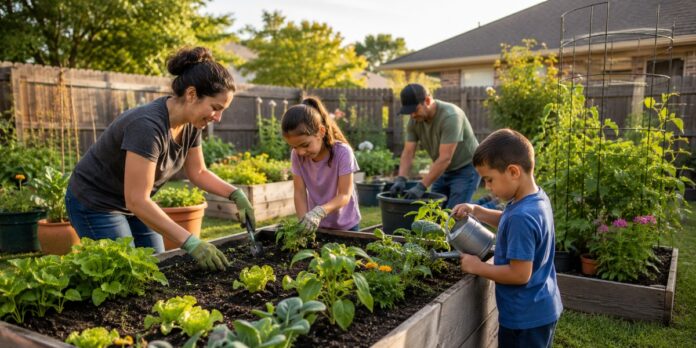
Finally, make the garden a family project. Children can label plants, measure growth, photograph the first flowers and help harvest. Adults can keep a simple notebook recording planting dates, expenses, successes and failures. That record will be more valuable next season than trying to remember what happened.
The goal of the first year is not perfection. It is to learn the yard, understand the seasons and harvest enough food to make the family excited about planting again. Start small, care for the space consistently and expand only after the first garden feels manageable.