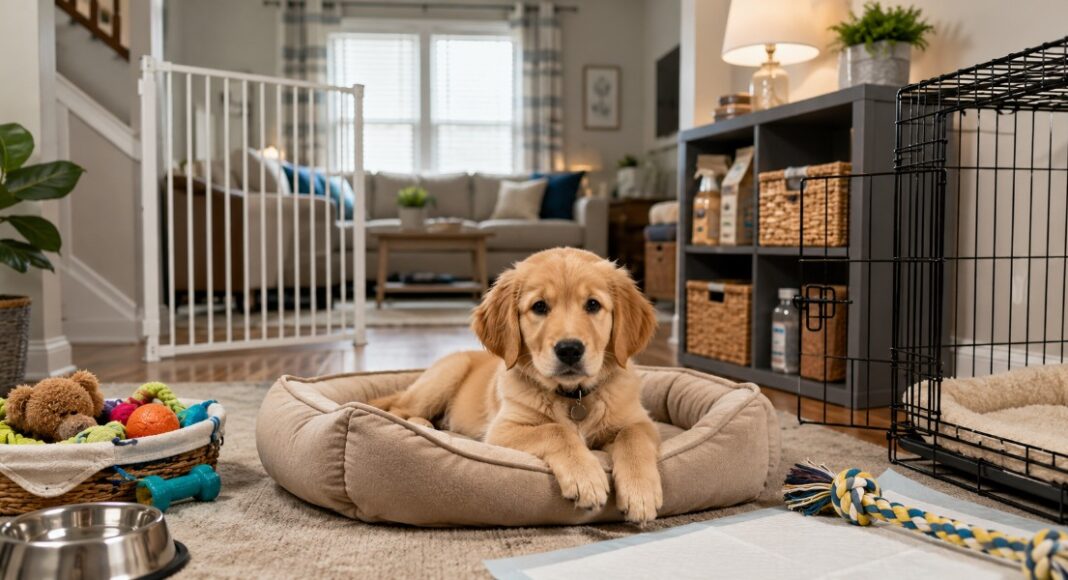
Adopting a dog involves more than purchasing food and choosing a name. A new dog will enter an unfamiliar environment filled with new sounds, smells, people and expectations.
Preparing the home in advance can reduce stress and prevent avoidable accidents.
Choose a Safe Adjustment Area
A new dog does not need immediate access to every room. Select a quiet area where the dog can eat, rest and become familiar with the household.
This space might include a crate, washable bedding, water, safe toys and access to a nearby outdoor bathroom area.
Avoid placing the dog’s resting area beside loud appliances, heavy foot traffic or frequently opening exterior doors.
Remove Household Hazards
Dogs often investigate unfamiliar objects with their mouths. Before adoption day, walk through the home and look for anything the dog might chew, swallow or knock over.
Secure electrical cords, medications, cleaning products, household chemicals and small objects. Place trash containers behind closed doors or use containers with secure lids.
Certain foods, including chocolate, grapes, raisins, onions and products containing xylitol, can be dangerous to dogs. Keep food and chewing gum out of reach.
Houseplants should also be checked because some varieties may be harmful if eaten.
Prepare the Yard
Inspect fences for holes, weak boards and gaps beneath gates. Make sure gates close securely and cannot be pushed open.
Remove sharp objects, exposed chemicals and tools. If the yard contains a swimming pool, garden pond or other water feature, supervise the dog until its behavior around water is known.
A fenced yard can be helpful, but it should not replace daily interaction, walks or supervision.
Purchase Essential Supplies
Basic supplies may include:
- Appropriately sized food and water bowls
- A collar or harness
- A sturdy leash
- Identification tags
- Bedding
- Safe chew toys
- Waste bags
- Grooming supplies
- A crate or playpen
- Food recommended for the dog’s age and needs
Avoid buying large quantities of food before learning what the dog currently eats. Sudden diet changes may cause stomach problems.
Create a Household Plan
Decide who will feed, walk and supervise the dog. Establish feeding times, bathroom breaks and sleeping arrangements before adoption day.
Children should understand that the dog may need quiet time. They should not climb on the dog, pull its tail, disturb it while eating or crowd it when it is resting.
Visitors may need to wait until the dog has had time to adjust.
Schedule Important Appointments
Arrange a veterinary examination and confirm what medical records will be provided by the shelter, rescue organization or previous owner.
Owners may also want to research training classes, grooming services, boarding options and emergency veterinary clinics before they are urgently needed.
Plan for the First Day
Keep the dog’s arrival calm. Avoid inviting a crowd or introducing too many new experiences immediately.
Take the dog outside to its designated bathroom location, allow it to explore one area at a time and begin following the planned routine.
A prepared home cannot eliminate every challenge, but it can give a newly adopted dog a stable beginning. The goal is to create an environment where the dog feels protected, supervised and gradually welcomed into family life.