

Shop in Seagoville may earn a small commission when readers make a purchase through links in this article, at no additional cost to the buyer. Shop in Seagoville only recommend products we believe will provide value to our readers.
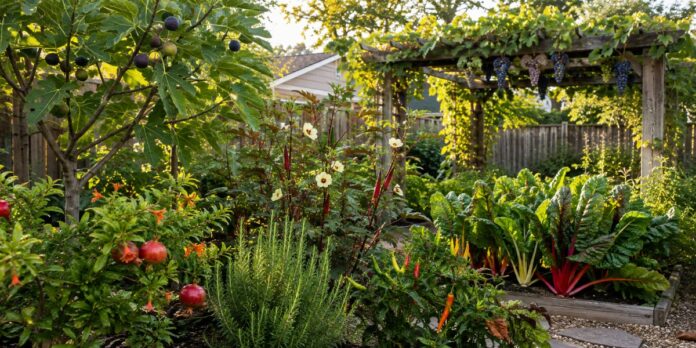
A productive garden does not have to resemble a traditional vegetable patch. With careful plant selection, homeowners can combine flowers, colorful foliage, shade and visual structure with fruits, vegetables and herbs for the kitchen.
Most fruiting vegetables require full or nearly full sunlight and well-drained soil, while some leafy crops tolerate partial shade. Homeowners should select plants suited to their available sunlight, soil, space and local growing conditions.
Those planning a larger food-producing landscape can find additional ideas in The Self-Sufficient Backyard, a guide focused on producing more food at home.
Here are seven edible plants that can add both beauty and practical value to a Texas landscape.
1. Fig Trees
Fig trees provide broad green leaves, a spreading form and sweet fruit while serving as attractive landscape focal points. They can be planted as individual specimens or incorporated into mixed backyard borders.
Figs can be grown throughout Texas, although winter freezes may damage the trees. Celeste is considered among the more cold-hardy varieties grown in the state. Fig trees should be planted in well-drained soil with enough room to accommodate their mature size.
2. Pomegranate Shrubs
Pomegranates combine glossy foliage, bright flowers and colorful fruit on shrubs that can also function as hedges or accent plants.
Many fruiting varieties can survive winters across central, southern and southeastern Texas. Because the Dallas area is near the northern edge of that broad range, homeowners should select an appropriate variety and a protected planting location rather than assuming every pomegranate will perform equally well.
3. Rosemary
Rosemary is an edible evergreen shrub with fragrant, needlelike foliage and small flowers. Upright varieties can form low hedges, while spreading types can soften retaining walls or raised beds.
Depending on the variety and growing conditions, mature rosemary plants may reach approximately 18 to 48 inches tall. Rosemary generally performs best in full sun and well-drained soil. Constantly wet soil can lead to root problems.
Gardeners interested in making food production a larger part of their property can explore the planning and self-reliance strategies presented in The Self-Sufficient Backyard guide.
4. Burgundy Okra
Okra’s height, deeply divided leaves and hibiscus-like flowers give it considerable ornamental appeal. Burgundy varieties add red stems and dark-colored pods, making the plants suitable for the back of a flower bed or along a sunny fence.
Okra is a warm-season crop that grows well in most Texas soils. It requires full sun and fertile, well-drained ground for its best production. Pods should generally be harvested when they are about 3 to 4 inches long, before they become tough and stringy.
5. Colorful Peppers
Pepper plants provide dense green foliage and fruits that may ripen through shades of green, yellow, orange, red or purple. Compact varieties work especially well in decorative containers, along walkways or near patios.
Peppers require bright sunlight and are well suited to smaller home gardens. Homeowners should confirm that any plant sold as an ornamental pepper is also intended for culinary use before eating its fruit. They should also avoid consuming plants that may have been treated with products not labeled for edible crops.
6. Swiss Chard
Swiss chard produces large green leaves and vividly colored stalks that may be red, yellow, orange, pink or white. Its upright form makes it an attractive edging plant or colorful addition to mixed containers.
Bright Lights, Ruby and Lucullus are among the varieties available to Texas gardeners. Gardeners can harvest the outer leaves while allowing the plant’s center to continue growing, extending both its usefulness and ornamental display.
7. Grapevines
A grapevine trained over an arbor can provide shade, privacy and clusters of edible fruit while adding height and structure to a landscape. A well-positioned arbor can also create an attractive passageway or shaded sitting area.
Variety selection matters because grapes differ in their soil, climate and disease requirements. Homeowners should consult a local nursery or county Extension office before choosing a vine for the Dallas-area climate.
A successful edible landscape begins with a manageable plan. The Self-Sufficient Backyard may help families think beyond a seasonal garden and consider how different parts of their property can support household food production.
By combining permanent fruiting plants with seasonal vegetables and herbs, homeowners can create landscaping that looks intentional while producing something useful for the table.