Shop in Seagoville may earn a small commission when readers make a purchase through links in this article, at no additional cost to the buyer.
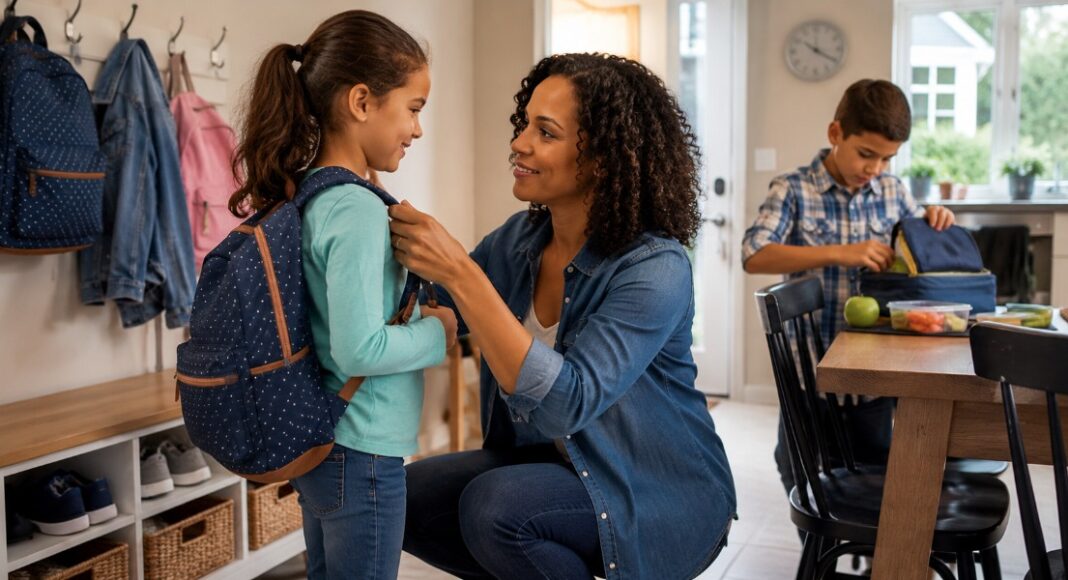
School mornings can quickly turn into a race against the clock. Missing shoes, unfinished lunches, last-minute searches for homework and repeated reminders can create stress before students ever reach the classroom.
A smoother morning usually begins long before the alarm goes off. Pediatric guidance emphasizes predictable family routines, adequate sleep and preparing as much as possible the night before.
Move Decisions to the Night Before
One of the simplest ways to reduce morning pressure is to eliminate choices that do not need to be made at 7 a.m.
Have children choose their clothes, pack backpacks, locate school IDs and charge necessary devices before bedtime. Parents can prepare lunches or organize lunch ingredients, check the next day’s calendar and place anything that must leave the house near the door.
The American Academy of Pediatrics recommends putting as many things in order as possible the night before to help weekday mornings run more smoothly.
Giving children age-appropriate responsibility for these preparations can also build useful organizational habits. Parents looking for additional activities centered on responsibility, creativity and entrepreneurship can explore the myKidPrenuers: The StartUp Generation E-books.
Protect Bedtime Before Fixing Wake-Up Time
A child who is consistently difficult to wake may need more than a louder alarm.
Children ages 6 through 12 generally need nine to 12 hours of sleep during a 24-hour period, while teenagers ages 13 through 18 generally need eight to 10 hours, according to sleep recommendations cited by the Centers for Disease Control and Prevention.
Keeping bedtime and wake-up times reasonably consistent can make mornings more predictable. A regular bedtime routine also gives families a better chance of avoiding the daily struggle of trying to get an exhausted child moving.
Create a Simple Morning Order
Instead of giving children a series of new instructions every few minutes, establish the same basic sequence each school day.
For example, a child might use the bathroom, get dressed, eat breakfast, brush teeth, gather belongings and put on shoes in roughly the same order every morning.
Predictable routines help children know what is expected without depending on constant parental reminders. The American Academy of Pediatrics specifically recommends daily routines as a way to help young children understand what comes next.
For younger students, a short visual checklist posted near the bedroom door, bathroom mirror or backpack area may make the routine easier to follow independently.
Give Everything a Home
Some morning emergencies are really organization problems.
Designate one location for backpacks, another for shoes and jackets, and a consistent place for school papers, sports equipment and other frequently needed items.
This reduces the chances of spending valuable minutes looking under furniture, searching bedrooms or trying to remember where something was left the previous afternoon.
Parents who want to turn everyday responsibilities into lessons about independence and decision-making can also review the myKidPrenuers: The StartUp Generation E-books.
Keep Breakfast Manageable
Breakfast does not have to become another complicated morning project.
Families pressed for time can keep easy options available, such as yogurt, fruit, cereal, hard-boiled eggs or other foods children can eat quickly. The American Academy of Pediatrics encourages breakfast and recommends keeping grab-and-go choices available when a sit-down meal is not practical.
The goal is to have a workable plan before the morning gets busy rather than deciding what everyone will eat while watching the clock.
Build in a Departure Buffer
If the family must leave at 7:30 a.m., treating 7:30 as the moment everyone should finally start looking for shoes leaves no room for problems.
Set a household “ready time” several minutes earlier than the actual departure deadline. That buffer can absorb a spilled drink, missing permission slip, bathroom trip or other unexpected delay without immediately making everyone late.
It can also reduce the temptation to rush children through every task.
Reduce Morning Distractions
Televisions, games, phones and social media can quietly consume the few minutes families thought they had to spare.
Consider making entertainment available only after children are completely dressed, fed and ready to leave. For some households, keeping recreational screens off entirely until departure may be easier than repeatedly telling children to put devices away.
Let Children Own Part of the Routine
As students get older, parents should not have to manage every step indefinitely.
Children can gradually take responsibility for setting alarms, checking their backpacks, remembering extracurricular equipment and watching the clock. Younger children may begin with smaller jobs, such as placing shoes by the door or putting their lunchbox in their backpack.
Those responsibilities can help children practice planning and accountability in everyday life. Families interested in extending those skills into activities involving money, business ideas and entrepreneurship can find additional resources through the myKidPrenuers: The StartUp Generation E-books.
Fix the Problem That Keeps Happening
When the same delay occurs repeatedly, focus on that specific problem instead of simply trying to move faster.
If shoes disappear every morning, establish a shoe station. If one child takes too long choosing clothes, make nighttime clothing selection mandatory. If breakfast causes delays, simplify the menu. If everyone repeatedly leaves five minutes late, move the household’s target departure time earlier.
A successful school-morning routine does not need to be elaborate. The most effective system is one the family can repeat consistently while helping students leave home rested, prepared and ready to begin the school day.