

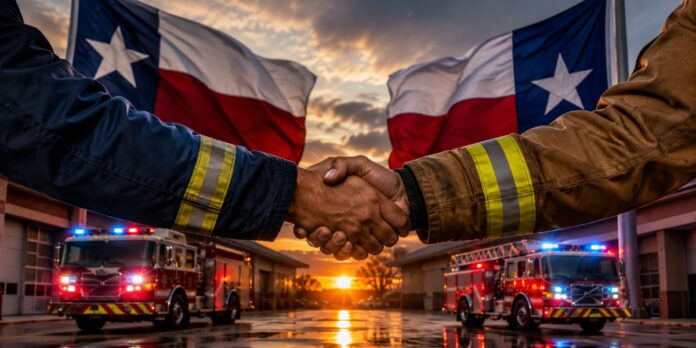
The proposed fire-protection partnership between Seagoville and Crandall may ultimately benefit both communities.
It could add personnel to the Seagoville Fire Department, strengthen regional emergency response and provide Crandall with dependable fire and rescue coverage. It could even improve Seagoville’s long-term public-safety capabilities.
But none of those possible benefits excuses Seagoville officials from answering one basic question:
Is this agreement truly good for the people paying Seagoville taxes?
Residents should not be asked to accept slogans, summaries or broad promises. They deserve the complete agreement, a detailed financial analysis and direct answers from every City Council member preparing to vote on it.
Seagoville residents fund their fire department. They own the equipment. They pay the salaries. They carry the financial risk.
They have every right to know exactly what their city may be committing to another community.
What Is Seagoville Being Asked to Approve?
The City has described the proposal as an interlocal cooperation agreement through which Seagoville would provide fire-protection services to Crandall.
Public information says dedicated personnel and equipment would be assigned to serve Crandall and that Crandall would reimburse Seagoville for the cost of providing those services.
That sounds reasonable until residents begin asking what the word “cost” includes.
Community discussion has centered on a reported annual payment of approximately $690,000 to fund nine new firefighters. A five-year agreement at that amount would involve approximately $3.45 million before any increases, additional reimbursements or equipment expenses.
But where is the complete calculation?
Does the reported amount cover only salaries, or does it cover the entire cost of employing nine firefighters?
Until Seagoville publishes the proposal and supporting financial documents, residents cannot determine whether this is full cost recovery or merely partial reimbursement dressed up as a complete solution.
Salaries Are Only the Beginning
Hiring nine firefighters involves far more than issuing nine paychecks.
Will Crandall’s payment cover health insurance, retirement contributions, payroll taxes, workers’ compensation, overtime, holiday pay, certification incentives and future salary increases?
Will it pay for continuing education, emergency medical training, physical examinations, background checks and required licensing?
Who will pay for fire-resistant coats and pants, helmets, boots, gloves, uniforms, radios, breathing equipment and the many other items firefighters must carry and maintain?
What about administrative expenses?
Seagoville’s fire chief, finance department, human resources staff, payroll employees, dispatchers, attorneys and other city personnel may all perform work connected to the agreement. Has the value of that work been included in the proposed payment?
The City should publish a line-by-line financial breakdown showing every anticipated expense and the party responsible for paying it.
“Crandall will cover the cost” is not enough.
Show residents the numbers.
Who Pays for the Fire Trucks?
Nine firefighters cannot protect a city without fire apparatus.
They will need engines, rescue vehicles, brush trucks, hoses, pumps, ladders, medical supplies, communications equipment and protective gear. Those assets are expensive to buy, maintain, insure and replace.
Will Crandall purchase the vehicles needed to serve its community?
Will Seagoville dedicate trucks that are already owned and funded by Seagoville taxpayers?
Will Seagoville be expected to purchase additional apparatus?
If so, will Crandall pay the entire purchase price, or will Seagoville carry debt for equipment primarily used outside its city limits?
Who will pay for fuel, oil changes, tires, preventive maintenance, mechanical failures and accident repairs?
If a Seagoville-owned engine is damaged while responding in Crandall, who pays the insurance deductible?
If increased call volume causes a truck to wear out years earlier than expected, will Crandall reimburse Seagoville for that loss?
The proposed agreement should contain a complete equipment plan, including ownership, maintenance, depreciation and replacement responsibilities.
Without that information, Seagoville taxpayers cannot know whether they are being reimbursed for providing fire protection or gradually giving away the useful life of equipment they purchased.
Crandall’s Staffing Problem Did Not Begin Yesterday
Beginning in October 2014, Kaufman County Emergency Services District No. 7 funded two certified firefighter-EMTs. The paid staffing was added because the number of available volunteers had declined, making it more difficult to answer emergency calls.
That history matters.
It shows that Crandall’s struggle to maintain dependable fire-department staffing has existed for more than a decade. It also shows that another government entity has already been financially involved in supporting fire protection in the Crandall area.
So what has changed?
Why is the current arrangement involving Crandall and Kaufman County ESD No. 7 no longer considered sufficient?
What services does ESD No. 7 currently provide within Crandall?
How much funding, staffing and equipment has the district provided since 2014?
Has ESD No. 7 presented Crandall with an alternative plan involving more firefighters, another station, additional apparatus or increased taxes?
What would that alternative cost?
Why does Crandall prefer contracting with Seagoville?
Would Seagoville replace the existing system, supplement it or operate beside it?
What happens to Crandall’s current firefighters, volunteers, vehicles and equipment if the agreement is approved?
Would Crandall’s existing apparatus be available to Seagoville personnel, or would Seagoville be expected to provide everything?
Residents also deserve to know whether property owners in Crandall and Heartland would continue paying taxes to Kaufman County ESD No. 7 while the City of Crandall separately pays Seagoville for fire services.
If residents there continue paying ESD taxes, what services would they receive from the district?
The most uncomfortable question may also be the most important:
Is Seagoville being asked to assume staffing, equipment and liability responsibilities because Crandall does not want to pay the cost of expanding its existing fire-service system?
There may be a reasonable explanation.
Seagoville residents should not have to guess what it is.
Will Seagoville Residents Really Experience “No Impact”?
The City has said the proposal would not reduce service levels in Seagoville.
That is a serious promise. It should be supported by more than a graphic.
Will the nine new firefighters be completely separate from the personnel currently assigned to protect Seagoville?
Will they remain stationed in Crandall, or could Seagoville employees be moved between the two cities to cover shortages?
What minimum staffing level will be guaranteed inside Seagoville during every shift?
Who will cover vacations, illnesses, injuries, military leave, training days, resignations and unfilled positions?
Will overtime be necessary to keep both cities fully staffed?
Who pays that overtime?
What happens when major emergencies occur in both cities at the same time?
If Crandall experiences a large commercial fire, tornado, hazardous-material emergency or mass-casualty incident, could Seagoville trucks and firefighters be pulled away from local residents?
What is Crandall’s current annual emergency-call volume?
How many overlapping calls occur?
What response times are projected under the partnership?
How much additional wear will the increased call volume place on Seagoville’s vehicles and equipment?
“No impact” must be demonstrated with staffing models, response-time projections, call-volume data and emergency contingency plans.
Residents should not be expected to accept the phrase on faith.
What Does Seagoville Gain?
Crandall’s potential benefit is easy to understand. It would receive dedicated fire and emergency personnel backed by the resources of an established municipal department.
What does Seagoville receive?
Will the agreement produce actual revenue after every direct and indirect expense is paid?
How much net income does the City expect to earn each year?
Would any revenue be placed into Seagoville’s fire-department budget, equipment fund or reserve account?
Would the additional personnel improve emergency response inside Seagoville?
Would the agreement allow Seagoville to place more firefighters on duty during major incidents?
City officials have suggested that adding personnel could improve Seagoville’s fire-protection statistics and potentially lower its Insurance Services Office rating. If that is a major selling point, where is the written analysis?
How many rating points would the City expect to gain?
How soon could a rating change occur?
Would Seagoville homeowners and businesses actually receive lower insurance premiums?
Has Seagoville’s insurance adviser or financial adviser documented any expected savings?
Claims involving better insurance ratings, lower bond costs or improved financial standing should be supported by professional reports—not assumptions.
What Happens to the Nine Firefighters After Five Years?
The reported proposal is believed to involve a five-year agreement, possibly with an option to renew.
The City must clarify that point before any vote.
Can either city terminate the agreement early?
How much notice is required?
Would there be financial penalties?
Could Crandall renew the agreement automatically, or would both councils have to approve a new contract?
Will Crandall’s payments increase when salaries, insurance premiums, retirement contributions and equipment costs rise?
What happens if the annual payment becomes insufficient during the contract?
Most importantly, what happens to the nine firefighters if Crandall chooses not to renew?
Will they lose their jobs?
Will Seagoville absorb them into its existing fire department?
If Seagoville keeps them, where will the money come from to pay their salaries and benefits?
Will local taxpayers face a tax increase or budget cuts to support positions originally created for Crandall?
A five-year agreement should not create a sixth-year financial crisis.
Who Carries the Legal Risk?
Fire protection involves substantial liability.
If someone alleges that a response in Crandall was delayed, mishandled or negligent, which city is responsible?
If a Seagoville firefighter is injured while working in Crandall, whose insurance pays?
If a lawsuit is filed, which city pays for the legal defense?
Who is responsible for settlements, judgments, increased premiums and workers’ compensation claims?
Will Crandall indemnify Seagoville?
Has Seagoville’s insurance carrier reviewed the proposed agreement?
Has the carrier confirmed in writing that personnel and equipment will remain fully covered while operating outside Seagoville?
Who will supervise the firefighters assigned to Crandall?
Who controls hiring, discipline, promotions and termination?
Who has operational command during an emergency?
What happens if Crandall disputes an invoice or fails to make a payment?
Can Seagoville suspend services for nonpayment, or would it remain legally obligated to respond?
These are not technical details that can be settled later.
They determine who pays when something goes wrong.
Why Have Crandall Residents Heard More Than Seagoville Residents?
Crandall residents have been publicly discussing the future of their fire protection.
Many Seagoville residents, however, learned about the proposed partnership through social media, private conversations and community posts rather than a detailed presentation from their own city.
That is unacceptable.
Why was there not an early public presentation in Seagoville?
Why has the complete proposal not been published?
Why have residents not been shown the financial calculations?
Why has the City not released a direct comparison between Crandall’s existing fire-service arrangement, the ESD proposal and the proposed Seagoville agreement?
Will there be a dedicated public meeting or town hall before the council votes?
Will residents be allowed to question the fire chief, city manager, finance director and council members?
How many days will the final agreement be available for public review?
Will the City answer questions in writing?
The fact that elected officials may possess the legal authority to approve an interlocal agreement does not mean they should treat it like routine day-to-day business.
This is not comparable to hiring a contractor to repair an air conditioner.
It could involve millions of dollars, nine permanent employees, expensive emergency vehicles, increased liability and a five-year commitment to provide an essential public service outside Seagoville.
That demands public scrutiny.
Publish the Agreement Before the Vote
The City of Seagoville should release the following documents before the City Council is asked to approve anything:
The complete proposed agreement.
The five-year financial projection.
The calculation supporting the reported annual payment.
The staffing and overtime plan.
The equipment and replacement plan.
The insurance and liability review.
Crandall’s current and projected call-volume data.
The expected impact on Seagoville’s response times.
The plan for the nine firefighters if the contract ends.
Any analysis involving Seagoville’s fire-protection rating, insurance premiums or borrowing costs.
Any competing proposal involving Kaufman County ESD No. 7.
Residents should also receive a clear answer about the expected vote date.
If the agreement will be considered at an August City Council meeting, the public should be told immediately. The agenda should identify the agreement clearly, and the full contract should be available far enough in advance for residents to study it.
A document released shortly before a meeting does not provide meaningful transparency.
This Is Not Opposition to Cooperation
Questioning this agreement does not mean opposing Crandall.
Neighboring cities should cooperate when cooperation protects residents, improves service and uses public resources responsibly.
The issue is not whether Crandall deserves dependable fire protection. Of course it does.
The issue is whether Seagoville taxpayers will be fully protected while their city assumes responsibility for providing that service.
This proposal may be an excellent opportunity.
It may strengthen the Seagoville Fire Department.
It may improve regional safety.
It may provide financial and operational benefits to Seagoville.
But if those claims are true, city leaders should be able to prove them in writing.
Seagoville Residents Have a Right to Know
Our position is not that the City Council must reject the agreement.
Our position is that the council should not approve it until residents can see exactly what Seagoville is promising, what Crandall is paying and what financial risks may remain with local taxpayers.
No blank checks.
No vague assurances.
No hidden costs.
No rushed vote.
No major public-safety agreement approved without meaningful public examination.
Seagoville residents work hard for their money. They pay taxes with the expectation that those dollars will first protect and serve their own community.
Before Seagoville commits personnel, vehicles and resources to another city, elected officials must answer one question in unmistakable terms:
How does this make Seagoville safer, stronger and financially better off?
Until that answer is supported by documents, calculations and enforceable contract language, residents should continue asking questions.
A proposal affecting millions of dollars and the future of Seagoville’s fire department should not be approved because residents are told to trust the process.
The process must earn their trust.