

Tariffs, Iran War and Immigration Policy Strain Texas Household Budgets
Texas families are paying more at the pump and at the register in 2026. Three federal actions drive much of the debate: tariffs, the war with Iran and the immigration crackdown. Staff Reports reviewed federal data and independent research to measure the cost.
Some figures below come from federal agencies and nonpartisan researchers. Others come from Democrats on the Joint Economic Committee, who are the minority party in Congress. Each source is identified so readers can weigh the numbers.
Supreme Court Struck Down the Emergency Tariffs
The Supreme Court ruled 6 to 3 that the International Emergency Economic Powers Act does not allow the president to impose tariffs. The decision came February 20, 2026. The Court said the Constitution gives Congress the power to tax and that broad tariffs require clear approval from Congress.
The administration ended the emergency tariffs on February 24 and moved to replace them under other laws. The Yale Budget Lab estimated on August 25 that tariffs will cost the typical American household more than $1,000 a year.
The Tax Foundation puts the 2026 figure at $840 per household and the Tax Policy Center says $920.
Texas ranks second among the states in tariff costs. The National Taxpayers Union Foundation estimates importers in Texas have paid $37 billion in executive tariffs since January 2025. Only California, at $63 billion, paid more.
About 71 percent of the Texas total fell on manufacturing inputs. Cars and trucks accounted for $5.7 billion of the cost. The data run through June 2026 and include duties that may be refunded.
Importers pay tariffs at the border. Economists say businesses often pass added costs along to shoppers through higher prices. Courts have ordered refunds for importers, but Staff Reports did not find a program to repay shoppers.
War With Iran Pushed Texas Gas Prices Higher
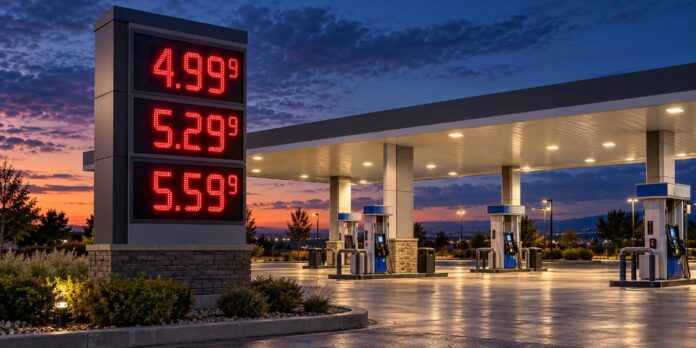
The war with Iran began February 28, 2026. AAA data show the Texas average for regular gasoline was $2.55 a gallon on February 18. By October 1 the Texas average was $3.94.
That is $1.39 more per gallon than before the war. Texas remains among the cheapest states for gasoline. The national average has stayed above $4 a gallon.
Minority Democrats on the Joint Economic Committee estimate Texans spent an additional $8 billion on gasoline from the start of the war through September 11. They put the cost at $803 for the average Texas family. Those are partisan estimates and not official government figures.
Grocery Prices and the Immigration Crackdown
Federal data show grocery prices rising more slowly than gas. The Bureau of Labor Statistics reported that food at home rose 2.2 percent nationally in the 12 months ending in August. In the South region, which includes Texas, the increase was 1.9 percent.
The link to deportations is harder to measure. In October 2025 the Labor Department said immigration enforcement had cut the farm workforce and put the food supply at risk. The agency estimated that 42 percent of agricultural workers lacked authorization to work.
Economists have warned that farm labor shortages can push up food costs. Staff Reports found no verified estimate of how many dollars deportations have added to grocery bills in Texas. Any such figure would be a projection and not a measured cost.
Minority Democrats on the Joint Economic Committee say Americans paid $310 more for groceries in President Trump’s first year than in 2024. They also say grocery prices are more than 4 percent higher than when he took office.
Those figures are national and do not isolate the effect of deportations.
What the Total Means for Texas Families
The same Democratic group says the average Texas household has paid more than $3,000 extra for goods and services as of August 2026. That figure includes housing, electricity and health care along with gas and groceries. It is a partisan calculation and cannot be traced to these three policies alone.
The figures in this report are statewide or national estimates. Staff Reports did not find published cost estimates specific to Seagoville, Crandall or Combine. Residents can compare their own monthly gas and grocery receipts to the numbers above.
The Bureau of Labor Statistics is scheduled to release September regional price data on October 14. Staff Reports will update this story as new numbers arrive.