

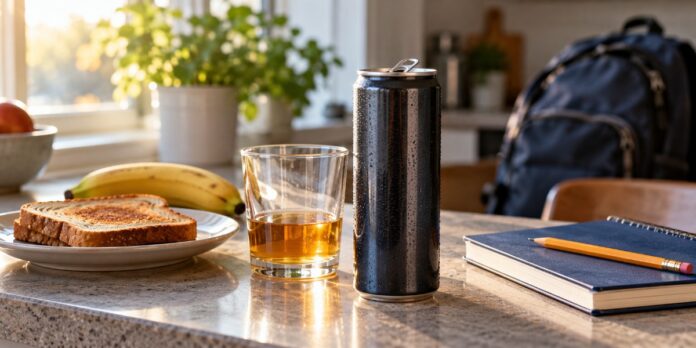
An energy drink purchased before class can contain substantially more caffeine than its size suggests. A 12-ounce CELSIUS contains more caffeine than a 16-ounce original Monster, while choosing a larger Red Bull changes the amount considerably.
For students at Seagoville High School and Crandall High School, the important comparison is the specific product and amount consumed—not simply the brand, flavor or promise of extra energy.
Pediatric guidance advises adolescents to avoid energy drinks. Sugar-free formulas and added vitamins do not remove the caffeine.
What one container delivers
Manufacturer information identifies the following caffeine amounts for these U.S. products:
| Product | Container size | Caffeine in entire container |
|---|---|---|
| Red Bull Original | 8.4 fluid ounces | 80 milligrams |
| Red Bull Original | 12 fluid ounces | 114 milligrams |
| Red Bull Original | 16 fluid ounces | 151 milligrams |
| Monster Original Green | 16 fluid ounces | 160 milligrams |
| CELSIUS standard energy drink | 12 fluid ounces | 200 milligrams |
The 12-ounce CELSIUS contains 2½ times the caffeine of the smallest Red Bull listed, despite holding only about 43% more liquid.
These figures apply to the products and sizes shown. Other flavors, product lines and container sizes can differ. CELSIUS, for example, identifies 270 milligrams per can for its separate Essentials line.
When reading a label, check whether the caffeine amount is stated per serving or per container. If a package contains multiple servings, drinking the entire package means consuming all of them. A serving designation is a measurement, not a recommendation for teenagers.
Sugar-free does not mean caffeine-free
An 8.4-ounce original Red Bull contains 27 grams of sugar. The American Academy of Pediatrics’ product comparison lists 54 grams in a 16-ounce Monster Green OG and zero grams in a 12-ounce CELSIUS Sparkling Fantasy Vibe.
Those are separate measurements from caffeine. A drink can contain no sugar while delivering a substantial stimulant dose.
Ingredient lists also matter. Some energy drinks contain taurine, vitamins and plant extracts. Guarana naturally contains caffeine, so its presence should not be interpreted as an alternative to caffeine.
The Food and Drug Administration says most U.S. energy drinks list total caffeine from all sources on their labels. Consumers should seek manufacturer information when the amount is unclear rather than assuming an unfamiliar ingredient is caffeine-free.
What marketing claims actually establish
Red Bull promotes alertness and concentration and describes its B vitamins as contributing to reduced fatigue. CELSIUS emphasizes zero sugar, vitamins and an active lifestyle.
Those descriptions do not establish that a product is appropriate for adolescents or that it improves grades.
In its own explanation of energy drinks and studying, CELSIUS says its products are not study aids or cognitive supplements. Its consumer guidance also says the drinks are not recommended for people younger than 18.
Words such as “natural,” “plant-sourced” and “functional” should be evaluated alongside the actual caffeine amount. According to the FDA, the body does not handle naturally occurring caffeine differently from caffeine added to a product.
Adult guidance is not a teen allowance
The FDA cites 400 milligrams a day as an amount generally not associated with negative effects for most adults. That figure is neither a recommended intake nor a caffeine allowance for high school students.
The American Academy of Pediatrics’ current parent guidance says avoiding caffeine is the best choice for children. Medical experts advise against energy drinks for children and teenagers.
Too much caffeine can cause a racing heartbeat, palpitations, anxiety, elevated blood pressure, digestive problems and disrupted sleep. Sensitivity varies, and health conditions or medications can affect a person’s response.
A morning drink also may not be the day’s only source. Coffee, tea, soda, supplements and certain medicines can add to the total.
Before the first bell
Pediatric guidance recommends water and adequate sleep rather than relying on caffeine to overcome tiredness. Caffeine can temporarily increase alertness, but it cannot replace the restorative effects of sleep.
Students experiencing persistent fatigue should discuss it with a parent, school nurse or healthcare professional. Comparing labels can reveal what is inside a can; it does not turn an energy drink into a solution for insufficient rest.